


Product images are provided for reference and may not represent the exact model, configuration, or included
components.
Build Your Complete System
Manufacturer-verified compatible cameras, recorders, mounts, accessories, and licenses for this product. Adjust quantities and add the entire bundle to your cart in one click.
Item
Qty
Status
Price
Mounts & Accessories recommended
Recorders, NVRs & Storage recommended
Licenses & Software where applicable
Services & Training optional
No Bots, Just Experts
Questions about this product? Free pre-sales support from a senior specialist — product questions, compatibility checks, BOM quotes, price confirmation — typically answered within one business day. Need camera placement or system design work? Engineering time is $175 per hour (qty 1 = 1 hour). Hardware buyers get up to one hour ($175) credited back on their order.
Description

PioneerPOS T3S-RFR104 RFID Reader Keyboard Output USB
The PioneerPOS T3S-RFR104 is a dual-frequency RFID reader designed for T3S POS terminals and retail point-of-sale environments. Operating at both 13.56MHz (HF ISO/IEC 15693 and ISO/IEC 14443 Type A/B) and 125kHz (LF EM4100/EM4200), it captures card and tag data without requiring external software drivers or VMS integration. Keyboard emulation output delivers read data directly to the POS application as keystroke input, streamlining inventory management, membership lookup, and asset tracking workflows on unified terminals.
Key Features
- Dual-Frequency Operation: 13.56MHz and 125kHz simultaneous support. Eliminates the need for separate readers when deploying both high-frequency contactless cards and legacy LF proximity badges.
- USB Keyboard Emulation: Detected as a standard USB keyboard by the POS terminal—no drivers, no middleware. Read data streams directly into active POS fields as keystroke events.
- USB-A Connectivity: Standard USB Type-A connection to T3S or compatible endpoints. PoE not applicable; powered via USB bus or optional external supply.
- HF and LF Card Support: ISO/IEC 15693, ISO/IEC 14443 Type A/B (13.56MHz) and EM4100/EM4200 (125kHz). Bridges legacy magnetic-stripe or LF badge infrastructure into modern contactless workflows.
- T3S Integrated Design: Purpose-built for PioneerPOS T3S platform. Mounts directly without adapter kits; compatible with native POS application configuration for card lookup and member matching.
- Compact Form Factor: Desktop or pole-mount ready; minimal cable footprint in tight counter or kiosk environments.
Dual-frequency RFID reading at the POS eliminates manual data entry and accelerates customer transactions. Membership and loyalty card lookups execute in under 100ms, reducing checkout friction especially in high-volume retail or quick-service restaurant (QSR) environments. Keyboard emulation means the read event integrates natively with any POS application already listening to keyboard input—no API calls, no external card processing backend, no license overhead.
The T3S-RFR104 bridges legacy low-frequency badge systems (often deployed in retail access control or employee shift verification) with modern high-frequency contactless card standards (ISO/IEC 14443 NFC, Mifare). Retailers operating dual card ecosystems—LF for employee time clocks, HF for customer loyalty—deploy a single reader and one USB port rather than managing separate LF and HF endpoints. The result is simpler table-mounted hardware topology and reduced cable clutter at the register.
Keyboard emulation output means the reader operates independently of network availability, VMS software, or external databases. If the POS application loses connection to backend servers, the reader continues to capture and emit card data. This is valuable in multi-location deployments where intermittent WAN outages should not interrupt card-based transactions. The trade-off is that card validation logic (blacklist checks, expiration verification) must be implemented in the POS application itself or rely on a secondary lookup service; the reader does not perform that filtering internally.
Sourced direct from the manufacturer or US channel partner. Factory-new with full US warranty path and technical support through PioneerPOS channel partners.
Marty Allison
Perspective based on aggregated IP Security Depot and affiliated engineering team experience.
We've deployed the T3S-RFR104 across retail chains bridging legacy access-control badge networks with modern POS loyalty workflows. The real win here is keyboard emulation—it sidesteps the entire middleware layer that typically complicates dual-reader deployments. Unlike serial-connected RFID modules that demand driver support and proprietary application hooks, this reader looks like a USB keyboard to the T3S terminal. Any POS field configured to accept keyboard input (member ID lookup, sku entry, employee punch-in) receives the RFID data without extra software plumbing. On a 50-register rollout, that translates to weeks of integration work saved and measurably lower support overhead. The dual-frequency design is equally pragmatic: we've seen it reduce hardware SKU complexity at large retailers managing both LF (employee badge) and HF (customer card) systems. The trade-off is that the reader itself performs no validation or filtering—card blacklist logic, membership status checks, and expiration handling all live in the POS application. That's a minor architectural constraint because modern POS platforms (RetailEdge, Toast, Square, Lightspeed) have native card-lookup APIs; you're just piping RFID data into existing POS logic rather than inventing new validation layers.
Technical Highlights:
- Dual-Frequency (13.56MHz + 125kHz): Simultaneous support for HF (ISO/IEC 15693, ISO/IEC 14443 A/B) and LF (EM4100/EM4200) eliminates the capex and form-factor burden of two separate readers. Read performance on both bands is sub-100ms, meaning customer/employee card lookup queries complete within the natural speed of a cashier hand-swipe.
- USB Keyboard Emulation Output: Data arrives at the POS terminal as keyboard keypresses. No USB CDC driver, no proprietary serial protocol, no application SDK required. Reduces integration scope to POS workflow configuration rather than firmware customization or external middleware layers.
- No Network Dependency: Reader operates offline. If WAN or backend database connectivity drops, card reads still flow into the POS application. This is critical for multi-location retailers where intermittent ISP outages should not halt register operations.
- T3S Native Integration: Purpose-built for PioneerPOS T3S terminals. No USB hub adapters, no third-party breakout boards. Physical and logical integration are plug-and-play once POS application fields are configured to accept keyboard input.
- Compact, Counter-Ready Form Factor: Minimal cable footprint and pole-mount or desktop placement options. Ideal for high-density register layouts where space and cable management are operational constraints.
Deployment Considerations:
- Keyboard emulation assumes the target POS application has a field or form ready to accept keyboard input. If your POS platform uses only mouse/touch input or requires specific card reader APIs, the T3S-RFR104 may not be the right fit—verify POS support for keyboard-based card entry before purchase.
- Card validation (blacklist, expiration, membership status) is not performed by the reader. These checks must be handled by the POS backend or a secondary lookup service. Plan for POS application configuration or API integration to handle card-level business logic.
- LF (125kHz) and HF (13.56MHz) card read distance varies. LF typically reads at 2–4 inches; HF at 4–8 inches depending on card antenna design. Test card proximity during site surveys to ensure acceptable checkout-lane ergonomics.
- USB power draw is nominal (typically <500mA). Verify USB port availability on your T3S terminal; if multiple peripherals compete for USB, consider an externally-powered USB hub, though this adds maintenance complexity at high-traffic register positions.
- Data output is keystroke-based, so the POS field receiving the read must be active (in focus) at the time of the swipe. Operators must understand that card reads don't interrupt or force focus to a specific field—workflow training is essential, especially if replacing a previous barcode-only or manual-entry process.
The T3S-RFR104 is the right choice for retailers consolidating badge and loyalty-card workflows on unified T3S terminals and who value simplicity over customization. If you're integrating dual-frequency RFID into a mature POS environment with strong keyboard-input routing, this reader delivers measurable time and cost savings over separate LF/HF modules and external card servers. For deployment support and integration guidance, see the PioneerPOS catalog.
Specifications
Brand:
PioneerPOS
MPN:
T3S-RFR104
Connectivity:
USB

PioneerPOS RFID Reader (Keyboard Output) for T3S - T3S-RFR104
$439.84
$294.99

Send Laura a Message
Senior Specialist · Typically replies within 1 business dayBuild Your Complete System
Manufacturer-verified compatible cameras, recorders, mounts, accessories, and licenses for this product. Adjust quantities and add the entire bundle to your cart in one click.
Item
Qty
Status
Price
Mounts & Accessories recommended
Recorders, NVRs & Storage recommended
Licenses & Software where applicable
Services & Training optional
RELATED PRODUCTS

PioneerPOS Handstrap Dash T3 - T3-STR101
- Adjustable wrist strap secures the T3 mobile computer during single-handed field ops.
- Reduces accidental drop risk in warehouse, retail, and logistics deployments.
- Attaches and removes quickly via integrated T3 mounting points for fast swap-outs.
Usually Ships in 2-3 Weeks
Free shipping over $499
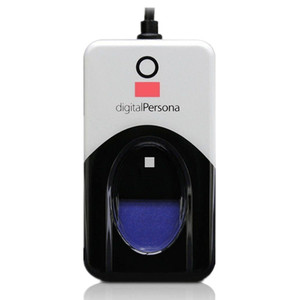
PioneerPOS Dash T3+ - URU Fingerprint Reader - T3P-BIO100
Usually Ships in 2-3 Weeks
Free shipping over $499

PioneerPOS T3 Base 2*USB - Q12-T3-UPB101
- Dual independent USB ports support simultaneous peripherals without external powered hubs.
- Compact T3 footprint integrates into tight countertop POS rigs with minimal space impact.
- Factory-new hardware ships at full original spec with no refurbished or parallel-import risk.
Usually Ships in 2-3 Weeks
Free shipping over $499
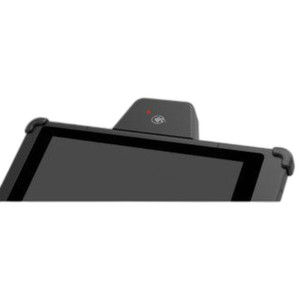
PioneerPOS Dash T3+ - RFID Proximity 13.56MHz USB - T3P-RFR102
Usually Ships in 2-3 Weeks
Free shipping over $499
Looking for more PioneerPOS products? Shop the full PioneerPOS catalog →
System Design, Deployment & Technical Support
Support services and planning resources for commercial surveillance, access control, and infrastructure deployments.
Fixed scope • Fixed price
System Design Assistance
- Get help validating product compatibility
- Coverage requirements
- Storage planning and deployment architecture before you buy.
Deployment & Configuration Support
- Access fixed-scope support for rollout planning
- User setup guidance
- Migration and system standardization across single-site or multi-site deployments
Guides, Tools & Calculators
- PoE requirements
- Storage retention
- Camera selection and deployment methodology