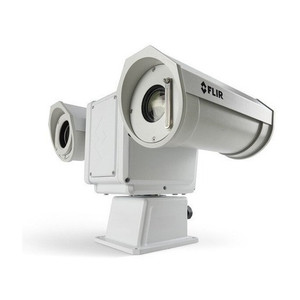
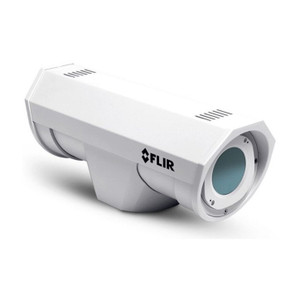
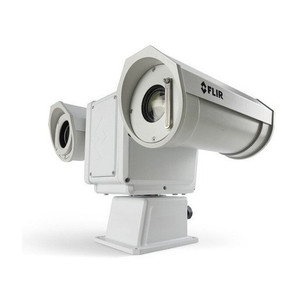
FLIR 427-2075-01-00 Fixed Thermal Security Camera
Overview
The FLIR 427-2075-01-00 is a fixed thermal security camera built around an uncooled VOx microbolometer core with 320x240 thermal resolution — a sensor format aimed at detection and verification tasks rather than facial-ID or license-plate-grade identification. This is a thermal imager first: it sees heat signatures through smoke, fog, and total darkness where a conventional visible-light sensor goes blind. The 427-2075-01-00 is built for perimeter and critical-infrastructure applications where reliable detection matters more than color detail — fence lines, remote yards, substations, and other sites where a visible-light camera's performance collapses at night or in poor weather.
Key Features
- 320x240 Uncooled VOx Microbolometer: a thermal-specific sensor architecture, not a repurposed visible-light chip. Uncooled design means no cryocooler to maintain and no scheduled cooler replacement — lower long-term maintenance versus cooled thermal cores.
- Thermal Sensitivity (NETD) <50 mK: the camera resolves temperature differences smaller than 50 milliKelvin, which translates to picking a warm body or running vehicle engine out of a visually flat, low-contrast scene — the spec that actually drives detection range on a thermal camera, more than resolution does.
- 30 Hz Frame Rate (US) / 8.3 Hz (Export): the domestic 30 Hz version delivers smooth motion for tracking a moving subject across a wide field; the 8.3 Hz export variant reflects ITAR/EAR-driven frame-rate restrictions on thermal imaging exported outside the US — confirm which variant you're ordering before deployment planning.
- IP66 Ingress Protection: sealed against dust ingress and powerful water jets — direct rain, wind-driven spray, and pressure-washer-adjacent exposure won't compromise the housing. IP66 does not mean submersion-rated; if the mounting location risks full immersion, that's a different rating class.
- -50°C to 75°C Operating Range: this camera is built for genuinely extreme sites — arctic perimeter fencing, desert substations, rooftop units baking in direct summer sun. Most commercial-grade cameras top out well short of either end of this range.
- PoE+ or 24 VAC Power: PoE+ lets you run data and power over a single Ethernet run, cutting conduit and electrician time on new installs; the 24 VAC option covers retrofit sites already wired for legacy analog thermal or access hardware where pulling new Ethernet isn't practical.
- ONVIF Profile S, RTSP, H.264: standards-based streaming and control means the 427-2075-01-00 integrates into ONVIF Profile S-compliant VMS platforms without a proprietary driver, and H.264 keeps stream bitrates manageable on bandwidth-constrained links back to a central NVR.
- NDAA-Compliant: eligible for federal, state, and local government procurement and any private deployment where NDAA Section 889 sourcing rules apply — a hard requirement on an increasing share of critical-infrastructure and municipal bids.
Integration & Compatibility
ONVIF Profile S support means the 427-2075-01-00 pairs with any VMS that speaks that standard rather than locking you into a single management platform. RTSP streaming gives you a second integration path for systems that prefer direct stream pulls over full ONVIF discovery. Because this is a fixed thermal camera rather than a multi-sensor or PTZ unit, plan it as a dedicated detection layer — many perimeter designs pair a fixed thermal camera like the 427-2075-01-00 with a nearby PTZ camera for slew-to-cue verification once the thermal sensor flags motion. For the recording side, check network video recorders with enough channel headroom for the thermal stream alongside your visible-light cameras, and review a PoE planning guide before finalizing switch capacity if you're running the PoE+ option across multiple units. The full FLIR camera catalog is worth checking for a matched visible-light or multi-sensor unit if this site needs both thermal and color imaging, and browsing outdoor IP cameras more broadly helps confirm whether a fixed thermal-only sensor or a thermal/visible hybrid better fits the coverage plan.
Frequently Asked Questions
Q: Is the FLIR 427-2075-01-00 NDAA compliant?
A: Yes, the 427-2075-01-00 is NDAA-compliant, making it eligible for government and federally-funded procurement subject to Section 889 sourcing restrictions.
Q: What's the thermal resolution of the 427-2075-01-00?
A: The 427-2075-01-00 uses a 320x240 uncooled VOx microbolometer sensor with thermal sensitivity (NETD) below 50 mK.
Q: Can the 427-2075-01-00 run on standard PoE?
A: It requires PoE+ or 24 VAC power — confirm your switch or injector supplies PoE+ (802.3at) rather than standard PoE (802.3af) before install.
Q: What's the operating temperature range on the 427-2075-01-00?
A: -50°C to 75°C, rated for extreme outdoor environments including high heat and deep cold.
Q: Does the 427-2075-01-00 support ONVIF?
A: Yes, it supports ONVIF Profile S along with RTSP and H.264 streaming for VMS integration.
Q: What's the difference between the US and export frame rate versions?
A: The domestic version runs at 30 Hz; the export version is limited to 8.3 Hz due to thermal imaging export regulations. Confirm which variant applies to your order.
The 427-2075-01-00 is a thermal-only fixed camera, and the spec that tells you the most about it isn't the 320x240 resolution — it's the NETD rating under 50 mK. That sensitivity number is what determines how far out you'll actually pick up a person or vehicle against background clutter, and it's the number I check first on any thermal spec sheet.
Technical Highlights:
- 320x240 VOx Microbolometer: lower pixel count than a visible-light IP camera, but that's expected — thermal sensors trade resolution for the ability to see heat differentials in zero light, smoke, or fog.
- NETD <50 mK: sub-50-milliKelvin sensitivity is what separates a usable detection camera from one that just shows blobs; this is the spec driving effective detection range more than the 320x240 pixel count does.
- -50°C to 75°C Operating Range: a 125°C spread that covers essentially any US climate zone without a heated or cooled enclosure — relevant for unmanned substations and remote fence lines where nobody's doing seasonal maintenance visits.
Deployment Considerations:
- Confirm you're ordering the correct frame-rate variant — 30 Hz domestic versus 8.3 Hz export — before it ships, since thermal frame rate is export-controlled and not a simple firmware toggle.
- IP66 covers rain and dust, not submersion — mount with standard drainage practice in mind, same as any outdoor IP66 camera, not as a substation-flood-zone solution.
This is the right call for a perimeter detection layer on a substation, remote yard, or fenceline site where you need reliable heat-signature detection in total darkness or bad weather, paired with a PTZ or visible-light camera nearby for verification once the thermal sensor cues an alarm.