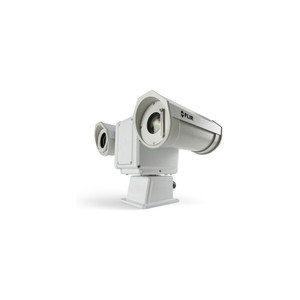
FLIR 427-2075-03-00S PT-608 AI PTZ Thermal Camera with 75mm Lens, 8.3Hz
When perimeter protection demands thermal detection beyond visible light capabilities, pan-tilt-zoom thermal cameras eliminate the vulnerabilities of conventional surveillance. The FLIR PT-608 delivers automated thermal monitoring with AI-enhanced detection across large areas where lighting conditions, camouflage, or environmental obscurants render standard cameras ineffective. The 75mm lens configuration provides extended detection ranges for critical infrastructure, industrial facilities, and remote site perimeters requiring early threat identification.
Key Features
- Thermal imaging eliminates dependence on ambient lighting and defeats visual camouflage
- PTZ functionality enables automated scanning patterns and operator-directed investigation
- 75mm lens delivers extended detection range for perimeter and area surveillance
- 8.3Hz refresh rate balances thermal detection performance with data bandwidth requirements
- AI-enhanced analytics reduce false alarms from environmental thermal signatures
- Thermal detection operates through smoke, dust, light fog, and complete darkness
- Integrates with VMS platforms supporting ONVIF and FLIR-specific protocols
- Pan-tilt positioning provides wide area coverage from a single mounting location
Thermal PTZ cameras address deployment scenarios where fixed thermal cameras lack sufficient coverage and visible-light cameras cannot detect threats. The PT-608's combination of thermal sensing and mechanical positioning automates large-area monitoring while maintaining the ability to investigate specific zones on demand. The 75mm lens extends useful detection range compared to shorter focal lengths, supporting applications where early detection distance directly impacts response effectiveness. The 8.3Hz frame rate provides functional thermal detection while managing network bandwidth in systems with multiple cameras or limited infrastructure.
AI processing within the camera reduces the false alarm rates that traditionally complicate thermal surveillance, distinguishing human and vehicle signatures from benign thermal sources like animals or environmental heat variations. This intelligence at the edge decreases the monitoring burden on security staff and improves the reliability of automated alert protocols. Integration follows standard IP camera workflows with VMS compatibility, though thermal-specific configuration for detection zones and temperature thresholds requires familiarity with thermal imaging deployment.