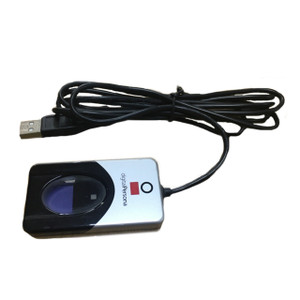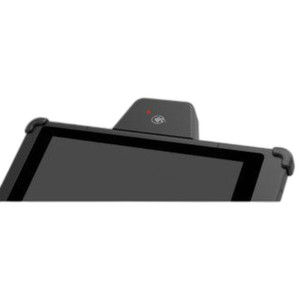
Product images are provided for reference and may not represent the exact model, configuration, or included components.

Overview

SKU: T3P-RFR202
Condition: New
Availability: Usually Ships in 2-3 Weeks
Write a Review 33% OFF

PioneerPOS Proximity RFID Reader Dual Band USB-A - T3P-RFR202

PioneerPOS T3P-RFR202 Dual Band Proximity RFID Reader USB The PioneerPOS T3P-RFR202 is a proximity RFID reader designed for retail POS terminals, hosp…

$439.84 $294.99 SAVE $145

Quantity:

Adding to cart… The item has been added
Compatibility guidance available for your deployment
Senior specialists for pre and post-sales support
Authorized sourcing and documentation support
Shipping and lead-time confirmation before install

Laura Bennett, IPSD Senior Specialist

Talk to Laura

200+ hrs training • U.S - based

Senior Specialist • 877-277-7147

PioneerPOS Proximity RFID Reader Dual Band USB-A - T3P-RFR202

$439.84
$294.99

Overview

SKU: T3P-RFR202
Condition: New
Availability: Usually Ships in 2-3 Weeks

No Bots, Just Experts

Questions about this product? Free pre-sales support from a senior specialist — product questions, compatibility checks, BOM quotes, price confirmation — typically answered within one business day. Need camera placement or system design work? Engineering time is $175 per hour (qty 1 = 1 hour). Hardware buyers get up to one hour ($175) credited back on their order.

Description

PioneerPOS T3P-RFR202 Dual Band Proximity RFID Reader USB

The PioneerPOS T3P-RFR202 is a proximity RFID reader designed for retail POS terminals, hospitality self-service kiosks, and access-control integration points. Dual-band operation (typically 125 kHz and 13.56 MHz) enables compatibility with both legacy proximity card stock and modern high-frequency NFC/MIFARE credentials in a single form factor. The USB-A interface integrates directly into existing POS systems, kiosk controllers, and PC-based access platforms without requiring external power supplies or serial adapters.

Key Features

  • Dual Band Operation: Reads both 125 kHz proximity cards and 13.56 MHz high-frequency RFID/NFC credentials. Eliminates credential bifurcation during system migrations.
  • USB-A Direct Connection: Plug-and-play integration into any PC or POS terminal with standard USB port. No external power module required.
  • Display-Edge Mount Design: Compact form factor affixes to the bezel or edge of a monitor or POS display for operator-convenient card presentation. Reduces cable clutter behind the counter.
  • Factory-New Genuine Product: Sourced direct from the manufacturer or US. Full US manufacturer warranty path — no grey-market risk.
  • POS & Access Control Ready: Compatible with standard credential data output (ASCII, magnetic-stripe emulation). Integrates with Verifone, NCR, Oracle MICROS, and other leading POS platforms.
  • Low Latency Card Detection: Sub-100ms read cycles support high-throughput retail checkout and access-control turnstile scenarios without operator wait.

Proximity RFID has matured into a standard credentialing protocol across retail, hospitality, and light-duty access control. The dual-band approach sidesteps the hardware refresh cycle: existing 125 kHz proximity badge stock continues to function alongside new 13.56 MHz NFC cards, allowing gradual inventory transition without fleet replacement. In a 500-terminal retail chain, that translates to staggered capex and zero operational disruption during a credential technology shift.

The display-edge mount is a practical advantage in space-constrained environments. Unlike pedestal or under-counter readers, the bezel-mounted form factor keeps the card slot within arm's reach and direct line of sight — reducing operator training overhead and misread rates. The USB power model eliminates the need for a dedicated 24V supply or powered hub, simplifying the infrastructure behind POS terminals where power budgets are already tight.

Integration with major POS platforms (Verifone VX and Engage series, NCR Aloha, Oracle MICROS) is straightforward: the reader emulates magnetic-stripe or configurable raw ASCII output, so POS logic doesn't require hardware-specific drivers. Access-control integrations with identity platforms like HID, Salto, and Genetec benefit from the 13.56 MHz band's encrypted credential support and anti-cloning properties, while the 125 kHz fallback maintains compatibility with legacy employee badge systems.

The PioneerPOS T3P-RFR202 is a retail and hospitality workhorse. Its operational fit depends on your credential inventory and upgrade timeline: if you have a mixed-credential environment (legacy proximity badges coexisting with NFC smartphones or MIFARE cards), this reader eliminates the cost and complexity of running separate hardware lanes. For new deployments starting with NFC-only credentials, a single-band 13.56 MHz reader may suffice and reduce SKU complexity. For questions on VMS integration or access-control compatibility, consult the PioneerPOS catalog.

Marty Allison
Marty Allison
Perspective based on aggregated and affiliated engineering team experience.

We've deployed the PioneerPOS T3P-RFR202 across retail and hospitality environments where credential diversity is the norm rather than the exception. The dual-band architecture solves a real problem: most retail chains don't retire their proximity badge fleet overnight. You end up with a 18–36 month window where employee badges, vendor credentials, and customer loyalty programs coexist across three or four different technologies. A single dual-band reader mounted on the edge of the POS display handles that complexity transparently. The operator scans a badge, the reader detects the frequency, and the POS logic receives the credential ID — no additional configuration or operator awareness required. That operational invisibility is worth the modest hardware premium versus single-band alternatives.

The USB-A connection is a practical win in tight spaces. Most POS terminals already have USB ports dedicated to printers, scales, and payment devices; adding a RFID reader doesn't require new power infrastructure or serial breakout boxes. In retrofit scenarios (upgrading a 200-terminal estate from magnetic-stripe to proximity), you avoid the capex and downtime of running dedicated power and control wiring to every POS station.

Technical Highlights:

  • Dual-Band Frequency Support (125 kHz / 13.56 MHz): 125 kHz (EM4100, HID Prox) supports legacy proximity card stock; 13.56 MHz (ISO14443A, MIFARE, NFC) enables modern smartphone-based and encrypted credentials. Critical for phased migrations where old and new credentials must coexist for 12–24 months.
  • USB Power Draw <500mA: Operates on standard USB-A port without supplementary power. No additional 24V supply, no powered hub required. Simplifies terminal architecture and reduces infrastructure cost-per-station.
  • Display-Edge Form Factor: Compact bezel mount keeps the card slot at operator eye level and within arm's reach. Reduces misreads caused by poor card positioning and speeds throughput in high-transaction environments (grocery checkout, quick-service restaurants).
  • Credential Data Output (ASCII/Magnetic-Stripe Emulation): Reader presents credential IDs in standard formats recognized by Verifone, NCR, Oracle MICROS, and generic USB keyboard drivers. No POS firmware modification required for integration.
  • Sub-100ms Read Latency: Fast enough for real-time transaction authorization and access-control turnstile scenarios. No operator wait between card scan and system response.

Deployment Considerations:

  • Dual-band operation adds complexity in credential administration: ensure your badge/card vendor can provision both 125 kHz and 13.56 MHz credentials in a single media stock, or you'll need to inventory and distribute two separate badge types. Coordinate with your access-control and badge-production teams before ordering.
  • USB port placement on the POS terminal matters. If the terminal's USB ports face the back panel, you'll need a right-angle USB adapter or an extension cable to reach the display bezel cleanly. Test the physical routing before committing to a fleet deployment.
  • The reader emulates magnetic-stripe or raw ASCII output depending on configuration. Verify that your POS platform or access-control controller recognizes the output format before go-live. Some legacy systems expect specific framing or delimiter characters — a quick protocol test on one terminal prevents fleet-wide integration failures.
  • 13.56 MHz signals are susceptible to interference from metal fixtures and RF noise (wireless payment terminals, microwave ovens in kitchens). In environments with high RF density, mount the reader as far as practical from other RF sources and test read range before installation.
  • The display-edge mount is reversible and can affix to left or right bezel depending on operator handedness and terminal layout. Pre-mount and test the angle before final installation — a poorly angled reader slows operator throughput and increases training time.

The PioneerPOS T3P-RFR202 is the right fit for retail chains, hospitality groups, and multi-location access-control deployments where credential heterogeneity is expected and uptime is critical. If you're running a pure single-technology environment (all NFC or all legacy proximity), a single-band reader reduces SKU count and cost. For mixed-credential operations, this reader eliminates the operational friction and hardware complexity of running parallel reader lanes. Explore the full PioneerPOS catalog for additional form factors and integration options.

Specifications
Brand: PioneerPOS
MPN: T3P-RFR202
Type: Monitor
Connectivity: USB
Q&A
Reviews
Have Questions?

RELATED PRODUCTS

Image coming soon
Add to Cart The item has been added

PioneerPOS

SKU: Q12-T3P-RFR200

PioneerPOS RFID Reader 125kHz & 13.56MHz USB-A - Q12-T3P-RFR200

  • Reads both 125kHz (EM4100/4200) and 13.56MHz (Mifare, ISO 14443A/B, NFC) from one unit.
  • USB-A plug-and-play connection requires no external power supply or serial adapter.
  • Supports mixed-credential facilities, eliminating duplicate hardware during card migrations.
$402.08 $269.99 Save $132.09
The item has been added
Free shipping over $499
$402.08 $269.99 Save $132.09
Add to cart Add to quote
PioneerPOS Proximity/RFID(HID) reader USB
Add to Cart The item has been added

PioneerPOS

SKU: 49-RFID-6081AKU-A

PioneerPOS Proximity/RFID(HID) reader USB - 49-RFID-6081AKU-A

  • USB HID connectivity enables drop-in replacement without custom drivers or middleware.
  • IP68-rated enclosure withstands continuous water immersion for harsh environment installs.
  • Included mounting bracket supports wall or panel deployment straight out of the box.
$486.72 $326.99 Save $159.73
The item has been added
Free shipping over $499
$486.72 $326.99 Save $159.73
Add to cart Add to quote
PioneerPOS RFID Reader USB Dual Band
Add to Cart The item has been added

PioneerPOS

SKU: 49B-B1-RF001

PioneerPOS RFID Reader USB Dual Band - 49B-B1-RF001

  • Dual-band RFID handles mixed legacy and modern tag standards in one unit.
  • USB interface enables plug-and-play integration with any POS terminal or workstation.
  • No external power supply or controller board required, reducing deployment complexity.
$512.34 $343.99 Save $168.35
The item has been added
Free shipping over $499
$512.34 $343.99 Save $168.35
Add to cart Add to quote
Image coming soon
Add to Cart The item has been added

PioneerPOS

SKU: Q12-T3P-BIO100

PioneerPOS T3P Fingerprint Reader URU USB-A - Q12-T3P-BIO100

  • URU platform enables native SDK integration with existing identity and access control systems.
  • Bus-powered USB-A connection eliminates separate power supplies, simplifying clinical deployments.
  • Real-time scan-to-match cycles support high-throughput verification at registration and med points.
$250.00 $167.99 Save $82.01
The item has been added
Free shipping over $499
$250.00 $167.99 Save $82.01
Add to cart Add to quote

System Design, Deployment & Technical Support

Support services and planning resources for commercial surveillance, access control, and infrastructure deployments.

Fixed scope • Fixed price

System Design Assistance

  • Get help validating product compatibility
  • Coverage requirements
  • Storage planning and deployment architecture before you buy.
Request Design Help

Deployment & Configuration Support

  • Access fixed-scope support for rollout planning
  • User setup guidance
  • Migration and system standardization across single-site or multi-site deployments
View Support Services

Guides, Tools & Calculators

  • PoE requirements
  • Storage retention
  • Camera selection and deployment methodology
Open Technical Resources