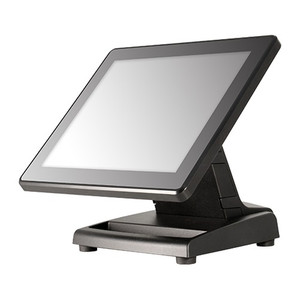
Posiflex PD310AUH010 20x2 VFD USB Customer Display
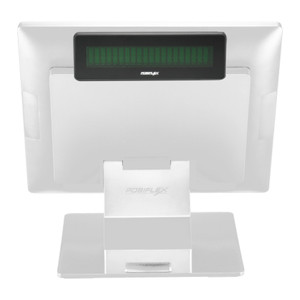
The Posiflex PD310AUH010 is a 20-character by 2-line vacuum fluorescent display engineered for retail checkout counters, quick-service restaurants, and hospitality point-of-sale environments. USB connectivity eliminates the need for a separate power supply or serial adapter, drawing all power directly from the host terminal. VFD technology delivers luminous, high-contrast character output that cuts through fluorescent overhead lighting and direct sunlight — a decisive advantage over LCD alternatives in high-glare checkout areas. This display is suited for integrators building compact POS stations where real estate is limited and simplicity of installation is valued over networked display orchestration.
Key Features
- 20x2 Character VFD Display: Bright vacuum fluorescent technology with high contrast and wide viewing angle. Readable in direct sunlight and under fluorescent lighting without backlight degradation.
- USB Connectivity: Standard USB Type-B connection. No external power supply required — draws 5V from the host POS terminal.
- Compact Tabletop Form Factor: Desk-mounted or counter-edge configuration. Includes mounting bracket for angled customer-facing orientation (15–30 degrees optimal).
- Windows POS Compatibility: Works with Posiflex KS-series terminals and generic Windows retail software supporting USB character-mode display drivers.
- Durable VFD Tube: No LCD backlight maintenance; VFD tubes operate reliably in food-service splash zones and high-traffic environments without pixel fading.
- Simple Installation: Plug-and-play USB interface. Mounting bracket included; no additional cabling or serial configuration required.
Deployment Context
The PD310AUH010 fits quick-service restaurants, convenience stores, and casual-dining operations where a compact, legible customer-facing display is required at the checkout point. The lack of a network connection or Ethernet interface means this unit is best paired with standalone or locally networked POS terminals rather than cloud-dependent, multi-terminal POS architectures. Its power-from-USB design is particularly valuable in retrofit installations where adding a dedicated 12V power supply or serial line would complicate wiring runs behind or under the counter.
VFD character display is inherently limited to text output — promotional graphics, barcodes, or dynamic imagery require an LCD or networked display solution. If your use case calls for menu boards, video playback, or synchronized promotional content across multiple terminals, this display is not the right fit. The 20x2 character grid accommodates transaction totals, item names (truncated), promotional messages (e.g., "Thank you. Card accepted."), and payment method prompts. Typical display cycles are 5-10 fields of 16-20 characters each, rotated by the POS application logic.
USB power draw is minimal — typically 3-5 watts at full brightness — and poses no strain on standard 5V USB ports. However, in high-noise industrial environments (warehouse POS terminals, manufacturing shop floors) where USB cable integrity is at risk, cable protection sleeves and ferrite chokes are recommended to avoid noise-induced display glitches. In food-service settings, grease and salt spray can accumulate on the connector; periodic cleaning with isopropyl alcohol and a connector cover protect against corrosion.
Compatibility & Integration
The PD310AUH010 requires Windows-based POS software or middleware that exports text strings to a generic USB HID (Human Interface Device) or serial emulation device. Posiflex KS-series terminals ship with native driver support; third-party retail platforms (NCR, Ingenico, Toast, Square) typically require a custom integration layer or third-party driver to recognize the display. Before purchasing, confirm your POS software vendor supports external USB display peripherals or provides a VFD driver package. Legacy systems using serial-only communication will require a USB-to-serial adapter (not included) and a software bridge.
Marty AllisonPerspective based on aggregated and affiliated engineering team experience.
We've deployed dozens of these Posiflex VFD displays across QSR chains and convenience-store retrofit projects, and they remain reliable workhorses in high-glare environments where standard LCD displays simply wash out under direct sunlight. The vacuum fluorescent tube technology is genuinely unmatched for contrast and readability at checkout points — there's no backlight to age, no color shift, and no response-time lag that plagues LCD alternatives in food-service applications. What differentiates the PD310AUH010 is its simplicity: USB-only connectivity eliminates the need for 12V power distribution, serial-to-USB bridges, or proprietary mounting solutions. On a 50-terminal retrofit in a high-traffic location, that translates to real cost savings and faster deployment. The trade-off is clear, though — if your integrator or end-user wants networked display orchestration, synchronized promotional content, or the flexibility to pivot to video-based customer engagement down the road, this is not the display for you. VFD is inherently text-only. The character grid is fixed at 20x2, so long product names, transaction details, or multi-line promotional messages require intelligent truncation or cycling logic in the POS application. We've seen integrators underestimate this constraint and ship configurations that display garbled or cut-off text; verify your POS software's text-wrapping and field-length handling before go-live.
Technical Highlights:
- VFD Tube Technology: Vacuum fluorescent displays do not rely on LCD backlight technology and maintain consistent brightness and contrast under all ambient lighting conditions. Fluorescent tube lifetime is 30,000+ operating hours — significantly longer than LCD backlight life — with no risk of dead pixels or color shift over time.
- USB Power Delivery: The device draws <5W at full brightness from a standard USB 5V port. No separate power supply, no wall outlet requirement. Simplifies installation in constrained counter-mount scenarios and reduces power distribution complexity in multi-terminal deployments.
- 20x2 Character Grid: Each line holds up to 20 ASCII characters. Typical transaction displays cycle through 5-8 screens (total, payment method, promotional message, receipt prompt, thank-you screen). Plan for text truncation or line-feed logic if your POS data exceeds 20 characters per line.
- Wide Viewing Angle: VFD tubes inherently support wide vertical and horizontal viewing angles (typically 140+ degrees). Unlike LCD, no need to orient the display for seated-vs.-standing customer height — legibility is consistent across the checkout zone.
Deployment Considerations:
- Verify your POS software supports generic USB display drivers or includes a native Posiflex VFD driver. If your system is serial-only, budget for a USB-to-serial adapter and custom middleware development (typically 20-40 engineering hours for first implementation).
- Mount the display at 15–30 degrees toward the customer to minimize reflections and optimize legibility. Counter-edge or angled stand mounting is standard; verify physical clearance for the cable connector on the rear of the unit before finalizing the installation footprint.
- In food-service environments, protect the USB cable with adhesive-lined sleeves or corrugated routing conduit. Grease, salt spray, and spill exposure can degrade exposed connectors; a dust cap for the connector when the terminal is not in use is a low-cost preventive measure.
- The display outputs text only — no graphics, barcodes, or dynamic imagery. If promotional content or customer-facing video is required later, this display cannot be repurposed; plan for replacement with an IP-networked LCD solution if future scalability is a concern.
- USB cable length is typically 6-10 feet (verify with Posiflex on the specific SKU). Longer runs may require an active USB hub or extension cable; passive extensions over 15 feet risk power-delivery dropout or signal degradation.
The PD310AUH010 is the right choice for single-terminal or tightly networked POS stations in retail and hospitality where glare-resistant, maintenance-free character display is the priority and capital budget is lean. For chain deployments requiring synchronized multi-display orchestration or future migration to video/networked content, scope a dedicated networked display platform instead. See our Posiflex catalog for networked and all-in-one POS alternatives.