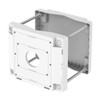
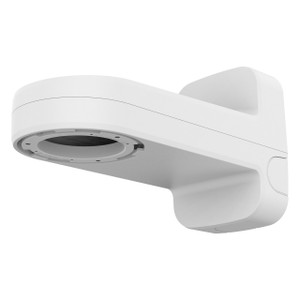
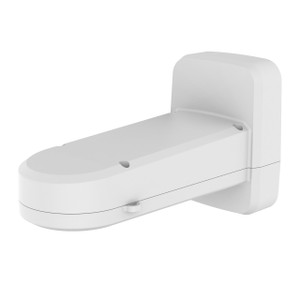
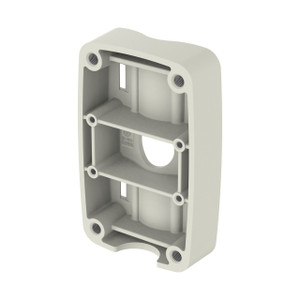
Hanwha SBP-150PMW Pole Mount Bracket for Outdoor Cabinet
Overview
The Hanwha SBP-150PMW is a pole-mounting bracket engineered to secure outdoor surveillance cabinets on utility poles and similar infrastructure. It is designed as a dedicated accessory for the SBP-150NBW cabinet but also supports TNO-A26081 devices where pole mounting is required. This bracket carries the structural and environmental demands of outdoor installations—where centralized, cabinet-based recording and network consolidation replace distributed camera-level power supplies and cabling.
Key Features
- 40 kg load capacity: Sufficient to support a full SBP-150NBW cabinet with integrated network video recorder, switch, and power equipment without deflection over the product lifecycle. Verify the pole's own load rating independently—the bracket itself is rated for 40 kg, but the underlying structure must carry that load reliably.
- Aluminum construction with RAL 9003 white finish: Resists UV degradation, salt spray, and corrosion in harsh outdoor environments. The white finish reduces thermal absorption in direct sunlight, extending hardware lifespan and minimizing cabinet temperature rise during peak operational hours—a real factor in remote sites where cooling capacity is limited.
- Flexible pole accommodation (ø80–200 mm vice grip; ø200 mm+ steel strap): Adapts to standard utility poles and non-standard infrastructure without custom fabrication. The integral vice grip handles poles up to 8 inches in diameter; larger poles require a separate steel strap fastening system sourced and sized on-site. This dual fastening approach reduces installation lead time and avoids inventory complexity across varying site geometries.
- M12 and TR30 mount screw compatibility: Ensures compatibility with a range of cabinet mounting systems and third-party surveillance equipment. TR30 is the standard security industry thread for cabinet mounting, so migration between cabinet vendors is straightforward without re-drilling or adapter plates.
- 19.1 mm (3/4 inch) and M25 conduit holes: Supports standard electrical conduit sizes for power and network cabling in North American and European installations. Direct conduit integration prevents water pooling at cable entry points and reduces the need for additional cable trays or external routing hardware—a significant labor and cost saving on retrofit projects where existing site power and network infrastructure can be reused.
- Compact footprint (310 × 260 × 49 mm, 3.2 kg): Minimal wind load profile and low storage weight make single-technician installation practical on remote sites. Reduces structural demand on poles compared to larger, deeper brackets—meaningful when working with aging utility poles or non-dedicated surveillance infrastructure.
Integration & Compatibility
The SBP-150PMW integrates directly with the SBP-150NBW cabinet, which houses an integrated NVR, Ethernet switch, and power conditioning. Conduit hole sizing is standard across North American and European electrical codes, so existing site power and network backhaul can often be reused without adapter hardware. This reduces commissioning time and cost on retrofit projects where the pole structure already carries utility power or dark fiber.
When specifying pole-mounted surveillance systems, confirm pole material (wood, concrete, or steel) and structural load rating with site engineering. The bracket itself is rated for 40 kg, but pole capacity must be verified independently—a common oversight that results in installation delays or safety failures.
Deployment Context
This bracket is suited for utility infrastructure monitoring, remote site deployments, and edge surveillance where a centralized cabinet-based recorder is preferable to distributed camera power supplies and cabling. Common scenarios include perimeter monitoring of warehouse compounds, pipeline monitoring stations, remote toll-collection sites, and telecom tower base monitoring—anywhere power and network backbone are already pole-mounted. If your deployment involves multiple cabinets on a single pole, verify pole load rating and coordinate bracket placement to avoid cable pinch points or interference with existing utility equipment.
Frequently Asked Questions
Q: What is the maximum pole diameter the SBP-150PMW can accommodate?
A: Up to ø200 mm (approximately 8 inches) using the integral vice grip. Larger poles (ø200 mm and above) require a separate steel strap fastening system, which must be sourced and sized on-site based on actual pole diameter.
Q: Can the SBP-150PMW be used with cabinets other than the SBP-150NBW?
A: The bracket is designed for the SBP-150NBW, but M12 and TR30 mount compatibility means it can support other cabinets or devices with matching screw threads. Verify cabinet weight does not exceed 40 kg, and confirm that the mounting footprint aligns with the bracket's screw hole pattern.
Q: What pole materials does the SBP-150PMW support?
A: Wood, concrete, and steel poles are all viable. The vice grip and steel strap methods work across these materials, but you must verify the pole's structural capacity and any local utility or building codes that govern pole-mounted equipment. Some regions require engineering certification for pole-mounted installations.
Q: Are conduit adapters included, or do I need to source them separately?
A: The bracket provides standard 19.1 mm (3/4 inch) and M25 conduit holes. If your site power or network cabling uses different conduit sizes, you will need appropriate reducers or adapters sourced locally—these are typically inexpensive and readily available from electrical supply vendors.
Q: Does the SBP-150PMW come with fastening hardware for poles larger than ø200 mm?
A: No. Poles larger than ø200 mm require a separate steel strap fastening system. The specific strap size and fastening method depend on the pole's actual diameter and material. Consult the site engineer or utility infrastructure owner for guidance on strap selection and installation.
James EverettPerspective based on aggregated IP Security Depot and affiliated engineering team experience.
The SBP-150PMW is straightforward hardware—no surprises, which is exactly what you want in a pole-mount bracket. At 40 kg capacity, it's correctly sized for a SBP-150NBW cabinet loaded with an NVR, switch, and UPS. The aluminum and white RAL 9003 finish will hold up in coastal or high-UV environments. The real decision point is pole diameter and availability of the steel strap for larger poles.
Technical Highlights:
- 40 kg static load rating: Matches the weight of a populated SBP-150NBW without deflection. If you're mounting multiple cabinets or adding external cooling, the pole itself becomes the limiting factor—not the bracket.
- Dual fastening methods (vice grip + steel strap): ø80–200 mm poles use the integral vice grip; anything larger requires a separately sourced strap. This avoids a single point of failure but means you need to source the strap on-site for non-standard poles.
- Standard conduit holes (19.1 mm and M25): North American and European electrical codes align here. Existing site cabling infrastructure can often be reused without adapter hardware—a real win on retrofit projects where the pole is already carrying power or dark fiber.
Deployment Considerations:
- Pole structural capacity is NOT the bracket's problem—it's yours. Always verify the pole's load rating before installation. Wood poles rot from the inside; concrete poles can spall; steel poles can rust if not painted. Get the site engineer involved.
- The white finish helps with thermal management in direct sunlight, but cabinet ventilation still matters. Verify cabinet cooling capacity for your ambient temperature range, especially in enclosed or shaded installations where wind cooling is limited.
- Conduit entry points are standard electrical sizes, but your power cabling gauge and network backbone bandwidth must match your NVR and camera load. A 40 kg bracket won't help if your power supply is undersized or your network backhaul is saturated.
Best suited for utility infrastructure monitoring and remote single-site deployments where a centralized cabinet recorder reduces cabling complexity and avoids camera-level PoE budget constraints. Skip this if you're building a large multi-site network—distributed edge recording or cloud ingestion will be more cost-effective than pole-mounted cabinets at every location.