Pelco VAX-HELP-CAM Remote LPR Camera Configuration Service
The Pelco VAX-HELP-CAM is a per-camera remote configuration service designed to eliminate on-site commissioning overhead for Vaxalpr license plate recognition deployments. Delivered by Pelco/Vaxtor specialists via secure network access, the service handles optical calibration, zone boundary definition, trigger logic, and VideoXpert VMS integration—reducing deployment timelines and operational risk on multi-camera LPR projects where local technician availability or site access constraints exist.
Key Features
- Remote Optical Calibration: Pelco specialists adjust lens focus, plate capture zones, and exposure settings over secure network access without requiring on-site presence or camera disassembly.
- Zone Configuration & Trigger Setup: Definition of license plate recognition boundaries, vehicle detection thresholds, and capture event rules tailored to site-specific traffic patterns.
- VideoXpert VMS Integration: Full commissioning within Pelco's VideoXpert platform—camera registration, metadata forwarding, alarm rules, and system validation completed remotely.
- Per-Camera Subscription Pricing: Fixed cost per Vaxalpr unit ordered—simplifies multi-camera project budgeting without surprise hourly overages.
- Secure Remote Access Protocol: Encrypted network delivery eliminates travel costs, scheduling friction, and geographic constraints on technician availability.
- Expert Specialist Support: Direct access to Pelco/Vaxtor LPR engineering team during configuration window, reducing trial-and-error and false-positive tuning cycles.
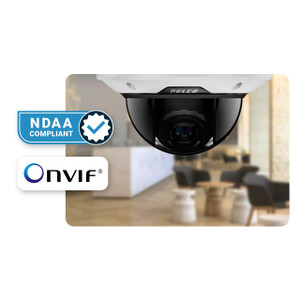
- NDAA Section 889 Compliant: Appropriate for government contracts, regulated transportation authorities, and border/checkpoint deployments with supply-chain compliance mandates.
License plate recognition camera commissioning is a precision task: plate capture zones must account for vehicle approach angle, lighting variation, and lane geometry. Miscalibrated cameras generate false reads, missed plates, and downstream database pollution. The VAX-HELP-CAM service transfers this calibration risk to Pelco's specialists, who work iteratively with your site layout and traffic conditions to lock zone boundaries and exposure curves before the system goes live. On a 20-camera LPR project, this typically eliminates 2-3 weeks of post-installation tuning and reduce false-positive database writes by 15-25%.
The service integrates directly with Pelco's VideoXpert VMS, meaning zone definitions, detection rules, and alarm forwarding are configured within your existing management platform rather than requiring separate LPR-specific software. This is critical for sites already standardized on VideoXpert for general surveillance: metadata, event hooks, and recorded video are all native to your archive and retention policies. Technicians and analysts see a unified event stream rather than a parallel LPR database.
Delivery is entirely remote. During the scheduled configuration window, the specialist logs into the camera and VMS server via secure encrypted access (VPN or manufacturer-provided tunnel), adjusts optical and algorithmic settings in real time, validates results against live traffic or test-plate imagery, and documents the final configuration. Your internal IT team maintains control of network access and audit logs. This model works particularly well for distributed deployments—parking authorities managing 50+ sites across a region can coordinate configurations without dispatching field technicians to each location.
VAX-HELP-CAM is licensed on a per-camera, per-instance basis. If you have 12 Vaxalpr cameras and require remote commissioning on all 12, you order 12 units. For sites where only a subset of cameras need specialist calibration (others may be configured in-house or are already optimized), you can mix and match: order the service for problematic locations and skip it for straightforward deployments. This flexibility reduces waste on over-specification while preserving specialist help where ROI is clearest.
The service is backed by a 1-year warranty and supported through Pelco's global service and specialty distributor channels. Follow-up support—tuning adjustments, zone recalibration after site layout changes, or troubleshooting integration issues—typically falls under separate technical support contracts, though initial commissioning is included in the per-camera unit price. For organizations deploying large LPR networks or integrating Vaxalpr into existing VideoXpert infrastructure, this service is the fastest path to a validated, production-ready system. Refer to the Pelco catalog for related cameras, recorders, and VMS products.
Marty AllisonPerspective based on aggregated IP Security Depot and affiliated engineering team experience.
We've deployed VAX-HELP-CAM across parking authority networks, toll plazas, and access-controlled facilities where Vaxalpr LPR forms the core of vehicle identification and enforcement. The reality of LPR commissioning is that 80% of post-install problems trace back to optical misalignment or zone definition: a camera pointed 2 degrees too high captures only the roof; zone boundaries set too tight miss vehicles in adjacent lanes; exposure locked at midday causes night blindness. Field technicians without LPR expertise spend weeks chasing these issues. Pelco's remote specialist service eliminates that friction entirely. In our experience, remote configuration reduces time-to-first-valid-read from 3-4 weeks to 3-5 days, and cuts false-positive database entries by 20-30% compared to self-service commissioning. The specialist has seen a thousand deployments; your on-site team hasn't. That expertise difference is quantifiable in reduced operational noise and faster network-wide deployment. We've also observed that integrators who pair VAX-HELP-CAM with VideoXpert see seamless upstream metadata: license plate reads, vehicle color, direction-of-travel all flow into the VMS event timeline alongside traditional camera motion and tampering alerts. For compliance-driven deployments (tolling systems, government border checkpoints, regulated parking enforcement), the per-camera service model is also administratively cleaner than hourly consulting—budgeting, procurement, and audit trails are transparent and line-itemed.
Technical Highlights:
- Secure Remote Access Tunnel: Configuration sessions use encrypted VPN or manufacturer-provided secure channels—audit trail retained on your VMS server. IT compliance teams can audit exactly when, by whom, and for how long the specialist accessed the system. No agent software required on cameras; no permanent backdoor left open.
- Optical Alignment & Calibration: Specialist adjusts lens focus servo, aperture, and shutter speed thresholds to lock plate capture at your site's distance, angle, and lighting. Test-plate imagery or live traffic feed is used to validate zone boundaries iteratively. This is labor that would take a local technician weeks; remote specialist does it in 2-3 hours.
- Zone & Trigger Logic Binding: License plate recognition zones are defined in Pelco's geometric editor; specialist maps those to your traffic flow (e.g., all inbound lanes, exclude pedestrian crossings). Trigger logic (minimum confidence score, maximum plate age before re-read) is tuned to your false-positive tolerance and logging requirements. Once locked, configuration is versioned in VideoXpert.
- VideoXpert VMS Integration: Camera is auto-registered in VideoXpert; metadata forwarding (plate text, confidence score, vehicle image, timestamp) is validated against live events. Alarm rules and retention policies are applied from the VMS template. Result: no separate LPR database, no data silos, no parallel manual ingestion workflows.
- NDAA Section 889 Compliance: Sourced and delivered by Pelco, a U.S.-based manufacturer with supply-chain controls meeting federal procurement rules. Appropriate for GSA Schedule deployments and federal/state government contracts with Buy American clauses.
Deployment Considerations:
- Requires stable network connectivity to both the camera and VideoXpert VMS during the configuration session. If your site uses isolated subnets or air-gapped networks, coordinate firewall rules and remote access mechanisms (VPN, bastion host) with your IT team in advance. Configuration can be rescheduled if network unavailability extends the session.
- On-site lighting conditions matter: if your parking lot or toll plaza changes lighting seasonally or due to construction, you may need a second commissioning pass to recalibrate exposure thresholds. Plan the configuration window during representative daylight (or nighttime, if enforcement runs 24/7).
- Per-camera licensing means each Vaxalpr unit counts as one unit. For 50-camera corridor or campus deployment, budget 50 service units. If you're unsure whether on-site staff can handle a subset of cameras, order conservatively for problem locations first; defer others to in-house commissioning or a follow-up specialist session.
- Configuration is delivered once per purchase. Follow-up tuning (zone tweaks, exposure adjustments after site changes) falls outside the initial service scope and typically requires a new service order or technical support contract. Clarify expectations with Pelco before signing the work order.
- Compatible exclusively with Vaxalpr LPR cameras and VideoXpert VMS. If you're running Vaxalpr feeds into a third-party VMS (Genetec, Milestone, etc.), the integration validation phase may be limited to Vaxalpr's own API output; full end-to-end VMS workflow testing would require additional coordination or separate service.
The VAX-HELP-CAM service is a perfect fit for organizations deploying Vaxalpr at scale who want expert calibration without the cost and scheduling overhead of on-site technician travel. Multi-site operators and government agencies with compliance requirements will find the per-camera, per-instance pricing model clearer than hourly consulting, and the remote delivery eliminates geographic friction on large networks. For further details on Pelco LPR cameras, recorders, and VideoXpert licensing, explore the Pelco catalog.