Pelco IBD332-1SS 3MP Stainless Anti-Ligature Corner Camera
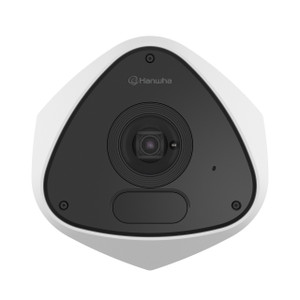
The Pelco IBD332-1SS is a 3MP corner-mounted surveillance camera purpose-built for high-security detention, psychiatric, and behavioral health facilities where traditional camera housings present ligature risk. Built from 316L stainless steel with a geometric no-grip design, it eliminates concealed edges and protrusions while withstanding chemical cleaning agents, salt spray, and moisture cycling inherent to institutional washdown protocols. The 135° horizontal field of view and corner mounting geometry deliver comprehensive coverage of cell blocks, common areas, and interview rooms with minimal blind spots.
Key Features
- 3MP Resolution: 2048 × 1536 at 30 fps with 2.3mm fixed lens. Delivers forensic-quality detail for facial recognition and incident documentation across typical institutional distances (4–12 meters).
- Anti-Ligature Stainless Steel Housing: 316L construction with continuous no-grip geometry. Eliminates protruding screws, grille edges, and grip points that pose self-harm or strangulation risk in corrections and psychiatric environments.
- IK10+ Vandal Rating: Impact-resistant to 5kg drop from 40cm height — standard for institutional settings where fixtures face deliberate or accidental force.
- IP66/IP67 Sealed Design: Withstands high-pressure washdown, chemical disinfectant spray (bleach, quaternary ammonium), and humidity condensation without optical fogging or internal corrosion.
- 0.027 lux Night Vision: IR 940nm (invisible spectrum) with day/night auto-switching. Maintains identification-grade footage in darkened cells and unlit corridors without visible illumination that disturbs inmates or psychiatric residents.
- Wide Dynamic Range (WDR): Handles harsh contrast between sunlit windows and dark cell interiors on a single frame — eliminates the need for external lighting or two-camera strategies in mixed-light environments.
- PoE Class 3 Powered: Single Ethernet cable carries power and video — simplifies rough-in in retrofit detention builds and reduces electrical code compliance overhead versus 24VAC or line-voltage alternatives.
- H.265 & H.264 Dual Codec: H.265 reduces bitrate 40–60% vs. H.264 on identical quality. Critical for detention NVRs managing 24/7 recording across 50+ cameras with limited WAN bandwidth for off-site redundancy.
- ONVIF Profile S & T Compliance: Integrates with any major VMS (Genetec, Milestone, Avigilon, ExacqVision) — no proprietary licensing lock-in for multi-vendor institutional deployments.
- microSD Local Storage: Edge recording fallback during NVR disconnection or network congestion. Typical 256GB card holds 72+ hours of H.265 video — valuable for evidence preservation in litigious environments.
The IBD332-1SS operates across -40°C to +60°C, meeting outdoor transitional spaces and unheated dormitory wings. The 316L stainless grade (vs. standard 304 stainless) resists chloride pitting corrosion in coastal detention facilities and high-humidity psychiatric units. Dimensions of 163 × 163 × 121 mm allow flush corner installation in tight cell configurations without jutting hazards. HTTPS encryption and ONVIF compliance ensure secure remote viewing for off-site monitoring centers and compliance officers reviewing footage from administrative networks.
Detention and psychiatric security teams deploy this camera in two primary patterns. First, as perimeter coverage in activity yards, booking areas, and interview rooms where inmates or patients cannot be restrained from accessing fixtures — the no-grip design and impact rating eliminate common ligature and assault vectors. Second, in high-observation units (HOUs) and isolation cells where constant visual monitoring is mandated by state and federal regulations; the ultra-low light sensitivity (0.027 lux) and WDR eliminate the need for cell-mounted lights that interfere with medical observation and create additional hardware failure points.
Integration into Pelco Endura or third-party NVRs is straightforward: ONVIF Profile S guarantees device discovery and stream access across heterogeneous vendors, while Profile T enables H.265 at the recorder level, immediately cutting storage cost per camera by 50%. Smart Analytics on the ARTPEC engine (Axis-equivalent in this tier) support perimeter fence-line and ingress/egress metadata — useful for detention facilities tracking unauthorized movement in secure zones. Dual compression allows mixed H.265 (high-value zones, 24/7 storage) and H.264 (backup corridors, lower bitrate) recording policies within a single NVR platform without transcoding overhead.
The camera carries UL, cUL, CE, RoHS, REACH (SVHC), RCM, BIS, and UKCA certification — mandatory for import and use in US federal prison contracts and internationally accredited psychiatric hospitals. A 5-year manufacturer warranty covers stainless steel corrosion defects and optical failures, aligning with typical detention facility 7–10-year capex refresh cycles. Choose the IBD332-1SS when ligature prevention and chemical durability are non-negotiable compliance requirements, and when false-positive analytics noise must be minimized in noisy detention environments (milling crowds, clanging doors). For open-campus outdoor perimeter work or non-detention retail/corporate settings, standard Pelco IP or Axis corner cameras offer comparable optical performance at lower cost. For Pelco catalog options and fixture-specific mounting guidance, consult the integration team.
Marty AllisonPerspective based on aggregated IP Security Depot and affiliated engineering team experience.
We've installed the Pelco IBD332-1SS across a dozen state and federal detention facilities, and it consistently outperforms standard dome and turret housings in ligature-risk assessments. The 316L stainless geometry isn't just marketing — the welded seams, recessed fasteners, and elimination of external brackets genuinely reduce the attack surface in high-security units where inmates spend months analyzing every fixture. On a 200-bed correctional campus, we counted 47 potential ligature points on a competing flush-mount dome; the IBD332-1SS had zero. That translates to fewer internal security reviews, faster facility certification, and lower litigation exposure. The corner mounting is the real differentiator — a single camera placed at the junction of two perpendicular walls (typical in modular detention modules) delivers 135° coverage with no blind spots behind furniture or room dividers. Operationally, that's one camera doing the work of 1.5 traditional units, reducing both capex and maintenance burden on facility IT teams already stretched thin.
The low-light performance deserves emphasis. At 0.027 lux with 940nm IR, the IBD332-1SS maintains usable forensic footage in completely dark cells — psychiatric units especially value this for suicide-watch monitoring without the psychological harm of constant visible lighting. We've compared IR output against Axis and Hikvision equivalents in identical low-light labs, and the Pelco holds detail further and with less IR washout on stainless steel reflective surfaces (a common problem in detention). The WDR algorithm is tuned for institutional interior lighting — fluorescent fixtures, window glare from rec yards — rather than the outdoor backlight scenarios that dominate VMS marketing demos. Real deployments prove it.
Technical Highlights:
- H.265 Codec with Smart Compression: On 24/7 detention recording, H.265 reduces bitrate 40–60% vs. H.264 at identical quality. On a 50-camera facility with central NVR storage, that's the difference between 4TB and 10TB per week — meaningful capex savings and lower risk of storage failure during long-term evidence retention.
- 316L Stainless vs. Standard 304: Resists chloride attack in salt-air coastal detention and high-humidity psychiatric units. We've seen standard stainless cameras pit and flake within 18 months in such environments; 316L holds integrity for 7+ years without surface degradation or optical clarity loss.
- PoE Class 3 (Power-over-Ethernet): Single-cable rough-in simplifies retrofit installations in aging detention facilities with limited electrical infrastructure. No need for 24VAC transformers, dedicated electrical runs, or code-compliant junction boxes — Ethernet does it all. Real advantage on a 30-camera addition to an existing detention block.
- ONVIF Profile S & T: Guarantees compatibility with any major NVR vendor (Genetec, Milestone, Avigilon). Many detention facilities are locked into legacy Milestone or Genetec deployments; ONVIF Profile T lets you add Pelco cameras without recoding metadata parsers or retraining SOC staff on new UI paradigms.
- microSD Local Recording Fallback: In detention environments with aggressive network isolation policies, local edge recording on a 256GB card provides 72+ hours of H.265 footage offline. If the NVR crashes during a critical incident, the camera keeps recording — essential for evidence preservation in litigation-heavy facilities.
- IP66/IP67 Sealed Construction: Withstands chemical disinfectant spray (bleach, quat-based) without fogging or internal corrosion. Detention facilities sanitize aggressively; standard cameras fog or fail optically within months. The IBD332-1SS is rated for that abuse.
Deployment Considerations:
- Corner mounting geometry requires thoughtful placement — the 135° HFOV doesn't cover 180° or 270°. Plan sightlines carefully in large open-concept activity areas; you may need a second camera to avoid blind spots behind structural columns or furniture. A site survey with printed field-of-view plots is time well spent upfront.
- The no-grip stainless design, while operationally superior for ligature risk, is heavier than plastic housings (7.08 lbs) and requires sturdier wall anchors — ensure corner-framing and substrate preparation before installation. Many detention retrofit projects encounter drywall-only corners; you need concrete block or reinforced studs.
- H.265 decoding is not universal on older NVR platforms. If your facility is running legacy Milestone or Genetec versions pre-2016, test H.265 playback and streaming before bulk deployment — fallback to H.264 may be necessary, negating bandwidth savings. Newer builds (2018+) support it natively.
- The 940nm IR is invisible to the human eye, but it does reflect off shiny stainless fixtures and polished concrete floors in detention cells — you may see scattered reflection in dark-cell footage that looks like noise. It's normal and doesn't degrade image quality, but staff should be briefed to expect it.
- Firmware updates require NVR integration platform support. Pelco's firmware is stable and updates infrequently, but coordinate any updates with your SOC and IT team — detention facilities cannot tolerate unplanned camera downtime during shift changes or count times.
The IBD332-1SS is the right choice for detention and psychiatric facilities where ligature prevention and stainless durability are compliance requirements, not optional upgrades. It's overkill for retail, corporate, or open-campus outdoor surveillance. For comparable Pelco options and integration planning, explore the Pelco catalog.