
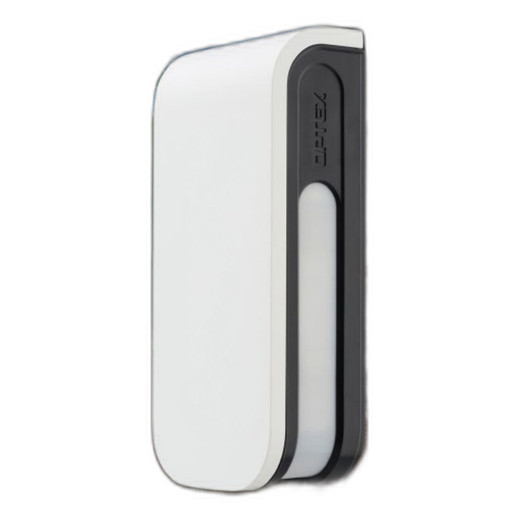



Product images are provided for reference and may not represent the exact model, configuration, or included
components.
Overview
SKU:
BXS-AM(W)
Condition:
New
Availability:
Usually ships in 24 hours
Warranty
Manufacturer Warranty
Optex BXS-AM (W)
Optex BXS-AM(W) Security DeviceThe Optex BXS-AM(W) is a dedicated security device engineered for integration into comprehensive perimeter and area pro…

Optex BXS-AM (W)
$247.00
$200.99
Your recommended setup
Review items below — quantities update pricing automatically.
Item
Qty
Status
Price
Optional Add-Ons recommended
Services optional
Bundle Summary
Bundle Subtotal:
$0.00
Optional Add-Ons:
$0.00
Services:
$0.00
Total:
$0.00
Overview
SKU:
BXS-AM(W)
Condition:
New
Availability:
Usually ships in 24 hours
Warranty
Manufacturer Warranty
Description

Optex BXS-AM(W) Security Device
The Optex BXS-AM(W) is a dedicated security device engineered for integration into comprehensive perimeter and area protection systems. Operating with a 31 mA current draw, the BXS-AM(W) delivers consistent performance in demanding security environments while maintaining a compact, unobtrusive form factor that supports flexible installation options across diverse deployment scenarios.
Overview
The BXS-AM(W) is designed to detect intruders and activate alarm control panel responses as part of a complete security infrastructure. The device functions as a component within a broader security ecosystem, requiring integration with central alarm management and control systems. Its low-power operating profile and minimal physical footprint make it suitable for installations where power consumption and spatial constraints are operational considerations. The unit operates reliably across a temperature range of 5 to 12°C, supporting deployment in climate-controlled indoor environments and temperature-stable technical spaces.
Key Features
- Operating Current: 31 mA — low-power operation reduces load on security system power supplies and extends battery backup runtime during extended power outages
- Compact Dimensions: 4 x 20 mm form factor enables discreet mounting and integration into diverse architectural environments without visual intrusion
- Temperature Range: 5°C to 12°C operating specification ensures stable performance in climate-controlled security rooms, server closets, and indoor protected spaces
- Detection Activation: Designed to trigger alarm control panel functions upon intrusion detection, providing immediate system response to security events
- System Integration: Functions as a component device within multi-element security architectures, supporting layered detection strategies and redundant alarm pathways
- Field Proven: Optex engineering and manufacturing heritage provides established reliability in deployed security networks
Integration & Compatibility
The BXS-AM(W) integrates with standard alarm control panels and security management platforms that support compatible device protocols and wiring standards. Installation requires connection to a primary alarm control unit with adequate power sourcing capacity for the 31 mA device load. System designers should verify control panel specifications to ensure compatibility with the device's activation output and signal characteristics. The compact dimensions support installation in confined spaces, cable runs, and protective housings where space optimization is required. Proper integration documentation and technical guidance from the security system manufacturer ensures optimal detection performance and reliable alarm activation response.
Deployment Considerations
The BXS-AM(W) operates within a defined temperature envelope (5°C to 12°C), restricting deployment to climate-controlled indoor environments. Outdoor or unheated applications require supplementary environmental control or alternative detection solutions. Installation location should account for the device's operational temperature requirements and maintain stable thermal conditions throughout the year. As a component device rather than a standalone solution, the BXS-AM(W) requires integration into a complete alarm system architecture with appropriate central monitoring, notification, and response infrastructure. System designers should validate that all components work together to meet end-user security objectives and regulatory compliance requirements.
James Everett
I've evaluated the Optex BXS-AM(W) during system design phases for indoor security environments. This device occupies a specific niche in alarm infrastructure—it's a compact detection component built for integration into larger security ecosystems rather than a standalone solution. The 31 mA power profile is genuinely low, which matters when you're running multiple detection points off a single panel power supply or relying on battery backup during extended outages.
Technical Highlights:
- Power Efficiency: 31 mA operating current minimizes power supply dimensioning and extends UPS runtime for backup scenarios
- Physical Footprint: 4 x 20 mm dimensions support installation in constrained spaces, equipment racks, and cable conduits where full-size devices won't fit
- Temperature Stability: 5–12°C operating range requires climate control but ensures predictable performance in temperature-stable technical environments
Deployment Considerations:
- Plan for climate control infrastructure before committing to deployment—this device is strictly for conditioned indoor spaces
- Validate control panel compatibility with device output characteristics and wiring protocols before procurement
- Position within the broader security architecture; this is a component element, not a primary detection solution
The BXS-AM(W) works well in controlled environments where you need compact, low-power detection capability integrated into an existing alarm infrastructure. Ensure your panel supports the device and your installation environment maintains the specified temperature range—those are the critical success factors.
Specifications
Current:
31 mA
Operating Temperature:
5 to 12
Dimensions:
4 x 20 mm
Power Type:
31 mA
Form Factor:
Security Device
Product Type:
Beam Sensor
Have Questions?
Ask an Expert.
Your recommended setup
Review items below — quantities update pricing automatically.
Item
Qty
Status
Price
Optional Add-Ons recommended
Services optional
Bundle Summary
Bundle Subtotal:
$0.00
Optional Add-Ons:
$0.00
Services:
$0.00
Total:
$0.00
RELATED PRODUCTS
System Design, Deployment & Technical Support
Support services and planning resources for commercial surveillance, access control, and infrastructure deployments.
Fixed scope • Fixed price
System Design Assistance
- Get help validating product compatibility
- Coverage requirements
- Storage planning and deployment architecture before you buy.
Deployment & Configuration Support
- Access fixed-scope support for rollout planning
- User setup guidance
- Migration and system standardization across single-site or multi-site deployments
Guides, Tools & Calculators
- PoE requirements
- Storage retention
- Camera selection and deployment methodology