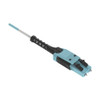
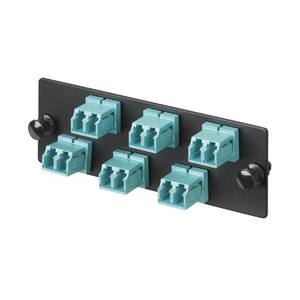
Panduit FZ2RPU1U1NNM8.5 Fiber Optic Adapter Panel
The Panduit FZ2RPU1U1NNM8.5 is a rack-mount fiber optic adapter panel engineered for high-density network termination environments where structured cable management and reliable connector performance are non-negotiable. Built to Panduit's quality standards for telecom rooms, data centers, and enterprise network closets, this panel provides a organized mounting solution for fiber optic adapters while maintaining the bend radius protection and accessibility required for long-term infrastructure deployments. The design addresses the common integration challenge of consolidating multiple fiber runs into limited rack space while keeping individual circuits identifiable and serviceable without disturbing adjacent connections.
This adapter panel is designed for standard 19-inch EIA racks and integrates with Panduit's broader fiber management ecosystem. The construction supports both single-mode and multimode fiber applications, accommodating the adapter types commonly deployed in building backbone installations, security camera networks running over fiber, and access control systems requiring dedicated fiber links. The panel's layout facilitates front-access termination and testing, reducing the time installers spend working in congested rack environments and minimizing the risk of accidental disconnection during maintenance.
Key Features
- Rack-mount fiber adapter panel for structured 19-inch rack integration in telecom and datacenter environments
- Supports high-density fiber terminations with organized cable management to maintain minimum bend radius per TIA-568 standards
- Front-access design for simplified installation, testing, and troubleshooting without rear rack access
- Compatible with standard fiber optic adapter modules for single-mode and multimode deployments
- Durable construction engineered for long-term reliability in commercial and industrial network infrastructure
- Designed to integrate with Panduit fiber management accessories for complete pathway solutions
Network Infrastructure Integration
In modern IP surveillance and access control installations, fiber optic runs are increasingly the backbone for camera networks, intercoms, and remote door controllers—especially in campuses, industrial facilities, and multi-building deployments where copper distance limits and electrical isolation become constraints. The FZ2RPU1U1NNM8.5 provides the structured termination point for these fiber links, allowing integrators to consolidate incoming fiber runs from remote switches or media converters into a centralized, labeled, and serviceable panel configuration. This eliminates the ad-hoc cable bundling and loose adapter mounting that creates troubleshooting nightmares six months after installation.
The panel's design supports the structured cabling methodology required by TIA-568 and ISO/IEC 11801 standards, which many enterprise and government end-users mandate for network infrastructure. By mounting fiber adapters in a defined panel structure rather than using loose bulkhead adapters or unsecured patch cords, you create a documented, testable, and auditable network topology. This becomes critical during system commissioning when certifying fiber link loss budgets, during incident response when isolating a failed circuit, or during expansion projects when identifying available capacity without physically tracing cables through conduit.
Installation Considerations for Security and Data Applications
For integrators deploying fiber-connected IP cameras or multi-site access control networks, the FZ2RPU1U1NNM8.5 serves as the demarcation point between your campus fiber plant and the rack-mounted network switches or media converters. The panel mounts in standard rack rails using conventional hardware, and its form factor is designed to coexist with network switches, patch panels, and power distribution units in the same rack without blocking airflow or creating access conflicts. The front-access layout means you can patch and test connections without pulling the rack away from the wall or working blind behind equipment—an advantage in densely packed telecom closets or where rack depth is limited by room dimensions.
When planning capacity, consider that fiber adapter panels like this one are typically populated with adapters based on the actual circuit count you're deploying, not the maximum port density the panel supports. This gives you flexibility to start with the circuits you need today while reserving panel space for future expansion without over-purchasing adapters upfront. The structured panel format also simplifies labeling: each adapter position can be marked with circuit ID, remote endpoint, VLAN assignment, or camera designation using standard label makers or Panduit's identification products, creating the documentation trail that saves hours during troubleshooting or system handoff.
Compatibility and Standards Compliance
The FZ2RPU1U1NNM8.5 is designed to accept standard fiber optic adapter modules, providing compatibility with the LC, SC, ST, or MTP/MPO adapter formats commonly used in security and IT network deployments. This adapter-agnostic design means the panel can support mixed connector types within the same installation—useful when you're consolidating fiber runs from different equipment generations or multiple manufacturers. The panel's construction meets the mechanical and environmental standards expected for commercial network infrastructure, ensuring long-term reliability in temperature-controlled IDF/MDF rooms as well as less controlled telecom closets subject to seasonal temperature swings.
Panduit's fiber management products are engineered to maintain the minimum bend radius specifications defined by fiber optic cable manufacturers and industry standards, typically 10x cable diameter for multimode and 15x for single-mode fiber under no load, or 20x/30x under tensile load. Violating these bend radius limits during installation or in the final dressed configuration degrades optical performance, increases insertion loss, and can cause long-term fiber stress fractures that manifest as intermittent connectivity issues months after deployment. The FZ2RPU1U1NNM8.5's cable management features guide fiber slack and patch cords through smooth radius turns rather than sharp bends, protecting your fiber plant investment and ensuring the link budgets you calculated during design actually hold up during acceptance testing.
Deployment Scenarios in Security Integration
Consider a multi-building campus deployment where you've installed outdoor-rated fiber cable between buildings to interconnect camera networks and access control panels. The fiber runs terminate in each building's telecom room, where they need to connect to network switches or media converters that provide the PoE or network uplink for the local IP devices. The FZ2RPU1U1NNM8.5 provides the structured termination point for those inter-building fiber runs, allowing you to maintain separate patch cords between the fiber plant and the active equipment. This separation is critical: it means you can replace a failed switch or upgrade network equipment without disturbing the building's permanent fiber plant, and you can test the fiber link independently of the active equipment by patching to a test meter at the adapter panel.
In datacenter or headend installations where multiple fiber runs converge from remote sites, the panel serves as the aggregation point for incoming circuits before they patch to the core network infrastructure. This is common in distributed security operations centers or enterprise command centers where camera streams, access control traffic, and alarm signals from dozens or hundreds of remote sites feed into centralized recording servers and management platforms. The structured panel approach provides the physical layer organization that mirrors your logical network topology, making it possible to visually verify connections, isolate circuit paths during troubleshooting, and document the infrastructure in a way that survives staff turnover.
Quality and Reliability Standards
Panduit manufactures its fiber optic infrastructure products to meet or exceed industry standards including TIA-568, ISO/IEC 11801, IEC 61754 (fiber optic connector interfaces), and Telcordia GR-326 (generic requirements for singlemode optical connectors). These standards define mechanical durability, insertion loss limits, return loss performance, and environmental operating ranges that ensure the components will perform reliably over a 20+ year infrastructure lifespan. For integrators working on projects subject to BICSI standards, government procurement specifications, or corporate IT standards that mandate specific performance criteria, using standards-compliant components like the FZ2RPU1U1NNM8.5 provides the documentation trail and test data necessary to demonstrate compliance during project acceptance.
The panel's construction is designed for the mechanical durability required in active telecom environments: it must withstand repeated plug/unplug cycles during installation, testing, troubleshooting, and reconfiguration without degrading connector alignment or causing damage to mated fiber interfaces. Low-quality adapter panels or loosely mounted adapters allow movement during mating, which can scratch fiber end-faces, misalign connector ferrules, or cause intermittent high-loss connections that are difficult to diagnose. Panduit's engineering focuses on rigid adapter mounting and stable panel construction to eliminate these variables, ensuring that connection quality depends on your fiber termination workmanship and patch cord quality rather than being compromised by the adapter panel itself.