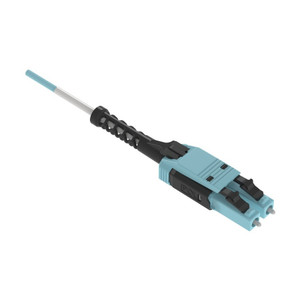
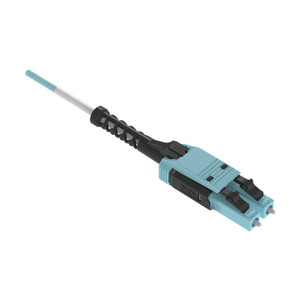
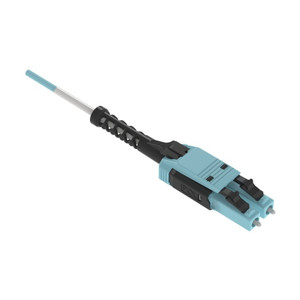
Panduit FS2RPU1U1NNM001 Signature Core™ OM4+ LC Uniboot Fiber Patch Cord
The Panduit FS2RPU1U1NNM001 delivers datacenter-grade 50/125 μm OM4+ multimode connectivity in a 1-meter (3.2 ft) uniboot form factor. Part of the Signature Core™ family, this aqua-jacketed plenum patch cord pairs ultra-low insertion loss with pull-boot LC duplex connectors on both ends, addressing high-density rack environments where every dB and every millimeter of bend radius matters. Whether you're cross-connecting cassettes in an MDA, patching ToR switches in a hot aisle, or terminating entrance facilities under strict fire codes, this cord provides the physical-layer foundation for 10/40/100 Gb Ethernet over OM4+ infrastructure.
Key Features
- OM4+ 50/125 μm multimode fiber for 10G/40G/100G applications
- LC duplex uniboot connectors both ends—single-boot design halves pathway congestion
- Ultra-low insertion loss for maximum link budget headroom
- Aqua jacket (TIA-598-D OM4 color standard)
- Plenum-rated OFNP jacket for air-handling spaces without conduit
- Pull-boot strain relief on uniboot connector for safe adds/moves/changes
- 1-meter length ideal for intra-rack, cassette-to-switch, or panel-to-patch scenarios
- RoHS compliant, meets ISO/IEC 11801, TIA-568-C.3, FOCIS-3, FOCIS-10
OM4+ vs. OM4 vs. OM3—why it matters: Standard OM4 multimode fiber supports 10 Gb Ethernet to 550 m and 40/100 GbE to 150 m (400 m with MPO-16). OM4+ tightens the modal bandwidth spec from 4700 MHz·km to ≥6000 MHz·km effective, extending 100 GbE reach and improving margin on lossy cassette-to-cassette patch architectures. If your switch optics are rated for −7.3 dBm sensitivity and you're running 40 m of trunk + cassettes + patch cords, every 0.2 dB of insertion-loss improvement translates to link viability under dirty-connector or aging-splice conditions. Panduit's Signature Core™ construction uses precision-ferrule alignment and endface geometry control to consistently deliver <0.15 dB IL typical on LC duplex interfaces—substantially better than the 0.5 dB worst-case allowed by TIA-568-C.3.
Uniboot design eliminates the traditional dual-boot LC duplex form factor (two separate 1.25 mm ferrules in side-by-side boots). Instead, a single integrated boot houses both transmit and receive fibers, clipped into a single connector body. Immediate benefits: 50% reduction in horizontal pathway fill, easier polarity reversal (some uniboot designs include a slide-latch mechanism to swap A↔B fibers without re-terminating), and cleaner appearance in photograph-ready datacenters. The pull-boot feature on the FS2RPU1U1NNM001 gives installers a textured grip surface isolated from the latch—critical when working in dense 1U patch panels where finger access is minimal and accidental de-latching of adjacent ports is a real risk.
Aqua jacket color follows TIA-598-D, the North American standard for OM4 identification (international ISO/IEC 11801 also recognizes aqua/violet for laser-optimized 50 μm MMF). This matters in mixed-mode plants: if you have legacy OM2 (orange), OM3 (aqua), and OM4+ (also aqua but often labeled OM4+), jacket printing and color become the first-line defense against mismatched-fiber incidents. Panduit prints the MPN, length, and fiber type on the cord jacket; combined with the aqua color, field techs can confidently grab the right cord during adds without consulting documentation.
Typical deployment scenarios for 1 m OM4+ patch cords: (1) Intra-rack cross-connects—ToR switch to spine uplink panel within the same 42U cabinet. (2) MDA cassette patch—from a preterminated MTP trunk cassette to a switch front-panel LC port. (3) EDA equipment patch—SAN array to fabric switch, where every dB counts and plenum rating is mandatory for raised-floor installations that double as air plenums. (4) Entrance facility demarc extension—carrier handoff from wall-mount LC connector to customer-owned termination patch panel.
High-density environments amplify the value of uniboot: a 1U 96-port LC panel populated with traditional duplex cords creates a 192-boot snarl at the front; uniboot drops that to 96 boots. Pathway managers, horizontal wire guides, and vertical lacing bars all see immediate capacity relief. If you're planning a 10 Gb Ethernet upgrade in an existing building with legacy OM2 plant, replacing trunk and patch cords with OM4+ enables 10G over the existing conduit infrastructure—no new risers, no permit delays, just swap the optics and cords.
Plenum (OFNP) vs. riser (OFNR) vs. general-purpose (OFNG): NEC Article 770 requires that cables installed in air-handling spaces (ceiling plenums, raised floors used for HVAC return) meet flame-spread and smoke-generation limits. OFNP (plenum) is the most stringent rating and the de facto requirement in most commercial datacenter and telecom room installations. If you run non-plenum cable in a plenum without metallic conduit, you fail inspection and create a Code violation that can void insurance in the event of a fire. The FS2RPU1U1NNM001 ships plenum-rated out of the box, so you can pull it through ceiling grids, underfloor trays, and vertical shafts without additional raceway—saving material cost and installation labor.
Cable management and bend radius: OM4 multimode fiber has a minimum bend radius of 15 mm (loaded) / 30 mm (unloaded) per TIA-568-C.3. Uniboot patch cords typically use 2.0 mm or 3.0 mm zipcord (two fibers in a flat or round jacket). The Panduit pull-boot design includes a strain-relief bend limiter at the connector exit, preventing kinks during dressing into vertical wire managers or tight-radius horizontal turns. If you're using zero-U vertical managers in a 600 mm-wide cabinet, you need every millimeter of usable depth—uniboot's compact profile reclaims ~5 mm per port compared to dual-boot, which compounds to centimeters when you're managing 48-port switch densities.
The FS2RPU1U1NNM001 meets ISO/IEC 11801 (international structured cabling), TIA-568-C.3 (North American optical fiber), TIA-604-3 (FOCIS-3 LC connector endface geometry), TIA-604-10 (FOCIS-10 LC duplex), and RoHS Directive 2002/95/EC (lead-free, low-halogen). Every cord ships with test results traceable to Panduit's ISO 9001 quality system, documenting insertion loss, return loss, and endface geometry per IEC 61300-3-35. If you're bidding on federal contracts (GSA schedule, DoD datacenter builds), or working under LEED certification requirements, traceability and third-party compliance are non-negotiable—this cord delivers both. For integrators managing long-term service contracts, Panduit's commitment to backward compatibility means you can order the FS2RPU1U1NNM001 today, stock spares, and confidently deploy them three years from now alongside the original installation without interoperability surprises.