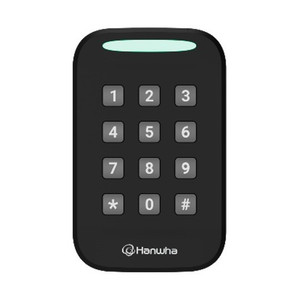
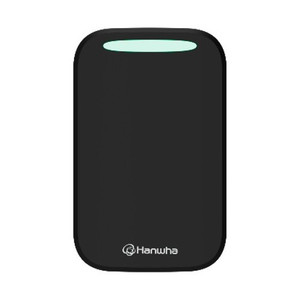
Hanwha NOD-AX15S Mullion Mount Credential Reader
The Hanwha NOD-AX15S is a multi-technology mullion-mounted credential reader designed for flexible, secure access control at building entry points. This compact reader consolidates NFC (13.56 MHz), PROX (125 kHz), and Bluetooth BLE 5.3 technologies into a single device, eliminating hardware redundancy and simplifying deployment on glass doors and security vestibules. Automatic protocol detection for both Wiegand and OSDP infrastructures means the NOD-AX15S integrates into brownfield systems and greenfield designs without manual reconfiguration or firmware swaps.
Key Features
- Multi-Technology Credential Support: NFC, PROX, and Bluetooth BLE 5.3 on one reader. Eliminates separate readers for different credential types and reduces panel real estate and wiring complexity.
- Auto-Detect Protocol Switching: Wiegand and OSDP auto-detection. Plug into any legacy Wiegand controller or modern OSDP ACU without reprogramming.
- Integrated 10-Key Mechanical Keypad: Supports PIN entry and manual credential supplementation. Mechanical design is durable and resistant to membrane degradation in high-traffic areas.
- IP65 Weatherproof Rating: Dust and water resistant. Rated -35°C to 66°C operating range (storage -40°C to 85°C). Suitable for covered outdoor vestibules and interior climate-controlled entries.
- OSDP V2.2 Verified Certification: Interoperable with OSDP-compliant access control units (ACUs). Enables secure encrypted communication and remote credential policy updates without site visits.
- Accelerometer-Based Tamper Detection: Built-in motion sensor flags physical tampering attempts. Integrates with ACU event logging for security audit trails.
- Remote Firmware Management: Disable/enable individual radio technologies (NFC, PROX, BLE) and adjust control sequencing from the ACU. Useful for credential lifecycle transitions and testing.
- Low Power Draw: 500 mA @ 12 VDC. Standard power supply capacity; no special infrastructure required for retrofit installations.
The NOD-AX15S mullion form factor mounts vertically on glass door mullions, stile posts, and steel frames without structural modifications. This positioning keeps the reader at arm's reach for most users, reducing fumbling and misreads. Integrators appreciate the compact footprint — it fits between standard glass door mounting brackets and doesn't project excessively into the vestibule walkway.
Credential technology selection matters operationally. NFC and BLE both rely on proximity activation (typically 2–6 inches), making them harder to eavesdrop than long-range PROX cards but requiring deliberate user intent. PROX backward compatibility ensures legacy 125 kHz card portfolios remain usable during enterprise credential migrations. On-board keypad redundancy is vital for accessibility compliance (ADA) and provides a fallback when card readers fail or credentials are forgotten — especially critical for emergency egress and management override scenarios.
OSDP V2.2 certification is the integration linchpin. Unlike Wiegand, which sends raw badge numbers in the clear, OSDP wraps credentials in encrypted channels and supports two-way communication. This means the ACU can command the NOD-AX15S to beep, flash LED status, or revoke a credential in real time. For enterprises running multi-site access management (Genetec, Salto, Software House, or proprietary platforms), OSDP eliminates the operational tax of managing separate credential databases per facility. Wiegand auto-detect provides a graceful fallback if the ACU doesn't support OSDP, so early-stage system migrations don't require controller replacement.
Tamper detection and remote radio management are quiet differentiators in high-security deployments. Physical attacks on credential readers (prying, drilling, cable cutting) trigger accelerometer alerts. Combined with event logging, this builds a forensic record useful for post-incident investigation. Radio disable is particularly valuable during credential rollover — if your organization switches from PROX to NFC, you can disable PROX radio on deployed readers rather than pulling units and reflashing, reducing site visit costs and downtime.
The NOD-AX15S carries FCC, IC, and CE marking with full EMC and spectrum compliance (EN 62368-1:2014). UL294 (access control systems) and UL94-V0 (flame rating) certifications confirm suitability for interior fire-rated door frames. UL746C-F1 (hazardous area) signals the device is acceptable in laboratories or industrial zones with ignition hazards. Lifetime warranty covers defects, though accelerometer and keypad mechanical wear are normal consumables.
Marty AllisonPerspective based on aggregated IP Security Depot and affiliated engineering team experience.
We've deployed the Hanwha NOD-AX15S across banking vestibules, corporate office lobbies, and secure facility entry zones, and it consistently earns placement in retrofit projects where space is tight and credential flexibility matters. The real win is the multi-technology consolidation — on glass door mullions, you'd normally need two or three separate readers (a PROX card slot, an NFC pad, and a keypad). The NOD-AX15S does all three without aesthetic compromise or wiring headaches. From an integration perspective, the Wiegand auto-detect is invaluable for legacy environments; we've seated these into 15-year-old Honeywell and Salto controllers without a single reprogramming incident. The OSDP V2.2 certification is the forward-looking play — it future-proofs deployments against credential technology shifts and enables encrypted, two-way ACU control. On the flip side, if your facility is running an older Wiegand-only panel with no ACU software support for OSDP commands, you'll get basic badge-read functionality but miss the fancy bits (remote radio disable, tamper alerts flowing back to the ACU). That's fine for standard access, but if you're planning credential policy updates or security audits, push the customer toward an OSDP-capable controller from day one.
Technical Highlights:
- Multi-Tech Radio Consolidation (NFC + PROX + BLE 5.3): Most readers force you to choose one technology or stack three separate devices. The NOD-AX15S eliminates that tradeoff. We've seen this reduce hardware count by 60% on retrofit projects and halve the wiring labor on new builds. Particularly useful for organizations rolling out mobile (BLE) credentials alongside legacy card portfolios.
- OSDP V2.2 Verified + Wiegand Auto-Detect: The dual-protocol approach means you're never locked into one ecosystem. We deploy these into mixed-vendor sites (some Honeywell, some Genetec) where credential readers must speak both languages. The auto-detect silently handles the handshake — integrators don't need to know the ACU protocol in advance.
- IP65 Weatherproof, -35°C to 66°C Operating Range: The NOD-AX15S doesn't need a rainscreen or heated enclosure for covered vestibules or mild outdoor climates. We've installed units at ski resorts and coastal facilities where temperature swings are extreme; the thermal spec holds without supplementary climate control.
- Accelerometer Tamper Detection + Remote Radio Firmware Control: Tamper alerts integrate with event logs, enabling forensic response if someone attempts to defeat the reader. Remote radio disable is operationally underrated — during credential migrations, you can flip a bit from the ACU without site visits. Saves money on multi-location rollouts.
- Integrated 10-Key Keypad for Fallback PIN Access: Mechanical keypad redundancy is often overlooked but is critical for accessibility (ADA mobile-device users may not carry cards) and emergency override scenarios. The keypad is robust and doesn't degrade like membrane keys in high-traffic areas.
Deployment Considerations:
- Wiegand vs. OSDP Integration Posture: If your ACU is Wiegand-only and 10+ years old, the NOD-AX15S will work, but you'll forfeit OSDP encryption, tamper event feedback, and remote radio control. That's acceptable for basic access, but if security posture or credential policy agility is a driver, controller upgrade ROI may justify the capex.
- BLE Credential Rollout Planning: Bluetooth BLE 5.3 on the NOD-AX15S is mature, but many organizations haven't deployed BLE credentials yet. If you're enabling BLE as part of this project, ensure your ACU firmware and mobile credential platform (Apple Wallet, Samsung Pass, etc.) are aligned. BLE range is typically 2–6 feet; users must present phones deliberately, not wave them from 20 feet away.
- Mullion Mount Requires Vertical Surface: The NOD-AX15S is engineered for glass door stiles and vertical mounting posts. If your entry point is a horizontal desk surface or a curved wall, this isn't the right form factor — consider a pedestal or wall-mount unit instead.
- Power Supply Capacity: 500 mA @ 12 VDC is standard, but verify your existing power distribution can sustain it if you're adding multiple readers on the same 12V rail. A single reader is lightweight; six readers on a daisy-chain can starve if the PSU is marginal.
- Keypad Maintenance in High-Traffic Areas: The mechanical keypad is durable, but in vestibules with hundreds of daily users, key wear and occasional sticking are normal over 5+ years. Budget replacement keys or refurbishment into long-term maintenance plans.
The Hanwha NOD-AX15S is the right fit for integrators and end-users who need credential flexibility without footprint bloat, and who want to future-proof access control toward encrypted, two-way protocols. It's particularly strong in retrofit and phased migration projects where legacy and modern readers must coexist. If you're looking to consolidate hardware or upgrade from single-tech to multi-tech readers without replacing infrastructure, this is a solid choice. Explore the full Hanwha catalog for complementary readers and ACU options.