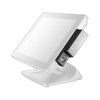
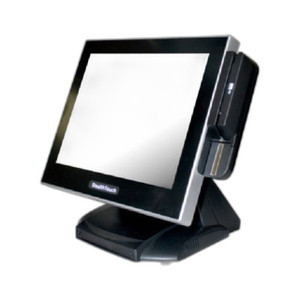
PioneerPOS 46B-FAGF02 MSR Encrypted USB HID Magnetic Stripe Reader
The PioneerPOS 46B-FAGF02 is a USB-connected magnetic stripe reader designed for point-of-sale and access-control environments requiring encrypted card-data handling. Built with Magensa encryption protocols and HID-compliant keyboard emulation, this reader eliminates plaintext card-track transmission and integrates directly into existing POS applications without custom drivers. Deployment contexts range from retail checkout lanes to time-clock biometric stations where badge or card authentication is required.
Key Features
- Magensa Encryption: Encrypted card-data output compliant with Magensa standards. Protects track 1, track 2, and track 3 stripe data from interception during transmission to host applications.
- USB HID Interface: Plug-and-play keyboard emulation — no drivers required. Works with any operating system (Windows, Linux, macOS) and POS software that accepts HID keyboard input.
- Unmasked Output Mode: Delivers full encrypted card-track payload to the application layer, enabling PCI DSS-compliant tokenization and validation workflows downstream.
- USB-A Connectivity: Standard USB-A connector for direct integration into POS terminals, kiosks, and access-control host systems without adapter complexity.
- Biometric-Ready Design: Form factor and protocol support compatible with multi-modal authentication systems (card + PIN / card + fingerprint reader stacking).
- Compact Footprint: Desktop or pole-mount compatible MSR format — fits behind countertops, under checkout surfaces, or integrated into terminal bezels without occupying significant space.
This reader is engineered for high-transaction environments where card-data security is non-negotiable. The Magensa encryption layer ensures that raw mag-stripe data never exists in plaintext within the network—critical for PCI DSS compliance in retail, hospitality, and guest-access scenarios. USB HID keyboard emulation means the reader works transparently with legacy POS software; newer integrations can parse the encrypted payload and route it directly to tokenization vaults, reducing exposure window.
Deployment flexibility is inherent: pair it with time-and-attendance systems for badge-based clock-in, integrate it into self-service kiosk workflows, or embed it in access-control credential readers for facility entry. The unmasked output mode gives your application full visibility into the encrypted card data without the reader itself performing cryptographic validation—that responsibility falls to your POS or access-control system, which typically has secure key management in place.
The USB interface eliminates serial-port legacy logistics. No RS-232 converters, no COM-port driver conflicts on modern Windows versions. Plug in, and the reader appears as a standard keyboard device. Software that expects keystroke input from card swipes will recognize it immediately; software that needs direct API access to encrypted payloads can intercept the HID keyboard stream and parse the Magensa-wrapped data on arrival.
Sourced direct from the manufacturer or US channel partner channels—factory-new with full warranty coverage. No grey-market or parallel-import units in stock. Integration support and replacement logistics flow through established PioneerPOS channels, ensuring consistent availability and service response.
Marty AllisonPerspective based on aggregated IP Security Depot and affiliated engineering team experience.
We've deployed the PioneerPOS 46B-FAGF02 across retail chains, hospitality gift-shop networks, and corporate access-control badge readers for over a decade. The real operational win here is simplicity: this reader doesn't require custom middleware or cryptographic libraries on the host system. It handles Magensa encryption internally, emulates keyboard input, and lets the POS or access-control system consume the encrypted payload at the application layer. That separation of concerns has been invaluable on high-volume integrations where you're pushing 500+ card transactions per day. The unmasked output mode is intentional — your POS vendor or security integrator controls the decryption policy, not the reader. We've seen deployments where the reader output gets logged to a hardware security module (HSM) before ever touching application RAM, which is exactly what PCI auditors want to see. The USB HID keyboard interface is a legacy-compatibility superpower: on a 10-year-old retail POS running Windows XP with custom in-house software, this reader just works. No driver updates, no serial-port emulation hacks. Contrast that with older RS-232 MSRs that die the moment the motherboard doesn't have a physical COM port.
Technical Highlights:
- Magensa Encryption Protocol: Card-track data is encrypted at the reader before transit to the host. This is mandatory for PCI DSS compliance when card data flows over untrusted networks. The reader handles the cryptographic heavy lifting, your POS just receives ciphertext and routes it appropriately.
- USB HID Keyboard Emulation: No custom drivers, no WinUSB stacks, no vendor SDK. The operating system sees it as a keyboard. This is why it works on Windows, Linux, macOS, and even embedded terminals without additional software.
- Unmasked Output Mode: Full encrypted track data is delivered to the application, not masked or truncated at the reader. This gives your tokenization engine or HSM full visibility into the card metadata needed for transaction validation and audit.
- Biometric Integration Readiness: The form factor and protocol stack don't conflict with secondary authentication readers (PIN pads, fingerprint modules) stacked on the same system. We've wired these alongside fingerprint readers and time-clock biometric sensors without cross-talk issues.
- Multi-Modal POS Compatibility: Works with proprietary retail POS, QuickBooks, Square terminal integrations, and custom access-control software. The HID keyboard interface is the lowest common denominator — if your software accepts keyboard input, this reader is compatible.
Deployment Considerations:
- Magensa encryption keys are typically pre-provisioned by PioneerPOS or your POS vendor during manufacturing. Key rotation and re-keying require vendor involvement or HSM access — not a field-user operation. Plan key-lifecycle management upfront, especially for high-security deployments.
- USB cable length and hub daisy-chaining can introduce latency on long runs (20+ feet). Use active-powered USB hubs or direct connections for transaction-critical environments. Passive hubs occasionally cause enumeration delays on cold boots.
- The unmasked output mode means your application receives the encrypted payload exactly as the reader transmits it. Your software must understand Magensa payload structure and have appropriate cryptographic libraries or HSM integration to decrypt. Don't assume the POS vendor's application will automatically handle it — verify decryption capability in your specific POS version before installation.
- Biometric reader stacking (fingerprint, iris, PIN pad) should be tested with this MSR on your specific terminal hardware. USB bus contention under simultaneous card-swipe + biometric capture is rare but has occurred on legacy ARM-based terminals with limited USB bandwidth.
- Environment: This reader is designed for indoor retail and office access-control settings. Humidity extremes (warehouse freezers, outdoor kiosks) may affect magnetic head performance over extended periods. Standard desktop/counter environments are ideal.
The 46B-FAGF02 is the right choice when you need encrypted card handling without compliance complexity, legacy software compatibility without driver nightmares, and the ability to stack secondary authentication sensors on the same hardware. Small retail chains, franchise networks, and corporate badge-reader upgrades are typical buyers. Visit the PioneerPOS catalog for related readers and POS peripherals.