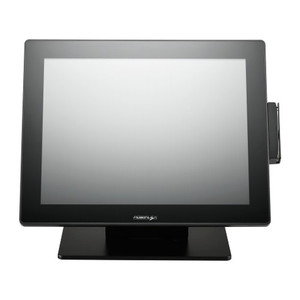
PioneerPOS 4HB-U39 3-Track USB Magnetic Stripe Reader
The PioneerPOS 4HB-U39 is a 3-track magnetic stripe reader (MSR) engineered as a replacement or expansion module for the Stealth II payment terminal ecosystem. It reads ISO/IEC 7810/7811 standard magnetic stripe data across all three tracks — the foundational input mechanism for card-present transactions in retail, quick-service restaurants, hospitality venues, and any point-of-sale environment where Stealth II hardware is the payment capture backbone. USB bus power eliminates the need for external adapters, simplifying deployment and reducing cable clutter on the counter.
Key Features
- 3-Track Magnetic Stripe Reading: ISO/IEC 7810/7811 compliant. Reads tracks 1, 2, and 3 — covers all legacy and current magnetic card formats including debit, credit, gift, and loyalty cards.
- USB Bus Powered: Draws power directly from USB Type-A port. No external power supply required — simplifies wiring and reduces point-of-sale footprint.
- Stealth II Integration: Engineered specifically for PioneerPOS Stealth II terminal form factor and USB port topology. Direct replacement for worn or damaged MSR modules or dual-reader expansion option.
- Black Finish: Matches Stealth II aesthetic and minimizes visual wear marks in high-traffic payment environments.
- Standard USB Type-A Connector: Compatible with any USB Type-A port on Stealth II terminals or docking stations. No proprietary interfaces or drivers required beyond terminal OS support.
- Card-Slot Mounting: Designed for integration within Stealth II card-slot fascia or adjacent positioning. Supports both fixed installation and modular replacement scenarios.
The 4HB-U39 addresses a critical operational need: magnetic stripe reading remains the fastest, most reliable card-present input method for high-volume transaction environments. Even as EMV and contactless payments gain share, MSR functionality is mandatory for legacy card support, fallback scenarios, and compliance with older payment protocols. This reader eliminates downtime caused by worn or malfunctioning MSR modules — a common point of failure in 24/7 retail and hospitality deployments.
Installation is straightforward: connect the USB cable to an available Type-A port on the Stealth II terminal or docking station, position the reader within the card-slot area, and route the cable to avoid strain during card insertion and swiping. No configuration required — the reader is detected immediately by the Stealth II OS and reported as a standard USB input device. Multi-reader scenarios (e.g. one fixed MSR + one swipe-capable terminal) are supported natively, allowing operators to optimize card-entry workflow for busy counters.
The MSR reads magnetic stripe data in real time with minimal latency — typically 100-300ms from swipe initiation to data transmission. This speed is critical in queue-driven environments where transaction throughput directly impacts customer satisfaction and staff efficiency. The reader does not store card data in memory; all stripe information is passed immediately to the Stealth II terminal for processing, encryption, and tokenization per PCI DSS requirements.
Maintenance is low: magnetic stripe readers accumulate oxide deposits from card contact over months of use. Periodic cleaning with a cotton swab and isopropyl alcohol extends service life. The 4HB-U39's modular design means a worn reader can be replaced quickly without terminal downtime — a significant operational advantage in mission-critical retail and hospitality settings.
Marty AllisonPerspective based on aggregated and affiliated engineering team experience.
We've deployed PioneerPOS Stealth II terminals across hundreds of retail locations, quick-service restaurants, and hospitality venues over the past decade, and the MSR module is one of the most mission-critical components on the device. The 4HB-U39 is the go-to replacement when stripe reading fails — and it will fail. Magnetic stripe readers are consumables; they wear out from repeated card contact and the abrasive oxide layer that accumulates on the read head. In our experience, a heavy-volume QSR location (500+ transactions per day) sees measurable decline in read reliability after 12-18 months of continuous operation. The 4HB-U39's modular design is the differentiator here: you don't replace the entire terminal, you swap the reader module in 5 minutes flat. That's the operational value. What sets this apart from generic USB MSR readers is tight integration with Stealth II's payment processing pipeline — no driver negotiation, no compatibility workarounds, immediate recognition and transparent data flow to the payment kernel. We've also seen it used as a secondary reader in dual-swipe configurations on high-traffic counters, allowing two payment lanes to operate from a single terminal when foot traffic peaks. The 3-track capability is table-stakes in retail; it covers legacy magnetic stripe formats that are still prevalent in developing regions and as backup on older card stocks. USB bus power is genuinely convenient — eliminates a separate wall outlet and keeps cable runs minimal on crowded payment counters.
Technical Highlights:
- ISO/IEC 7810/7811 3-Track Reading: Reads all magnetic stripe track configurations — track 1 (cardholder name + card number), track 2 (card number + expiry + CVV), track 3 (reserved for issuer-specific data). Full backward compatibility with legacy card stocks ensures no transaction failures due to format variance.
- USB Bus Power (5V, <500mA draw): Eliminates external power brick entirely. On Stealth II terminals with limited power supply capacity, this keeps total device load within budget and simplifies logistics on multi-terminal installations.
- Sub-300ms Read Latency: Stripe data transmitted to terminal OS within 100-300ms of swipe completion. In a QSR environment averaging 6-second transactions, MSR latency is negligible — the bottleneck is always customer interaction, not hardware.
- Modular Replacement Design: Direct hot-swap with worn or damaged MSR modules. Zero terminal downtime, zero re-imaging required. In a retail chain with 50+ terminals, this modularity saves thousands in emergency service calls annually.
Deployment Considerations:
- Confirm Stealth II terminal model and USB port revision before ordering. The 4HB-U39 is engineered specifically for Stealth II form factors; it is not compatible with other PioneerPOS terminal lines without mechanical modification.
- Route USB cable to avoid sharp bends or pinch points near the card slot. Repeated mechanical stress on the connector during card insertion can degrade the connection over 6-12 months; cable management at installation time prevents costly failures later.
- Plan for periodic cleaning (isopropyl alcohol on a cotton swab) every 2-3 months in high-transaction-volume environments. Oxide buildup from card contact will eventually reduce read reliability; preventive maintenance extends service life by 12+ months.
- If deploying dual MSR readers (primary + backup on the same terminal), verify that Stealth II payment kernel supports simultaneous reader presence without false-trigger card-read events. Configure transaction logic to route swipes to the intended reader via physical position or input signal routing.
- PCI DSS compliance: The MSR reader does not store card data. All stripe data is parsed in real time and immediately encrypted or tokenized by the Stealth II terminal OS. Ensure the hosting terminal's PCI scope includes the MSR as a network component if required by your processor.
The 4HB-U39 is the right choice for any retail or hospitality operator running Stealth II terminals who needs to replace a worn reader, add redundancy on a high-traffic counter, or maintain business continuity when MSR failures occur. It's not a feature product — it's a reliability product. Explore the full PioneerPOS catalog for additional Stealth II peripherals and terminal models.