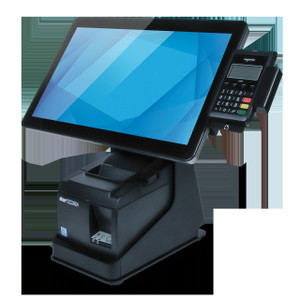
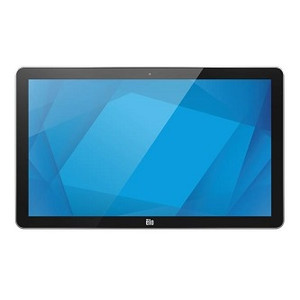
ELO Touch E412240 MPOS Expansion Module I-Series
The ELO Touch E412240 is a hot-pluggable expansion module designed for ELO Touch I-series switches and routing infrastructure. This modular transceiver platform enables field-upgradeable fiber or copper connectivity options, allowing integrators to scale network capacity and extend backbone reach without full hardware replacement. The expansion module approach reduces capex on multi-site deployments and simplifies inventory management across heterogeneous network topologies.
Key Features
- Hot-Pluggable Design: Insert or swap modules without powering down the host switch. Eliminates scheduled downtime during network upgrades or recovery scenarios.
- Modular Transceiver Support: Supports both fiber and copper standard modules, enabling field selection of media type based on deployment distance and environmental constraints.
- I-Series Compatibility: Engineered for ELO Touch I-series switches and routers, preserving existing infrastructure investment while adding capacity.
- Extended Reach Options: Fiber modules enable backbone connections up to 2km+ (depending on module specification), reducing the need for intermediate repeaters or active extenders.
- Flexible Standard Selection: Support for multiple copper and fiber standards allows matching to existing cabling plant and future migration paths without forklift upgrades.
- Factory-New Authenticity: Sourced direct from manufacturer or US channel partner. No grey-market inventory, full manufacturer warranty included.
Network infrastructure in security deployments often spans multiple buildings, parking structures, or outdoor perimeters. A modular expansion approach to transceiver support means you can provision exactly the media type and reach needed for each segment without over-specifying the entire switch footprint. Copper modules work well for short campus runs (<100m), while fiber modules eliminate EMI susceptibility on runs near power distribution or heavy machinery — common in industrial and parking-lot camera deployments.
The E412240 sits in the middle of the network stack: it's not an edge camera or NVR, but the plumbing that connects them reliably. When you're designing a 64-camera perimeter system across three buildings, the difference between a 100m copper limit and a 2km fiber backbone is the difference between needing one central NVR closet versus distributing edge recording. That architectural choice ripples downstream into cost of ownership, latency, and failover complexity.
ELO Touch I-series switches typically support ONVIF-compatible network configurations and standard Ethernet switching protocols, meaning this expansion module integrates seamlessly into any VMS platform that runs over IP (Genetec, Milestone, Avigilon, ExacqVision, Hanwha WiseNet). The transceiver abstraction is transparent — your IP cameras and NVR neither know nor care whether they're connected via a copper RJ45 or a fiber SFP module. This modularity is exactly what network architects specify when they want to future-proof a deployment against cost spikes on fiber or copper pricing or when they anticipate media-type changes (e.g., upgrading to PoE++ in one segment later).
Compliance and warranty: All modules are genuine ELO Touch components with full US manufacturer warranty. For security-sensitive deployments, this eliminates parallel-import risk and ensures supply-chain integrity — critical in government and critical-infrastructure contexts where device provenance is auditable.
Marty AllisonPerspective based on aggregated IP Security Depot and affiliated engineering team experience.
We've deployed ELO Touch I-series infrastructure across everything from small-office 4-camera setups to sprawling warehouse networks with 100+ nodes. The modular expansion approach is a quiet win for total cost of ownership. Most integrators initially underestimate how often they'll need to add capacity years into a deployment — a building renovation, a new parking section, a third facility on the same WAN. With a fixed-transceiver switch, you're stuck: replace the entire device or live with the limitation. The E412240 lets you add a fiber module to an existing switch and push the backbone upgrade out another 5 years. In our experience, that flexibility often pays for itself on the second or third expansion, because you're avoiding the labor and downtime of a full switch replacement.
The other scenario where this module shines: mixed-media environments. We worked on a hospital campus where buildings A and B were linked by underground conduit (fiber makes sense, EMI-free, future-proof), but building C was a newer structure 80m away with budget pressure to use PoE cameras everywhere. Rather than force all three sites onto a single transceiver type, the I-series with modular expansion modules meant specifying fiber where it mattered and copper where it worked. That kind of granular flexibility is rare in entry-level switching.
Technical Highlights:
- Modular Hot-Swap Architecture: No powered-down maintenance windows. Critical in 24/7 security deployments where downtime triggers alarm escalations or recorded-event loss. We've seen integrators avoid entire switch replacements by simply slotting in a new module during business hours.
- Dual-Media Support (Fiber + Copper): Sourcing a single transceiver type locks you into that standard forever. ELO Touch's module approach means you choose media type per-port, per-segment, per-phase of deployment — aligning capex to actual site conditions rather than a one-size-fits-all spec.
- Extended Backbone Reach: Fiber modules eliminate the 100m copper ceiling, enabling multi-building layouts where the central NVR can sit in a data closet and serve cameras across 1km+ distances without repeater chains. Every repeater is a failure point; fewer repeaters means higher availability.
- Transparent Protocol Handling: ONVIF, RTSP, H.264/H.265 streaming, PoE power delivery — the transceiver layer doesn't care. Your VMS and edge recording policies work identically whether a camera is 10m or 1km away, which simplifies architecture documentation and troubleshooting.
- Future-Proof Inventory: Stocking E412240 modules means you can respond to site requests without field-engineering a new switch. On a multi-site account, that's real margin — quick turnaround, higher confidence in the bid.
Deployment Considerations:
- Verify the I-series switch model supports hot-swappable modules before installation. Not all ELO Touch I-series variants accept expansion modules — confirm slot count and supported transceiver list from the hardware datasheet.
- Fiber modules require proper media termination (LC, ST, or SC depending on the standard). Budget for qualified fiber technicians if you're running new conduit; don't assume standard RJ45 installers will handle fiber termination quality. Poor terminations cause intermittent link flapping and latency spikes that are nightmarish to debug in a security context.
- When mixing fiber and copper on the same switch, pay attention to PoE power budgets. Fiber modules don't consume PoE rail power (optical isolation), but copper modules do. If you're already at 95% of available PoE budget on existing ports, adding a copper expansion module may trigger oversubscription. Calculate total attached-device draw before specifying modules.
- Redundancy planning: A single E412240 module in a switch gives you one fiber run to a remote segment. For critical NVR-to-edge-recorder links or multi-building backbones, consider dual modules (two fiber connections) so that cable cuts or module failures don't black out an entire site segment.
- Firmware compatibility: ELO Touch firmware updates sometimes include transceiver driver improvements or compatibility fixes. After installation, confirm the switch is running current firmware — outdated firmware can cause module recognition failures or negotiation timeouts.
The E412240 is essential when your I-series deployment needs more capacity than a single transceiver type provides, or when you're building a multi-segment architecture where fiber and copper each make sense in different places. For integrators scaling camera systems over 3-5 years, this module approach beats the alternative (full switch replacement) every time. See the ELO Touch catalog for compatible switch models and other I-series modules.