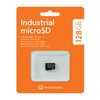
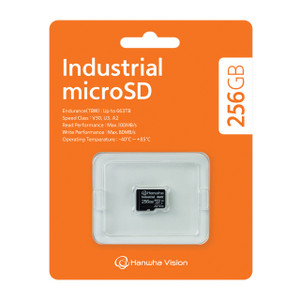
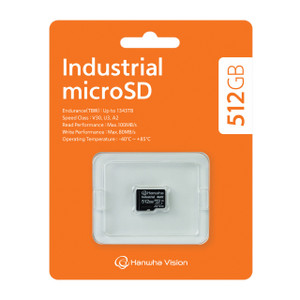
Hanwha SPP-E128G 128GB Industrial MicroSD Card
The Hanwha SPP-E128G is a 128GB microSDxC card purpose-built for embedded storage in Hanwha IP cameras and compatible surveillance systems. Unlike consumer-grade microSD cards that fail in field temperature extremes or moisture-heavy environments, the SPP-E128G operates reliably from -40°C to +85°C and carries IPx7 water ingress protection—meaning it survives outdoor deployments without degradation across hot summers, freezing winters, and wet coastal or industrial settings.
Key Features
- 128GB microSDxC capacity with V30/U3/A2 speed class certification — V30 guarantees a minimum 30MB/s sustained write speed, so you won't lose frames during high-bitrate continuous recording. Drop below 30MB/s sustained, and you risk frame loss or dropped segments during peak traffic or scene complexity spikes. U3 and A2 classes ensure the card handles random I/O bursts without stuttering when multiple concurrent streams write to the same card.
- Sequential read speed up to 100MB/s, write speed up to 80MB/s — accelerates playback and export workflows on the camera or a connected reader. Matters less for continuous 24/7 record, but meaningful when retrieving evidence clips during incident response or generating reports.
- Operating temperature range -40°C to +85°C with 0–95% RH non-condensing humidity tolerance — allows deployment in unheated outdoor enclosures, traffic signal cabinets, rooftop housings, and coastal installations without thermal stress degradation. Consumer cards typically max out at 0°C to 40°C, making them unsuitable for extreme climates.
- IPx7 water ingress protection — rated for temporary submersion up to 1 meter for 30 minutes. In practice, this protects against rain, dust, and condensation in semi-sealed or outdoor camera housings. Does not guarantee operation if fully submerged continuously—if you need that, consult a sealed enclosure or IP68-rated alternative housing strategy.
- Up to 331TB total bytes written (TBW) lifecycle rating — with 24/7 continuous recording at 30MB/s sustained, the SPP-E128G survives roughly 3.5 years before wear-leveling exhaustion. Plan refresh cycles accordingly for long-term deployments; don't assume 5+ year retention without factoring card lifespan into your storage budget.
- EMI/RFI immunity with IEC 61000 series certifications — IEC 61000-4-2 (electrostatic discharge), IEC 61000-4-3 (radiated immunity), and IEC 61000-4-8 (power frequency immunity) certifications reduce risk of data corruption in industrial environments with high electromagnetic noise, such as factory floors, rail yards, and power substations.
Integration & Compatibility
Compatible with all microSD-equipped Hanwha surveillance cameras and third-party surveillance systems featuring standard microSD slots. Verify your camera model explicitly supports microSDxC (not just microSD or microSDHC) before purchase—older models may cap at 32GB or 64GB cards due to firmware limitations. The SPP-E128G (often searched as SPP E128G) installs in a standard microSD slot with no additional drivers or software required.
When to Choose a Different Storage Approach
If your deployment requires continuous 24/7 recording for 5+ years without replacement, factor in the 331TB TBW lifecycle—you'll need to budget for card replacement every 3–4 years. For longer retention horizons, a dedicated NVR with built-in SSD storage or a higher-capacity storage array may reduce long-term maintenance overhead and provide centralized backup. If you need full submersion capability (IP68+), the IPx7 rating is insufficient—consult a sealed enclosure or alternative environmental housing strategy.
Frequently Asked Questions
Q: Can I use the SPP-E128G in a consumer camera or smartphone?
A: Technically, yes—it's a standard microSDxC card—but you forfeit the industrial temperature range and EMI certifications. Consumer devices typically operate 0°C to 40°C; the SPP-E128G's -40°C to +85°C rating and IEC 61000 immunity are engineering specifications for outdoor surveillance. In a smartphone, you'll get 128GB of storage, but you won't benefit from the industrial hardening.
Q: What happens when the card reaches 331TB TBW?
A: Wear-leveling exhaustion occurs gradually. The card doesn't fail instantly at 331TB; rather, it reaches end-of-life when write performance degrades or data integrity becomes unreliable. At 30MB/s sustained 24/7, expect roughly 3.5 years of continuous operation before this threshold. Plan a replacement cycle and test your card health periodically using manufacturer diagnostics if available.
Q: Is the IPx7 rating enough for a rooftop camera housing?
A: Yes, for typical rooftop scenarios where the card itself isn't exposed to direct rain for extended periods. IPx7 protects against splash, condensation, and brief submersion. If your housing design exposes the card to standing water or continuous spray, upgrade to a fully sealed enclosure or verify the camera housing is rated IP67/IP68 at the port level.
Q: Does the SPP-E128G work with NVRs or only cameras?
A: The SPP-E128G is a microSD card; it's designed for embedded storage in cameras, not as a host device for NVRs. However, if an NVR has a microSD slot for local logging or diagnostics, it will accept the card. Check your NVR documentation for microSD compatibility and supported capacities.
Q: Do I need to format the card before first use?
A: Not mandatory—most cameras auto-format on insertion—but it's safe practice to format in-camera before deployment. Use the camera's native format function (usually found in the settings menu) rather than a computer, since the camera may expect a specific file system layout.
Ted PerryPerspective based on aggregated IP Security Depot and affiliated engineering team experience.
The Hanwha SPP-E128G is a purpose-built storage component for surveillance deployments that can't tolerate consumer-grade card failures. The 331TB TBW lifecycle rating tells you exactly how long this card will function under continuous load—roughly 3.5 years at 30MB/s sustained write. That's valuable information when you're designing a five-year maintenance schedule. The V30/U3/A2 speed class guarantees won't drop your frame rate during peak bitrate spikes, which matters more than most integrators realize when you're recording at 15–25 Mbps on high-motion scenes.
Technical Highlights:
- 30MB/s sustained write (V30 guarantee): Eliminates frame loss risk on bitrates above 10 Mbps. Most consumer cards fail this spec under sustained load; you'll see dropped frames in the logs. The SPP-E128G's U3/A2 classes add random I/O resilience—important if the camera writes multiple event streams or alarm-triggered buffering to the same card.
- -40°C to +85°C operating range: Unlocks rooftop, outdoor traffic-signal cabinet, and coastal deployments without thermal derating. Consumer cards (0°C to 40°C) won't survive unheated enclosures in winter or sun-baked housings in summer. That 125°C swing is the difference between a three-year field life and three months of intermittent failures.
- IPx7 water ingress + IEC 61000 EMI/RFI immunity: Combined, these specs reduce data corruption in moisture and electromagnetic noise. Factory floors, rail yards, and power substations see enough RF noise to corrupt writes on unshielded cards. The IEC 61000-4-2/4-3/4-8 certifications directly address this.
Deployment Considerations:
- Lifecycle planning is non-negotiable: At 331TB TBW, you're looking at a mandatory replacement cycle every 3–4 years on 24/7 continuous record. Budget accordingly. Test card health before replacement to avoid surprise failures mid-deployment.
- Verify microSDxC support in your camera firmware: Older Hanwha models and third-party cameras sometimes cap at microSDHC (64GB). Confirm your camera supports microSDxC before purchase. Installing a 128GB card in a camera that only recognizes up to 64GB will result in reduced capacity or non-detection.
- IPx7 is not submersion-proof: It survives splash and brief dunking, but not continuous standing water. If your camera housing design exposes the card port to the elements, wrap it with a sealed adapter or upgrade to an IP68-rated enclosure.
The SPP-E128G is the right choice for outdoor surveillance where temperature extremes, moisture, and electromagnetic noise are realistic threats—industrial sites, coastal environments, rooftop deployments, and traffic applications. For indoor, climate-controlled camera arrays or short-term event recording, consumer cards cost less and will work fine. For long-term outdoor reliability, this card earns its premium.