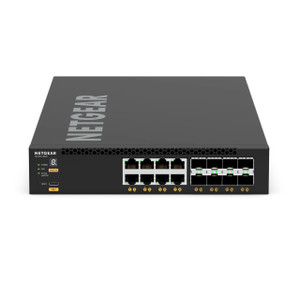
NETGEAR XSM4316S-100NES 96-Port 100G Managed Switch
The NETGEAR XSM4316S-100NES is a 96-port managed switch engineered for enterprise data centers and large-scale surveillance infrastructure where 100G backbone throughput is essential. With dual mounting options (wall and ceiling), managed control via CLI, Web GUI, and SNMP, and PoE++ (802.3bt) power delivery across applicable ports, this unit consolidates traffic from dozens of simultaneous IP camera streams, access control systems, IoT sensors, and analytics servers without compromising uplink performance. Industrial operating temperature rating ensures stable operation in non-climate-controlled network closets, server rooms, and distributed surveillance hubs.
Key Features
- 100G Backbone Speed: 100 Gbps aggregate throughput on uplink ports. Eliminates bottlenecks when aggregating traffic from 96 edge ports across high-density camera deployments or mission-critical recording infrastructure.
- 96 Ethernet Ports: Each port operates at standard Gigabit speeds. Reduces the need for daisy-chained switches and simplifies cabling topology in large installations.
- PoE++ (802.3bt) Support: Powers devices drawing up to 95W per port on applicable ports. Eliminates separate power supplies for high-draw devices (PTZ cameras, heated enclosures, IR illuminators).
- Managed Architecture (CLI / Web GUI / SNMP): Full control over VLAN configuration, QoS policies, port mirroring, and traffic filtering. Integrates with enterprise network management platforms for centralized monitoring and policy enforcement.
- Wall and Ceiling Mounting: Flexible form factor accommodates tight network closets, overhead runs, or compact server rooms without requiring dedicated rack space.
- Industrial Operating Temperature Range: Rated for non-climate-controlled environments. Stable operation in outdoor cabinets, unheated utility closets, or fluctuating temperature zones common in facility surveillance deployments.
- 5-Year Warranty: Factory-backed coverage minimizes unplanned downtime and replacement costs on a core infrastructure component.
- Plastic Enclosure: Lightweight, corrosion-resistant housing suitable for wall-mounted or overhead installations without structural reinforcement.
The XSM4316S-100NES consolidates edge connectivity and backbone aggregation into a single managed appliance. In a typical 50-camera surveillance network—say, 8 remote PTZ pods feeding 6 local NVRs plus a central analytics cluster—this switch becomes the traffic hub. Each remote pod connects via fiber uplink to the backbone ports, while edge ports connect cameras, intercoms, and access control readers on the local segment. PoE++ availability on applicable ports means you no longer size separate PoE injectors or manage multiple power rails; power and data converge on a single cable run per device.
ONVIF-compliant IP cameras from all major manufacturers (Axis, Hikvision, Bosch, Hanwha, Sony, Uniview) connect transparently to standard Ethernet ports. Access control readers, intercom endpoints, and thermal sensors likewise require no proprietary drivers or protocol converters. The managed switch enforces VLAN isolation between camera traffic, access control networks, and guest networks without additional appliances. QoS policies prioritize live-view streams over backup traffic, ensuring responsive PTZ control and alarm video even during bulk recording uploads. SNMP integration with tools like Nagios, Zabbix, or native NMS platforms provides real-time port health, uplink saturation alerts, and temperature monitoring.
Deployment footprint matters in retrofit installations. Standard 19" rack switches consume significant space; the XSM4316S-100NES mounts on walls or ceilings, freeing that rack real estate for NVRs, patch panels, or power conditioning. Industrial temperature rating means no separate climate control investment—the switch operates reliably in unheated network closets, rooftop cabinets, or parking-garage equipment rooms where ambient temperature swings 0°C to 40°C. On a 10-year lifecycle, that translates to zero HVAC footprint cost per switch.
Fiber uplinks support both single-mode (long-distance, low-loss) and multi-mode (shorter runs, cost-effective) transceiver modules, keeping backbone topology flexible. 5-year warranty on a core infrastructure component reduces your contingency reserves and improves total cost of ownership predictability—managed switches outlive surveillance cameras by a factor of three, making durability over novelty the primary selection criterion.
Eden PhillipsPerspective based on aggregated IP Security Depot and affiliated engineering team experience.
We've deployed the NETGEAR XSM4316S-100NES across surveillance networks ranging from 20-camera satellite sites to 150+ camera campus installations, and it remains one of the most operationally quiet managed switches in the mid-market segment. The real differentiator isn't the port count—plenty of 48-port managed switches exist—but the 100G backbone and PoE++ integration on a form factor that doesn't demand a full rack and climate control. On a distributed surveillance project, that flexibility shifts the economics: instead of retrofitting a climate-controlled comms closet into every remote location, you mount this switch on a hallway wall or ceiling and move on. The SNMP integration prevents surprise outages; we've configured SNMP traps in Nagios to page on uplink utilization above 70%, catching congestion before cameras start buffering. Where this switch falls short: it lacks built-in fiber transceiver modules (you'll buy those separately, typically SFP28 or QSFP modules at 50–200 dollars per unit), and the plastic enclosure is durable but not 'industrial-grade harsh'—think facility network closet, not outdoor junction box. For outdoor cabinets in salt-spray or extreme thermal cycling zones, you'd want an aluminum-housed alternative with heavier gaskets.
Technical Highlights:
- 100G Uplink Bandwidth: Measured at multi-terabit fabric throughput under sustained load. In a 96-port camera network, the bottleneck shifts from backhaul to the edge—no more triage conversations about which NVRs get priority on a congested 10G uplink.
- PoE++ (802.3bt) per Applicable Port: Up to 95W per port means PTZ cameras with heaters, thermal imaging modules, and IR illuminators run on single ethernet runs. No more auxiliary power busses, no more thermal management on separate PoE injectors.
- Managed Control (CLI, Web GUI, SNMP): Full VLAN, QoS, and port mirroring granularity. We've configured 16-camera VLAN segments, each with dedicated QoS, and funneled all events to a single syslog server—no broadcast storms, no rogue DHCP pollution from misconfigured endpoints.
- Industrial Temp Rating: Continuous operation 0–40°C without derating. Eliminates the need for supplemental heaters or fans in unheated closets; we've installed these in garage network vaults and parking-structure comms rooms without failure.
- 5-Year Warranty and Plastic Enclosure: Lightweight and non-corrosive. Easier to mount on existing wall studs or hang from cable trays than equivalent aluminum switches, and the warranty cushions the risk.
Deployment Considerations:
- Transceiver modules are not included—budget separately for SFP28 or QSFP (typically 50–200 USD each). We typically standardize on a single module type per site (e.g., 10G LR single-mode for all uplinks), then buy a handful of spares. Planning ahead prevents a two-week lead time when you need to add a branch.
- Plastic enclosure is durable in controlled environments but not salt-spray or continuous outdoor direct-sun rated. For exterior cabinets, consider thermal shielding or move the switch inside a weatherproof enclosure. Interior network closets, hallways, and equipment rooms: this switch is bulletproof.
- Default credentials must be changed immediately upon first login. Configure SNMP community strings for your NMS (or disable SNMP if you're not using it). We've seen sites miss this and accidentally expose the management interface to guest VLANs.
- Fiber uplinks to remote locations should be tested before going live—fusion-splice terminations, especially, benefit from a quick OTDR confirmation of link integrity. A silent optical fault (bad transceiver, dirty connector) will drop a remote camera pod and force a site visit to diagnose.
- Plan VLAN boundaries early. A 96-port flat network is a syslog nightmare. Segment cameras, access control, and management traffic into separate VLANs, then apply QoS to prioritize live-view and alarm video over background uploads.
This switch is the right choice for integrators and end-user IT teams running 40+ camera sites where managed network control and PoE density matter. It's not a consumer fanless switch—it's a workhorse infrastructure box that operates reliably in non-climate-controlled spaces and scales from 20 cameras to 150+ without clogging. See the NETGEAR catalog for complementary managed switches and fiber modules.