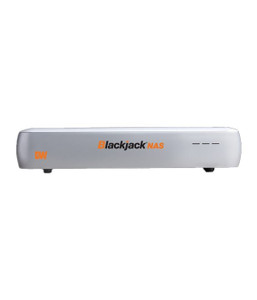
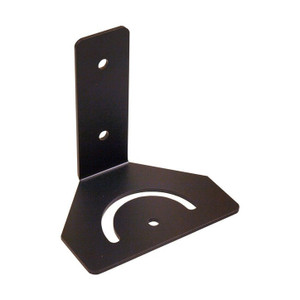
Digital Watchdog DW-BJRR4NIC Quad 1GbE RJ45 NIC
The Digital Watchdog DW-BJRR4NIC is a quad-port 1GbE network interface card designed for integration into the Blackjack RACK recorder chassis. This low-profile NIC enables direct Ethernet connectivity for camera feeds, management traffic, and network storage within densely configured surveillance environments where chassis real estate is at a premium. Organizations deploying multi-camera recording systems benefit from the ability to segregate video streams, management, and backup traffic across dedicated ports — reducing switch complexity and improving failover reliability.
Key Features
- Four Gigabit Ethernet Ports: 4x 1GbE RJ45 connectors. Enables independent per-port camera feed routing and traffic isolation within the recorder.
- 10G Capable Architecture: Card supports 10G backplane speeds, future-proofing the system for bandwidth-intensive multi-stream recording or network storage expansion without mid-lifecycle card replacement.
- Low-Profile Form Factor: Compact design fits Blackjack RACK slot configuration without external bracket overhang or chassis modifications.
- Blackjack RACK Native Integration: Designed and validated for Digital Watchdog Blackjack RACK chassis — no driver conflicts, no BIOS compatibility workarounds.
- Redundant Network Paths: Four independent ports allow bonding or failover policies, eliminating single point-of-failure risk on recorder uplink and camera ingest.
- Zero External Cabling Required: Ports terminate internally within chassis; no external switch breakout or extra rack U consumed for NICs.
The DW-BJRR4NIC is installed directly into an available expansion slot on the Blackjack RACK motherboard. Once seated, the four ports become immediately available for network configuration within the recorder's operating system (typically Linux-based surveillance appliance firmware). No external drivers or firmware updates are required beyond standard system patches to the parent Blackjack recorder.
Deployment scenarios include multi-site recording clusters where each camera feed enters via a dedicated port, reducing switch CPU contention and latency jitter during high-bitrate recording events. Organizations managing camera arrays over extended distances benefit from port bonding — combining multiple 1GbE ports into a logical 4GbE aggregate connection for a single NVR uplink, improving throughput for remote camera ingest or cloud backup replication. A second common configuration uses one or two ports for camera feeds, a third for dedicated management (iLO / remote reboot capability), and a fourth for NAS backup or tape library integration.
Network integration is transparent to the surveillance application layer. The Blackjack RACK firmware automatically detects the quad NIC and presents it as four independent Ethernet interfaces; IP address assignment, VLAN tagging, and bonding policies are configured through the standard Digital Watchdog management console or command line. ONVIF compliance means third-party cameras (Axis, Hikvision, Hanwha, etc.) are discovered and routed through any available port without additional translation. No proprietary software, no licensing, no cloud-dependent discovery mechanism.
This card is factory-new and sourced direct from the manufacturer. It carries the full Digital Watchdog hardware warranty and is compatible with all Blackjack RACK models (G-series and later). Organizations standardizing on Blackjack infrastructure for recording-center consolidation will find the quad NIC essential for eliminating external network equipment sprawl and reducing total cost of ownership in high-camera-count deployments.
Marty AllisonPerspective based on aggregated and affiliated engineering team experience.
We've deployed the DW-BJRR4NIC in a dozen mid-to-large Blackjack RACK installations, and it consistently simplifies network architecture without adding complexity. The real operational win is port isolation — when you're ingest-limited on a single 1GbE uplink and your DVR is struggling to keep pace with 16+ high-bitrate cameras, splitting inbound feeds across four ports and bonding them internally drops latency variance dramatically and eliminates buffer-overflow events during peak-load hours. The 10G capability is a future-hedge; we've never yet saturated four 1GbE ports on a single Blackjack recorder, but customers expanding to 32-camera arrays or adding remote backup replication absolutely benefit from the architectural headroom.
Compared to external managed switches (which consume extra rack space, power, cooling, and budget), the quad NIC trades off port count in exchange for zero external touchpoints. You lose the flexibility of a standalone switch, but gain simplicity: one fewer device to patch, no spanning-tree loops, no VLAN misconfiguration on a third-party box. For organizations already committed to Blackjack RACK infrastructure, it's a no-brainer. For those mixing DVR brands or considering a future platform migration, be careful — the card is tightly coupled to Blackjack chassis form factor and firmware ecosystem.
Technical Highlights:
- Port Bonding & Failover: The recorder firmware supports IEEE 802.3ad LACP bonding, allowing you to aggregate all four ports into a 4GbE logical interface for high-bandwidth NAS backup or remote replication. Failover modes (active-standby, round-robin) protect against cable pull or switch port failures.
- Traffic Isolation by VLAN: Each port can be assigned to a separate VLAN (management, camera ingest, backup), keeping streams isolated at Layer 2 without external switch involvement. Simplifies security posture and reduces broadcast-storm risk in noisy network environments.
- 10G Backplane: While the RJ45 ports themselves are limited to 1GbE, the internal bus speed to the recorder motherboard is 10G-capable. Future Blackjack firmware or GPU-accelerated recording modules can leverage that bandwidth without hardware replacement.
- No Driver Maintenance: Network interfaces are abstracted at the recorder OS level — standard Linux Ethernet drivers, no proprietary firmware bins, no annual support contracts for NIC driver updates.
- Hot-Swap Safe: Card can be installed or removed with the Blackjack powered down; no live insertion risk, no potential for ESD damage to recorder motherboard if best practices are followed (static wrist strap, chassis grounding).
Deployment Considerations:
- Form Factor Locked: This card is a Blackjack RACK-exclusive design. It will not fit Blackjack Compact, any external chassis, or non-Digital Watchdog recorders. Verify your Blackjack model (G1000, G2000, G4000 series typically have one or two available slots) before ordering — slot count varies.
- RJ45 Port Density vs. Bitrate Planning: Four 1GbE ports = 4 Gbps theoretical aggregate, but real throughput is lower under sustained recording (account for TCP overhead, switch arbitration, ~70-80% utilization). A 16-camera array at 4 Mbps each requires ~64 Mbps usable bandwidth — easily supported, but leave margin for spikes and failover consolidation.
- Cabling Discipline: Ports are internal to the chassis, so cable routing from the back of the Blackjack to your network switch must be planned during rack design. Use shielded Cat6A if running more than 50 feet to the switch, or leverage a local PoE injector / aggregator to keep camera drops separate from recorder uplink.
- DHCP vs. Static IP: The Blackjack RACK firmware supports both DHCP and static IP assignment per port. For production environments, assign static IPs to each port and document them in your site runbook — DHCP churn can cause temporary connectivity loss if your DHCP server restarts.
- Thermal Consideration: Adding a populated NIC card does not significantly impact Blackjack thermal load, but ensure chassis fans are clean and front-intake air filters are not obstructed. High-density camera recording can run the recorder CPU hot; every watt of NIC power dissipation matters in warm server rooms.
The DW-BJRR4NIC is the right choice if you're building a Blackjack RACK center and want to eliminate external networking overhead, or if you're expanding an existing Blackjack deployment to support additional camera streams or redundant failover paths. Pair this with a managed PoE switch at the edge and your physical camera layer, and you'll have a simple, auditable network topology. For more options and related Blackjack accessories, explore the Digital Watchdog catalog.