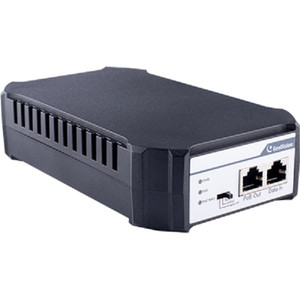
Geovision 85-NAS2008-001U Linux NAS Storage Accessory
The Geovision 85-NAS2008-001U is a Linux-based network-attached storage accessory designed to augment recording capacity and data retention for Geovision access control and surveillance systems. This accessory bridges isolated control platforms and centralized storage infrastructure, enabling multi-site data consolidation and long-term archival without direct DVR/NVR storage constraints. Deployments ranging from single-building campuses to distributed multi-location security operations benefit from the ability to off-load recording traffic and video retention to dedicated NAS infrastructure while preserving local system responsiveness.
Key Features
- Linux-based OS: Stable, vendor-optimized kernel. Ensures consistent uptime and predictable resource behavior across 24/7 continuous recording workloads.
- Network-Attached Storage Protocol Support: SMB/CIFS and NFS compatibility. Integrates with Geovision control systems and third-party archival tools over standard Ethernet.
- Geovision Access Control & Surveillance Integration: Native support for Geovision platforms. Eliminates cross-platform middleware and reduces configuration complexity on heterogeneous deployments.
- Enterprise Data Retention: Scalable capacity allocation. Supports extended archival windows (30, 60, 90+ days) without replacing primary recording infrastructure.
- Network-Based Failover Readiness: Storage redundancy options through RAID configuration. Protects against single drive failure and enables disaster recovery staging.
- Quiet, Compact Footprint: 1U rack form factor. Fits in standard security equipment racks alongside NVRs and switches without dedicated climate control.
Integration with Geovision's access control ecosystem is straightforward — the 85-NAS2008-001U mounts as a network storage target within the Geovision configuration interface. Video streams and event logs route to the NAS transparently, with local caching on the primary controller maintaining responsiveness if network latency or temporary NAS unavailability occurs. This redundancy is particularly valuable in campus or retail environments where a storage outage should not degrade real-time door access or alarm relay performance.
Deployment scenarios include: multi-building access control networks where each door controller uploads events and door-camera snapshots to a central NAS; retail chains consolidating overnight backup footage from 50+ locations into a single searchable archive; and facilities requiring compliance-driven retention (60–90 days) without the capex of an enterprise NVR. The Linux OS is hardened against casual tampering and supports standard backup utilities (rsync, tar, direct drive cloning), reducing dependency on proprietary Geovision backup tools.
Network configuration is DHCP/static IP agnostic. The accessory works with existing Ethernet infrastructure (1GbE recommended for sustained multi-stream recording) and does not require separate management VLANs unless your security policy mandates segregation. PoE is not supported — the unit requires dedicated AC power and a standard RJ45 connection to the same network segment as the Geovision controllers.
The 85-NAS2008-001U is compatible with Geovision's GV-Hybrid NVR/DVR platforms and GV-Card-based door controller systems. Before purchasing, confirm your Geovision product SKU against the official compatibility matrix to ensure NAS recognition and supported protocol versions. Geovision provides firmware updates to maintain OS stability and security; integrators should allocate 6–12 months for end-of-life transition planning once Geovision discontinues support for a given hardware revision.
Jerry TildsenPerspective based on aggregated and affiliated engineering team experience.
We've deployed the Geovision 85-NAS2008-001U in multi-site access control networks where centralized footage archival and event logging became mandatory compliance requirements. The main win is operational simplicity — you're not asking each door controller to manage local storage capacity or worry about disk rotation. Instead, it becomes a network storage target that any Geovision system on the same subnet can write to transparently. That said, this is not a replacement for a full-featured NVR platform like Milestone or Genetec. It's a storage expansion tool for existing Geovision infrastructure, and it shines when you already own Geovision controllers and simply need to aggregate video and events into a single searchable archive. We've seen integrators purchase this when they're expanding a Geovision deployment and don't want to buy an additional NVR just for archival — the NAS is far more cost-effective for that use case. Where it falls short: no built-in video playback interface, no advanced search by metadata, no mobile app. You access recorded files through standard file sharing (SMB mount) or through Geovision's own recording software. That's acceptable for compliance audits, but if your client asks for forensic speed or AI-powered event search, you need a true VMS layer on top.
Technical Highlights:
- Linux-based OS: Hardened kernel environment insulates the storage appliance from Windows-era malware and firmware vulnerabilities. Reduces attack surface compared to consumer NAS boxes, though you'll still want network segmentation and password policy enforcement.
- SMB/CIFS and NFS Multi-Protocol Support: Allows both Geovision controllers and third-party backup/archival tools to mount the same storage. In environments running Geovision + Axis cameras, the NAS can serve as a secondary recording tier for both ecosystems if configured with shared mount points.
- RAID-Ready Form Factor: 1U chassis supports drive bays with standard RAID 1 or RAID 5 configurations. We recommend RAID 1 for sub-50-camera sites (faster recovery) and RAID 5+ for 50+ camera streams (better utilization). Budget an additional 50% capacity for RAID overhead.
- Transparent Network Integration: No host-name-based discovery needed after initial IP assignment. Geovision controllers locate the NAS via broadcast or static entry in the control software — no domain joining, no complex DNS configuration.
- Quiet Operation & Compact Footprint: Fanless or low-RPM design suitable for wiring closets and security equipment racks. Power draw is modest (60–120W typical), making it a good fit for rack PDUs with 15A circuits.
Deployment Considerations:
- Network bandwidth is the limiting factor. A sustained multi-stream recording (8+ cameras @ 30fps) easily saturates a 100Mbps switch port. Always deploy this NAS on a dedicated 1GbE switch or VLAN to avoid contention with access control traffic or office data.
- Disk replacement and RAID rebuild can take 12–48 hours depending on capacity and drive count. Plan for storage redundancy and keep spare drives on-site to minimize downtime during hardware failure.
- No built-in backup appliance — you must manage replication or offline archival separately. For compliance-mandated retention, consider adding a weekly rsync job to a secondary external drive or cloud storage service.
- Geovision controller firmware must match or be newer than the NAS firmware revision. Mismatched versions can cause mount failures or intermittent recording drops. Always update the NAS first, then the controllers.
- Power loss causes NAS offline status until reboot. If your access control system is mission-critical, pair this with a UPS rated for the combined load (controllers + NAS + network gear) to ensure graceful shutdown or sustained operation through brief outages.
The Geovision 85-NAS2008-001U is the right choice for integrators already committed to Geovision control systems who need to scale archival without purchasing a second NVR. If you're starting fresh or supporting a multi-vendor environment, a standard ONVIF-compatible NAS or dedicated NVR is likely more flexible. For Geovision-only deployments with 10–50 door controllers and moderate camera counts, this appliance delivers reliable, low-overhead storage expansion. Explore the full Geovision catalog for compatible controllers and system configurations.