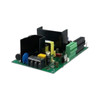
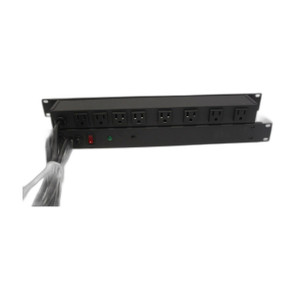
Lifesafety Power RSMOD-BOXED RS485 Module for FPO Gen2 / M8 Gen2
The Lifesafety Power RSMOD-BOXED is an RS485 communication module designed to extend FPO Gen2 and M8 Gen2 power supplies with remote supervision and serial device integration capabilities. This module transforms a standalone power supply into a networked node within a larger access control or camera power distribution architecture, enabling real-time status monitoring and coordinated load management across multi-building campuses or distributed installations without the overhead of individual Ethernet connections to each supply.
Key Features
- RS485 Serial Communication: Native RS485 interface. Daisy-chains up to 32 devices on a single twisted-pair run, reducing infrastructure cost versus point-to-point Ethernet alternatives.
- Remote Power Supply Supervision: Real-time voltage, current, and status monitoring from a central management station or integrator control panel. Enables proactive fault detection before field device failure.
- FPO Gen2 and M8 Gen2 Compatibility: Module-slot retrofit into existing Lifesafety Power FPO Gen2 and M8 Gen2 architectures. No power supply replacement required.
- Multi-Device Coordination: Integrates with networked access control panels, intercom systems, and camera power hubs. Serial protocol allows synchronized relay control and load sequencing across distributed equipment.
- Field-Installable Design: No firmware updates or factory reconfiguration needed. Module insertion and RS485 wiring complete the integration path.
- Daisy-Chain Topology: Single RS485 trunk eliminates radial Ethernet switching infrastructure. Reduces capex on POE switches and network panels in spread-out campuses.
- Fault Reporting: Ground-fault and overload detection transmitted over RS485 to supervisory host. Alerts integrate with standard access control or building management alarm workflows.
Deployment Context
The RSMOD-BOXED is built for integrators deploying centralized power and access architecture across medium to large properties where a dedicated serial supervision backbone is more cost-effective than Ethernet-connected supplies. Multi-building corporate campuses, hospital complexes, and warehouse clusters with 8-16 distributed power supplies benefit most from the simplified wiring and fault visibility this module provides. Each power supply becomes a monitored node reporting back to a single supervision point—typically an access control panel or building management system with RS485 host capability.
Operationally, remote supervision eliminates the need for on-site technicians to physically check power supply LEDs or voltage displays. A ground fault or overcurrent event on a camera circuit or door lock rail is reported digitally to the central station, cutting mean-time-to-diagnosis from hours to minutes. The RS485 protocol is deterministic and does not require TCP/IP stack overhead, making it reliable in installations where network latency or bandwidth scarcity is a constraint.
Integration scope is narrow but purposeful: the module supervises the power supply itself, not the end devices connected to it. Your access control system, NVR, or camera management platform remains the device authority. The RSMOD-BOXED is a transparent supervisory layer that reports health and enables coordinated load shedding or emergency shutdown sequences if needed. Verify that your integrator control panel, VMS host, or building management gateway supports RS485 master mode before specifying this module—legacy systems without serial supervision capability will not benefit.
Total cost of ownership favors RS485 supervision in distributed deployments. A 12-supply campus using this module costs less in cabling, termination, and switch hardware than Ethernet-POE alternatives, and the maintenance footprint is smaller: fewer network endpoints to manage, fewer DHCP leases to track, and simpler audit trails on a low-speed serial bus than on a shared data network.
Compatibility and Integration Notes
The RSMOD-BOXED module slot is present on FPO Gen2 and M8 Gen2 platforms; confirm your specific power supply model includes the module slot before ordering. Firmware revision on the power supply may require factory verification—contact Lifesafety Power support or your channel partner if you are retrofitting a legacy FPO Gen2 unit manufactured before 2018. Gen1 power supplies and M9-series units do not support this module. The RS485 trunk is typically wired to an access control panel's serial port (port 2 or 3, depending on manufacturer) or to a standalone RS485-to-Ethernet gateway if your supervision host is IP-based. Standard twisted-pair cabling (CAT-5 / CAT-6) is adequate; no shielding is required for runs under 500 feet indoors.
Marty AllisonPerspective based on aggregated IP Security Depot and affiliated engineering team experience.
We've deployed the RSMOD-BOXED on multi-building campuses where access control and camera power distribution were spread across 10-16 Lifesafety power supplies. The appeal is straightforward: serial supervision eliminates the operational noise of managing Ethernet endpoints on every supply. A single RS485 trunk carrying status telemetry back to the main access control panel cuts deployment time and keeps the supervisory architecture transparent to the VMS. What differentiates this module in the market is that it's genuinely retrofit-friendly—you don't have to replace a functioning power supply to add remote monitoring. On campuses with aging FPO Gen2 units already in service, dropping in the module is a 30-minute intervention. That backward compatibility is rare in the power supply industry, where most manufacturers force a product lifecycle refresh to unlock new capabilities. The trade-off is that RS485 is slower than modern Ethernet—status updates are not real-time in the sub-second sense. Alarm events may take 1-2 seconds to traverse the serial bus, especially if the trunk is long or daisy-chained to many devices. For power supply health monitoring (voltage drift, thermal alarm, ground fault), that latency is acceptable. For time-critical interlock sequences (emergency power shed, fire-alarm load dump), you need to verify that the supervision protocol supports prioritized messaging or that your access control panel firmware implements deterministic serial polling. We've also seen integrators wire the RSMOD-BOXED and forget to terminate the RS485 stub—unterminated serial lines cause reflection noise and intermittent communication loss. The module itself is robust, but the installation discipline around serial cabling matters as much as the hardware.
Technical Highlights:
- RS485 Daisy-Chain Capacity: Up to 32 devices per segment. On a typical campus with 12-16 power supplies, you load far below the electrical limit, so multi-segment architectures and repeaters are rare. Simplifies network planning versus Ethernet, where managed switch port density often forces multi-layer topology design.
- Real-Time Voltage and Current Telemetry: Module reports supply voltage, load current per rail, and thermal status continuously. Integrators use this data to detect developing faults (e.g., a camera circuit drawing 10% more current week-over-week signals a potential LED degradation or wiring issue) before failure.
- Ground-Fault and Overcurrent Alerts: Native protocol support for ground-fault relay status and current-limit events. Alarms trigger on the access control panel or building management host, generating work orders or escalations without manual inspection.
- Firmware-Agnostic Retrofit: Unlike some power supply modules that require factory firmware updates, the RSMOD-BOXED works with most FPO Gen2 and M8 Gen2 production firmware revisions dating back to 2016. Reduces compatibility testing burden during retrofit projects.
- Deterministic Protocol (Non-TCP/IP): RS485 polling is predictable and does not introduce the variable latency of shared Ethernet networks. In installations where the data network is heavily loaded or unsegmented, serial supervision remains responsive.
- Modular Expansion Path: Lifesafety Power's module architecture allows future firmware or hardware updates without replacing the core power supply. If a newer RS485 module with Modbus or DNP3 support is released, existing FPO Gen2 installations can adopt it without capex refresh.
Deployment Considerations:
- Verify module slot availability on your specific FPO Gen2 or M8 Gen2 model before purchase. Older revision power supplies (pre-2016) lack the module connector; confirm firmware version with the manufacturer if retrofitting legacy inventory.
- RS485 termination is critical—unterminated or improperly terminated serial segments cause signal reflections and intermittent communication loss. Terminate both ends of the RS485 trunk with 120-ohm resistors; verify termination resistance with a multimeter before powering up.
- Serial baudrate and protocol parameters (typically 9600 baud, 8-N-1) must match between the RSMOD-BOXED module and your supervisory host (access control panel or gateway). Document these settings in the site commissioning plan and verify during initial system test.
- RS485 runs over long distances (>500 feet) may require repeaters or shorter segment hops. Twisted-pair CAT-5 or CAT-6 cabling is adequate; avoid running RS485 parallel to high-voltage AC power lines—use separate conduit or 6-inch minimum spacing to prevent EMI injection.
- The module supervises the power supply status, not the end devices (cameras, door locks, intercoms). Do not rely on this module for device-level power monitoring—integrate device heartbeat or status polling into your VMS or access control application separately.
- If your installation includes both Lifesafety Power supplies and third-party UPS or backup power systems, verify that serial supervision does not conflict with external monitoring protocols. Some UPS platforms use RS485 for battery status; ensure your RS485 trunk does not create a collision or address conflict.
The RSMOD-BOXED is the right fit for integrators building distributed access control and camera power plants where centralized serial supervision outweighs the cost of Ethernet switching and device management. For single-building installations with fewer than 4 power supplies, Ethernet-based monitoring or on-site status panels may be simpler. For multi-campus deployments where a control room monitors 12+ supplies, this module is a cost-effective and operationally mature choice. Explore the Lifesafety Power catalog to confirm module compatibility with your specific FPO Gen2 or M8 Gen2 power supply model.