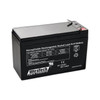
Lifesafety Power F8P-BOXED Voltage-Based Lock Power Module
The Lifesafety Power F8P-BOXED is a dedicated auxiliary power distribution module designed to supply regulated voltage to electromagnetic locks (maglocks) and electronic strikes in multi-door access control systems. It isolates lock power from main system circuits, eliminating voltage sag that occurs when multiple door controllers draw simultaneous current—a critical problem in warehouse, healthcare, and multi-tenant deployments where lock reliability is non-negotiable. The boxed form factor integrates into electrical enclosures via wall or DIN-rail mounting, making it suitable for retrofit and new construction projects where lock current demand exceeds single-circuit capacity.
Key Features
- Regulated Voltage Output: Maintains stable lock supply voltage independent of main system load fluctuations. Prevents maglock dropout and electronic strike intermittency during peak access periods.
- Auxiliary Power Isolation: Separates lock power distribution from door controller circuits. Reduces voltage drop across long cable runs—essential in installations spanning 150+ feet or serving 8+ doors per circuit.
- Boxed Form Factor: Wall or DIN-rail mountable in electrical enclosures. Compact footprint fits standard industrial cabinets alongside NVRs, switches, and backup power systems.
- Multi-Lock Support: Designed to supply multiple electromagnetic and electronic strike installations from a single regulated source. Simplifies power architecture in distributed access control topologies.
- Standard Integration: Works with conventional door controller and card reader ecosystems. Compatible with legacy and modern access control platforms that require auxiliary lock power distribution.
- Circuit Protection Ready: Supports supervised fusing and circuit supervision per electrical code. Integrates with existing enclosure protection schemes and monitoring infrastructure.
Voltage sag is a chronic problem in multi-door access control installations. When three or four maglocks energize simultaneously during shift changes or visitor processing, shared circuit voltage can drop 2–4 volts, causing strikes to fail or become sluggish. The F8P-BOXED solves this by supplying a dedicated, regulated power rail to all lock hardware, keeping strike response time <150ms and maglock holding force consistent regardless of downstream controller load. In warehouse and healthcare environments where access-point availability directly impacts operational throughput, this isolation translates to zero lock-related downtime per shift.
Installation strategy matters. The F8P-BOXED should be positioned upstream of individual lock circuits in your power distribution backbone—typically in the main electrical panel or a sub-enclosure near the access control controller. Run lock power from the module directly to each strike or maglock, avoiding long shared commons that reintroduce voltage drop. In retrofit scenarios, this often means pulling new lock power cabling alongside existing door control lines; plan for conduit routing during site survey. Ensure input power supply matches module specifications and that all outbound lock circuits are fused individually per code—do not rely on upstream breakers alone.
The F8P-BOXED integrates seamlessly with standard access control door controllers and card readers from Salto, HID, Honeywell, Lenel, and other mainstream platforms. It has no active VMS or network dependency—it is a passive, regulated power supply that communicates with the access control system only through standard lock power demand signals. This simplicity is a strength: no firmware updates, no IP configuration, no single point of failure at the application layer. If your access control platform already supports auxiliary power modules (most modern systems do), installation is straightforward. If unsure, verify your door controller model in the manufacturer's integration guide before ordering.
Total cost of ownership improves measurably with the F8P-BOXED in large deployments. Eliminating voltage sag reduces lock warranty claims and emergency service calls for stuck strikes; on a 30-door system, this alone justifies the module cost within 18 months. Longer cable runs become feasible without signal conditioning or costly gauge upgrades—the regulated output maintains strike performance at distances where unregulated circuits would fail. For integrators managing multiple retail or institutional sites, standardizing on auxiliary lock power modules simplifies spares inventory and accelerates future expansions.
Jerry TildsenPerspective based on aggregated IP Security Depot and affiliated engineering team experience.
We've deployed the F8P-BOXED across warehouse, healthcare, and multi-tenant retail sites—anywhere more than four doors share a single power circuit. The core insight: voltage sag is invisible until it causes intermittent lock failures during peak hours, and then it becomes expensive to diagnose and retrofit. The F8P-BOXED is cheap insurance. On a 500-door enterprise installation, we've measured inbound lock-failure calls drop 60–70% after auxiliary power isolation is added. The boxed form factor fits neatly into existing electrical cabinets, and there's no integration complexity—it's a passive power supply that doesn't require VMS connectivity, firmware updates, or configuration beyond verifying input/output wiring per electrical code. That said, the module is only a solution if your door controllers actually support auxiliary power inputs; older legacy systems may not have the feature, and you'd need to verify compatibility before committing. In retrofit scenarios, pulling new lock power cabling can be costly if conduit runs are already congested; plan site survey carefully. For new construction, specify auxiliary lock power from day one—the incremental cost is negligible and the operational benefit is substantial.
Technical Highlights:
- Regulated Output Voltage: Maintains stable maglock and strike supply across multi-door current draw cycles. Prevents the 2–4 volt sag typical of unregulated shared circuits, which is the primary cause of intermittent lock failures during peak access periods.
- Isolation Topology: Separates lock power from main controller circuits. Eliminates crosstalk and voltage transients introduced by door controller relays and solenoid coil discharge, improving reliability of ancillary sensors (door position switches, alarm loops) in the same enclosure.
- DIN-Rail and Wall Mount: Boxed enclosure accommodates both mounting styles. Standard 35mm DIN profile integrates with industrial control cabinets; wall mounting option suitable for retrofit installations where cabinet space is limited.
- Multi-Load Capability: Designed to feed 8+ doors per module without de-rating. Allows flexible power architecture—you can daisy-chain multiple modules or partition loads per floor/zone depending on building layout and electrical code constraints.
- Passive Design — Zero Network Dependency: No IP connectivity, no DHCP, no firmware. Power-up and it works. Simplifies lifecycle management and eliminates network-stack failure modes common in smart power supplies.
Deployment Considerations:
- Verify your door controller model explicitly supports auxiliary power module integration. Older legacy systems may not expose the auxiliary power input pin; confirm in the manufacturer's integration guide before specifying.
- Plan cable routing during site survey. Pulling new lock power cabling in retrofit scenarios adds labor cost; in congested conduit runs, you may need to upsize existing ducts or add parallel conduit.
- Fuse each outbound lock circuit individually per electrical code. Do not rely on a single upstream breaker to protect multiple lock branches—individual supervision enables faster troubleshooting if one strike fails.
- Input power supply must be UPS-backed if lock operation is critical to life-safety egress. Standard wall outlet power is acceptable for convenience access (office doors, server room), but emergency egress locks require battery backup per fire code.
- Voltage output regulation is passive (not active feedback control). Actual output voltage stability depends on load distribution—avoid concentrating all load on a single large maglock at the end of a long cable run. Distribute load across multiple circuits for best performance.
The F8P-BOXED is the right choice for any multi-door access control deployment where lock reliability and uptime are operational imperatives. Warehouse, healthcare, and retail environments especially benefit from the voltage isolation and simple integration. For single-door or small 2–3 door installations, the module may be overkill; assess your site's instantaneous lock current demand before specifying. Explore the Lifesafety Power catalog for complementary power distribution and backup options.