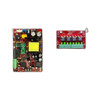
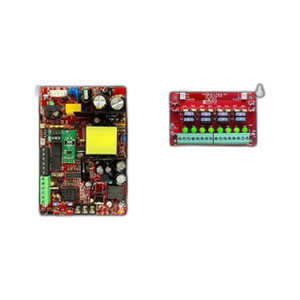
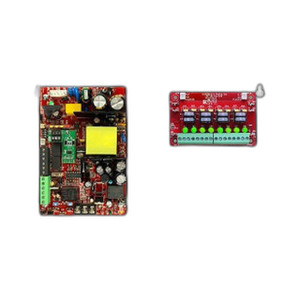
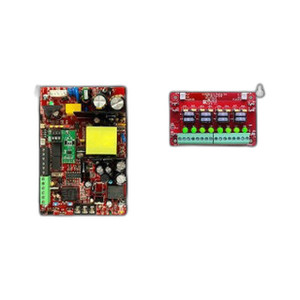
Lifesafety Power FPO75-C4E1M 75W Managed Power Supply
Overview
The FPO75-C4E1M is a 75W managed power distribution unit designed for security installations requiring supervised, monitored output circuits. It delivers regulated 12VDC or 24VDC power across four independent channels, each with individual fuse protection and status supervision. Deploy this in power supplies and backup systems where you need per-circuit fault detection and load monitoring—standard in access control, alarm panel, and camera networks where downtime visibility is non-negotiable.
Specifications
Power Ratings: 75W total capacity supports four supervised outputs at rated voltage. Each channel reports open-circuit, short-circuit, and brownout conditions back to a compatible control panel or monitoring system, eliminating silent failures on individual circuits.
Supervision: Built-in supervision circuits detect faults on each output independently. This means a shorted load on one channel will trigger an alarm without disabling the other three—critical in mixed-load deployments (cameras, locks, strobes on separate circuits).
Battery Backup: Integrated battery backup capability supports brief power loss scenarios. Confirm capacity and hold-up time against your site's UPS requirements and load profile before finalizing the order.
Installation Notes
Mount in a climate-controlled enclosure or DIN rail cabinet. Confirm input voltage (12VDC or 24VDC primary), output voltage configuration, and total load against the 75W rating before connecting loads. Wire each supervised output through its dedicated fuse holder; open or blown fuses report to the alarm panel in real time. Consult your control panel documentation for supervision signal integration.
When to Choose a Different Model
If you require higher total wattage or more than four outputs, evaluate higher-capacity units in the Lifesafety Power catalog. For non-supervised, simple 12VDC or 24VDC distribution without fault reporting, consider a standard unmanaged supply. If battery backup is not required, eliminating that component may reduce cost.