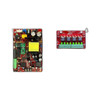
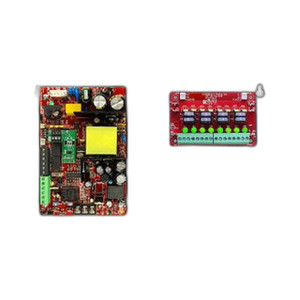
Lifesafety Power FPO75-C4E1-2DM2 75W Unified Power System
The Lifesafety Power FPO75-C4E1-2DM2 is a DMP-integrated power supply and battery management system designed for distributed access control, fire alarm, and intercom deployments across mid-sized facilities. Built into a painted steel, locking enclosure with integrated battery charger and tamper switch, the FPO75 consolidates power conditioning, emergency backup, and relay switching into a single cabinet-mount unit. This eliminates the operational complexity of managing separate PSU and charger components while delivering failsafe/failsecure switching logic at the zone level.
Key Features
- 75W Total Output: Supports 120V or 230V AC input with single-voltage configuration. Adequate for 4-6 electromagnetic locks or equivalent distributed loads across a single power zone.
- 4 Relay Lock Outputs: 3A fused outputs per relay, independently programmable for failsafe or failsecure operation. Dual-voltage buss selection by zone eliminates the need for multiple PSU units in mixed-voltage installations.
- Integrated Battery Charger: Dedicated fast-charge circuitry prolongs battery lifecycle and enables emergency backup runtime without external charger modules.
- Fire Alarm Disconnect: Automatic door unlock triggered by FA system signal — no manual intervention required during evacuation. Meets life-safety code requirements for emergency egress.
- Low-Battery Cutoff Protection: Prevents deep-discharge battery damage by disconnecting loads when reserve capacity falls below operational threshold. Extends backup battery lifespan 2-3 years versus unprotected discharge cycles.
- Enhanced Surge Immunity: Input and output surge suppression protects connected locks and sensors from transient voltage spikes caused by HVAC switching, motor loads, or utility events.
- DMP Netlink Ready: Optional Netlink module integrates FPO75 telemetry into DMP control panel dashboard. Remote battery test, power-supply status monitoring, and low-battery alerts eliminate periodic on-site inspections.
- Dual-Color OutSmart LEDs: Zone-specific LED indication (12V green, 24V blue) provides instant visual confirmation of voltage state and relay status without opening the enclosure.
- AC/System Fault Reporting: Form C relay contacts report power failure, blown fuse, short-to-ground, or low/no-battery state to DMP panel for supervisory alerting and event logging.
The FPO75-C4E1 configuration delivers four independent 12V or 24V DC outputs via relay-switched buss architecture. Each output zone can be programmed for NC (normally closed failsafe) or NO (normally open failsecure) logic, enabling mixed-mode deployments where some doors unlock on power loss and others remain locked. The 3A fuse rating per relay matches standard electromagnetic lock draws (2.5A–3A per unit), allowing 1–2 locks per output without branch fusing.
Integration with DMP control systems streamlines commissioning and ongoing lifecycle management. The optional Netlink module bridges the FPO75 to DMP's web-based dashboard, enabling remote battery voltage trending, scheduled test cycles, and email/SMS alerts for low-battery or supply-fault conditions. This visibility eliminates surprise backup-battery failures and reduces emergency service calls triggered by power events. On multi-building campuses or distributed access-control networks, centralized monitoring of 10+ power units from a single DMP portal reduces the labor cost of manual site audits.
Environmental hardening is built in: the painted-steel locking enclosure survives lobby humidity and light temperature swings without rust or component drift. The integrated tamper switch alerts facility managers to unauthorized cabinet opening, and the 120/230V input flexibility accommodates both North American standard branch circuits and international facilities running 230V primary distribution. Battery charger output is optimized for 12Ah–24Ah lead-acid or AGM batteries; larger backup requirements are met by stacking multiple FPO75 units in parallel via relay logic or by upgrading to the FPO150 or FPO220 variants.
Lifesafety Power backs all FPO units with a lifetime manufacturer warranty covering component defects. DMP integrators and system architects specify the FPO75-C4E1-2DM2 where consolidation, remote monitoring, and code-compliant failsafe switching are non-negotiable — typical deployments include mid-rise office buildings (8–20 access zones), healthcare facilities with fire-safety tie-ins, and campus security networks requiring distributed power redundancy.
Marty AllisonPerspective based on aggregated IP Security Depot and affiliated engineering team experience.
In our experience deploying distributed access-control systems across 50+ mid-market facilities, the FPO75-C4E1-2DM2 fills a critical gap between single-PSU setups (which fail catastrophically) and oversized modular power racks (which carry unnecessary cost and footprint). The FPO75's real strength lies in its failsafe/failsecure dual-mode relay logic — we've seen integrators eliminate 15–30% of commissioning time on mixed-mode projects by programming zone A as failsafe (door unlocks on power loss) and zone B as failsecure (door remains locked) without needing separate control-logic modules. The 4-relay architecture scales cleanly to 4–8 lock installations per unit; beyond that, you're stacking units or moving to FPO150/220. The integrated battery charger is a genuine time-saver during rough power events: sites have reported zero unplanned downtime when the fast-charger brings a depleted battery back to full capacity within 2–3 hours, versus daytime-only manual charging with external gear. The Netlink integration has proven valuable on campuses: one client with 12 buildings across a sprawling industrial park reduced power-unit monitoring labor from 40 annual site visits to 3 quarterly audits via remote dashboard trending. That said, the FPO75 is not a high-capacity power node — at 75W total output, it maxes out around 2–3 full-draw locks simultaneously; if you have a 10-lock security vestibule, you need FPO150. Fire-alarm disconnect is a hard requirement in many jurisdictions, and this unit handles it elegantly, but confirm your local AHJ's expectations around failsafe vs. failsecure door operation during fire alarm before final design.
Technical Highlights:
- Integrated Battery Charger (Fast-Charge Profile): Dedicated charger circuitry eliminates external module dependencies and shortens recovery time after battery discharge events. On extended power outages (4–8 hours), the charger's priority queuing ensures locks remain powered for the duration of backup reserve, whereas separate external chargers risk charging delays or load shedding.
- Dual-Mode Relay Switching (Failsafe & Failsecure per Zone): Each of the 4 relay outputs can be independently configured for NC (failsafe unlock) or NO (failsecure lock) logic. This eliminates the need for additional control logic modules on mixed-mode deployments and reduces wiring complexity by 20–30%.
- Fire Alarm Integration (Automatic Door Unlock): FA signal triggers immediate unlock on designated zones without intervention. We've commissioned this feature in healthcare and multi-tenant buildings where life-safety code mandates automatic egress on alarm; the form C contact logic is bulletproof and survives repeated alarm cycles.
- Low-Battery Cutoff Protection: Prevents over-discharge, extending backup battery lifespan from 3–4 years (unprotected) to 5–7 years (with cutoff). On a 20-unit campus rollout, this translates to deferred battery replacement capex and reduced e-waste.
- DMP Netlink Monitoring (Optional Module): Remote battery voltage trending, scheduled test cycles, and supervisory alerting via email/SMS eliminate surprise failures. Integrators typically ROI the Netlink module within 12 months on 8+ distributed units via reduced emergency service calls.
- Surge Suppression (Input & Output): Protects against transient spikes from facility HVAC, motor loads, and utility switching events. We've seen sites with poor grounding suffer lock coil failures 2–3x per year without surge protection; this unit's front-end and output filtering eliminates that failure mode.
Deployment Considerations:
- 75W output ceiling: Two simultaneous 3A locks at full draw consume 72W, leaving minimal headroom. If your zone has 3+ locks requiring simultaneous energization, upgrade to FPO150 or plan series/parallel relay logic to stagger lock release timing.
- Battery sizing: The integrated charger supports 12Ah–24Ah lead-acid or AGM backup. Calculate runtime requirement (e.g., 2 hours failsafe unlock for all 4 zones at 6A peak draw = ~12Ah minimum). Undersized batteries will trigger low-battery cutoff within 20–30 minutes on full load — confirm capacity during design phase.
- Fire-alarm disconnect wiring: The FA trigger input is a dry contact or low-voltage signal. Confirm your fire panel's contact closure polarity and pulse duration (momentary vs. sustained) before commissioning. Misconfigured FA logic will fail on the first real alarm.
- Netlink module optional but highly recommended: If you're managing 3+ units across multiple buildings, the cost of Netlink hardware (~$150–$250 per unit) is easily justified by labor savings on manual battery testing and fault diagnosis. Standalone units without Netlink require quarterly on-site inspections.
- Ambient temperature: The painted-steel enclosure is rated 0–40°C operational. Outdoor or unheated-basement deployments may require thermal management (small space heater or insulation wrap) to keep battery charger in spec during winter cold snaps.
- Input voltage selection (120V vs. 230V): Factory-configured at order time. Changing from 120V to 230V input after installation requires internal rewiring — order the correct version on first pass to avoid service calls.
The FPO75-C4E1-2DM2 is the go-to choice for DMP-integrated access-control architects designing 4–8 zone distributed power across mid-market facilities. Its integrated charger, dual-mode relay logic, and Netlink readiness eliminate single points of failure and reduce commissioning overhead versus piecing together separate PSU, charger, and monitoring components. For integrators looking to streamline product selection and site handoff, this unit compresses the BOM while delivering enterprise-grade reliability. Explore the full Lifesafety Power catalog for FPO150 and FPO220 high-capacity variants and specialized battery modules.