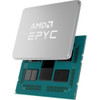
Lenovo 4XG7A63618 AMD EPYC 72F3 8-Core Processor for ThinkSystem SR665
Overview
The Lenovo 4XG7A63618 is an AMD EPYC 72F3 processor option for the ThinkSystem SR665 server platform — an 8-core, 16-thread chip engineered for workloads where single-thread performance and per-core licensing costs matter as much as aggregate throughput. At 3.7 GHz base with a 4.1 GHz boost frequency and a massive 256 MB L3 cache, the 72F3 occupies a distinct position in the EPYC 7003 lineup: fewer cores, higher clocks, and an L3 that dwarfs what most x86 server processors offer at any core count.
This is a Socket SP3 component configured specifically for the SR665 platform. If you are running per-core-licensed software — Oracle Database, SAP HANA, or VMware vSphere with per-socket-per-core licensing — the 72F3's 8-core density can significantly reduce your software licensing spend relative to 32- or 64-core alternatives, while the high base frequency keeps per-thread throughput competitive with anything in the datacenter.
Key Features
- 3.7 GHz Base / 4.1 GHz Boost Frequency: For workloads that don't parallelize well — legacy ERP transactions, single-threaded simulation, financial modeling — raw clock speed is the performance lever. The 72F3's 3.7 GHz base is among the highest in the EPYC 7003 generation, and the 400 MHz boost headroom means lightly threaded bursts can push close to 4.1 GHz without manual tuning.
- 8 Cores / 16 Threads: Per-core software licensing is a real line item in enterprise TCO. An 8-core EPYC at this clock speed lets you run core-licensed workloads on a modern, full-bandwidth platform while capping the license count at 8. Compare that to a 32-core part running the same workload: the licensing delta often exceeds the hardware cost by a multiple.
- 256 MB L3 Cache: AMD's 3D V-Cache design philosophy means the 72F3 carries a cache pool that would have been unthinkable on x86 server silicon three years ago. For in-memory analytics, database buffer pools, and latency-sensitive applications where cache misses translate directly to query latency, 256 MB of L3 means more working set stays on-die and fewer round-trips to DRAM.
- DDR4-3200 Memory Support: The 72F3 supports DDR4-3200 MHz memory, the fastest DDR4 standard. On the SR665 platform — which supports eight memory channels per socket — this translates to substantial available memory bandwidth for workloads that are bandwidth-sensitive rather than just compute-bound.
- 180W TDP / 165–200W Configurable Range: The processor ships at a 180W nominal TDP with BIOS-adjustable range from 165W down to 200W up. This flexibility lets system administrators trade peak performance for thermal headroom in dense rack configurations, or push to 200W cTDP-up in thermally unconstrained environments where maximum sustained frequency matters.
- Socket SP3 / 64-bit: Socket SP3 is the standard EPYC 7002/7003 series socket on the SR665 dual-socket platform. The 4XG7A63618 installs as either the primary or secondary processor in a two-socket configuration, enabling symmetric multi-processing for workloads that scale across NUMA nodes.
Integration and Compatibility
The 4XG7A63618 is a Lenovo-qualified option for the ThinkSystem SR665 — a dual-socket 2U server in the datacenter product line. Lenovo factory-qualifies processor options against specific firmware, BIOS revisions, and memory configurations; installing a non-Lenovo-listed processor option on the SR665 can result in no-post conditions or unsupported BIOS behavior. This part is listed specifically for the SR665 platform and should not be assumed compatible with other SP3 systems without separate Lenovo verification.
The processor supports server components in the AMD EPYC 7003 (Milan) ecosystem. For a full view of the Lenovo server and datacenter catalog, including memory, drives, and expansion options for the SR665, review the platform-level product family. DDR4-3200 DIMMs in the SR665's eight-channel architecture are the correct pairing — mixing lower-speed DIMMs will downclock the memory bus to the lowest installed DIMM's rated speed.
No cooler is included with the 4XG7A63618. The SR665's thermal solution is chassis-integrated; the processor ships without a heatsink and relies on the server's existing cooling infrastructure. Verify that the SR665 chassis and fan configuration meet the 180W (or 200W cTDP-up) thermal envelope before provisioning.
Frequently Asked Questions
Q: What server platform is the Lenovo 4XG7A63618 designed for?
A: The 4XG7A63618 is a Lenovo-qualified AMD EPYC 72F3 processor option for the ThinkSystem SR665 server. It uses the Socket SP3 interface and is listed specifically for that platform.
Q: Does the 4XG7A63618 include a heatsink or cooler?
A: No. The cooler is not included. The SR665 uses an integrated chassis cooling solution; the processor relies on the server's existing thermal infrastructure.
Q: What is the TDP of the AMD EPYC 72F3 in this configuration?
A: The nominal TDP is 180W. The processor supports a configurable TDP range from 165W (cTDP-down) to 200W (cTDP-up), adjustable via BIOS on supported platforms.
Q: What memory speed does the EPYC 72F3 support?
A: The processor supports DDR4-3200 MHz memory. Installing lower-speed DIMMs will result in the memory bus operating at the lower rated speed.
Q: Why would I choose an 8-core EPYC over a higher-core-count option for my workload?
A: The 72F3's 8-core configuration is optimized for per-core-licensed software (Oracle, SAP, VMware with per-core licensing) and single-threaded-intensive workloads. The 3.7 GHz base clock and 256 MB L3 cache deliver strong per-thread performance while minimizing software license counts.
Q: Can this processor be used in a dual-socket SR665 configuration?
A: Yes. The SR665 is a dual-socket platform and supports symmetric multi-processing. The 4XG7A63618 can be installed as either the primary or secondary processor in a two-socket deployment.
The 4XG7A63618 is the processor option I reach for when a customer is deploying core-licensed enterprise software on the SR665 and needs to justify the platform investment against their Oracle or SAP licensing budget. The 72F3's 3.7 GHz base frequency is the highest in the EPYC 7003 family at the 8-core tier, and that matters when you're comparing it to a 32-core part that might cost less per socket but generates four times the licensing exposure.
Technical Highlights:
- 256 MB L3 Cache: At 32 MB per core, the 72F3 carries more L3 per core than almost any x86 server processor available — practical impact is measurable on in-memory database workloads and analytics queries that previously stalled on DRAM latency.
- Configurable TDP 165–200W: The 15W downward headroom (165W cTDP-down) is genuinely useful in high-density two-socket SR665 racks where thermal budget is shared across neighboring nodes. Most deployments run at nominal 180W, but having the option without a hardware change is worth noting.
- DDR4-3200 with 8-Channel Architecture: The SR665's eight memory channels per socket, running at full 3200 MHz, provide the bandwidth headroom for workloads that would otherwise be memory-bottlenecked on older four-channel platforms — relevant for EDA, CFD, and in-memory OLAP.
Deployment Considerations:
- No cooler is included — the SR665 chassis provides all thermal management, so confirm the chassis fan configuration is rated for 180W or 200W (cTDP-up) before you deploy in a thermally constrained rack row.
- This part is Lenovo-qualified specifically for the SR665; do not assume drop-in compatibility with other Socket SP3 systems (ASUS, Supermicro, HPE ProLiant) without separate OEM qualification — BIOS and power delivery validation differ per platform.
For an SR665 deployment running Oracle Database Standard Edition 2 on a two-socket configuration, the 4XG7A63618 is the right call: you cap your named user or processor license count at 8 cores per socket while maintaining the clock frequency that SE2 workloads need for acceptable transaction throughput. Higher core count parts solve the wrong problem in that scenario.