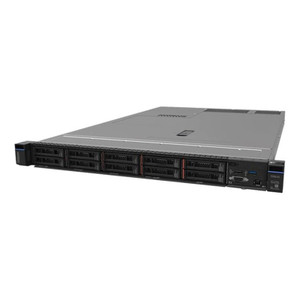
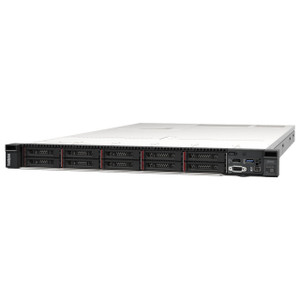
Lenovo 4XG7A63592 AMD EPYC 7513 32-Core Server Processor
Overview
The Lenovo 4XG7A63592 is an AMD EPYC 7513 processor option for the ThinkSystem SR645 platform — a 32-core, 64-thread server CPU built for compute-intensive workloads where core density and memory bandwidth drive purchasing decisions. Running at a 2.6 GHz base clock with a 3.65 GHz boost frequency, and backed by 128 MB of L3 cache on the AMD EPYC architecture, this processor fits squarely in environments running parallel workloads: analytics pipelines, virtualization hosts, software-defined storage, and high-channel-count video management systems. It arrives as a Lenovo-qualified component for the Lenovo server catalog, meaning it ships with the OEM firmware and hardware compatibility validation that matters in production environments where mix-and-match parts introduce support complexity.
Key Features
- 32 Cores / 64 Threads: The core count translates directly to parallel processing capacity. On a VMS platform, 32 cores mean you can handle real-time decoding, analytics, and recording simultaneously across dozens of high-resolution streams without fighting for CPU time. On a virtualization host, it's enough cores to run meaningful VM density without CPU contention on workloads that don't pin threads.
- 2.6 GHz Base / 3.65 GHz Boost Clock: The 1.05 GHz headroom from base to boost matters for burst workloads — motion event processing, batch analytics, or peak-hour transaction loads — where single-thread performance briefly becomes the bottleneck. Day-to-day steady-state work sits near base; the processor scales opportunistically when thermal and power headroom allow.
- 128 MB L3 Cache: At 128 MB, the L3 cache on the EPYC 7513 is large enough to hold working data sets in-cache for many common server workloads, reducing round-trips to main memory. This matters in latency-sensitive applications like database query processing or real-time event correlation where cache misses add up across millions of operations.
- Octa-Channel DDR4-3200 Memory Support: Eight memory channels running at 3200 MHz means the processor can sustain significant memory bandwidth — critical when you're streaming large volumes of video data, running in-memory databases, or handling analytics workloads that saturate memory bandwidth before they saturate compute. Plan your DIMM population to take full advantage of all eight channels; underloading channels leaves bandwidth on the table.
- 200W TDP with 165W Configurable TDP-Down: The 200W TDP is the rated thermal ceiling under full load — size your cooling and power delivery accordingly for the SR645 chassis. The 165W cTDP-down option is useful when you need to fit this processor into a power-constrained deployment or a higher-density rack where per-server power budgets are tight; performance scales down proportionally, so evaluate whether the workload justifies full versus cTDP-down mode.
- Socket SP3 / 64-Bit Architecture: Socket SP3 compatibility ties this processor to the ThinkSystem SR645 platform. It is not interchangeable across other socket families. The 64-bit operating mode is the expected baseline for any modern server OS — Linux, Windows Server, and hypervisor platforms all require it.
- No Cooler Included: This is a processor kit only — no thermal solution is included in the box. The SR645 chassis uses Lenovo-specified heatsinks matched to the processor TDP tier. Confirm the correct Lenovo heatsink option for 200W TDP before ordering, particularly if this is a field upgrade rather than a factory-configured system.
Integration and Compatibility
The 4XG7A63592 is qualified for the Lenovo ThinkSystem SR645, a dual-socket 1U/2U server platform built around AMD EPYC SP3 processors. Compatibility outside the SR645 is not supported under Lenovo's hardware qualification. Memory configuration should follow Lenovo's DIMM population rules for the SR645 to achieve full octa-channel operation at 3200 MHz — consult the SR645 memory configuration guide before specifying DIMMs. For deployments in server and storage environments running video management, virtualization, or analytics, the SR645 with the EPYC 7513 delivers a workload-appropriate balance of core count, cache depth, and memory bandwidth. Review your server planning and configuration resources to match processor tier to workload requirements before committing to a configuration.
Frequently Asked Questions
Q: What server platform is the Lenovo 4XG7A63592 compatible with?
A: The 4XG7A63592 is a Lenovo-qualified processor option for the ThinkSystem SR645 platform, which uses the AMD Socket SP3 interface. It is not cross-compatible with other server platforms or socket families.
Q: Does the 4XG7A63592 include a heatsink or thermal solution?
A: No. The processor ships without a cooler. A Lenovo-specified heatsink rated for the 200W TDP must be ordered separately for the SR645 chassis. Confirm the correct heatsink option before deploying in a production environment.
Q: What is the maximum memory speed supported by the AMD EPYC 7513?
A: The EPYC 7513 supports DDR4-3200 MHz across eight memory channels. Achieving full octa-channel bandwidth requires correct DIMM population per Lenovo's SR645 memory configuration guidelines.
Q: What is the TDP of the 4XG7A63592, and can it be reduced for power-constrained deployments?
A: The rated TDP is 200W. A configurable TDP-down (cTDP) of 165W is supported, which can be useful for high-density rack deployments with per-server power budgets. Performance scales proportionally with TDP reduction.
Q: How many cores and threads does the EPYC 7513 provide?
A: The EPYC 7513 delivers 32 physical cores and 64 threads, operating in 64-bit mode. The 3.65 GHz boost frequency is available for burst workloads when thermal and power headroom permit.