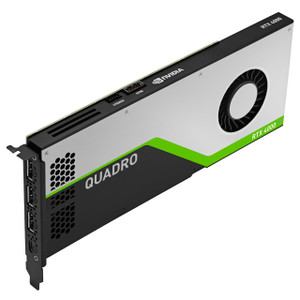
Lenovo 4X67A13135 NVIDIA A100 40GB PCIe Gen4 GPU Accelerator
Overview
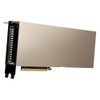
The Lenovo 4X67A13135 is an NVIDIA A100 40GB PCIe Gen4 GPU accelerator built for data center AI inference, high-performance computing, and large-scale deep learning workloads. Delivered in a full-height, full-length (FH/FL) passive-cooled form factor, this card is engineered for server environments with active chassis airflow — not workstations or edge deployments. With 6,912 CUDA cores, 40GB of HBM2 memory, and a PCIe 4.0 host interface, the 4X67A13135 targets deployments where raw compute density and memory capacity per slot matter most.
This card connects via datacenter GPU accelerators infrastructure, and pairs naturally with compatible Lenovo ThinkSystem servers that provide adequate chassis cooling and PCIe 4.0 slot bandwidth. For teams running AI compute server configurations, the A100's architecture handles both training and inference workloads within the same hardware install.
Key Features
- 40GB HBM2 Memory: High Bandwidth Memory 2 keeps large model weights and batch data on-card, reducing PCIe transfers that would otherwise bottleneck throughput. 40GB is enough headroom for most production-scale transformer inference tasks without memory-swapping overhead.
- 6,912 CUDA Cores: NVIDIA's A100 Ampere architecture delivers parallel compute across all 6,912 cores simultaneously — directly relevant for matrix-heavy workloads like neural network inference and scientific simulation. This is the same A100 silicon used in enterprise HPC clusters globally.
- PCIe 4.0 Interface: The PCIe Gen4 host connection doubles the theoretical bandwidth of Gen3, keeping the CPU-to-GPU pipeline from being the limiting factor when feeding large datasets. Requires a Gen4-capable server platform to realize full bandwidth; drops back to Gen3 speeds on older hosts without errors.
- Passive Cooling: No on-card fans means zero additional noise, no fan-failure failure modes, and no additional power rail for cooling subsystems. This is deliberate — the A100 passive design assumes a server chassis with defined, forced airflow. Deploy in rack servers rated for high-TDP passive cards; do not install in open-air or workstation chassis.
- 250W Typical TDP: At 250W, the A100 sits within a well-defined power envelope that most dual-processor servers can accommodate per slot. Size your PDU and per-slot power budget accordingly — at full load across multiple cards, rack power adds up quickly. Plan power distribution before commissioning.
- Full-Height / Full-Length (FH/FL) Form Factor: The FH/FL physical size means this card will not fit in short-length or low-profile slots. Verify your server chassis has the physical clearance and the correct PCIe slot length before ordering. Most 1U servers will not accommodate this card; 2U and above is the practical minimum.
- Dual Interface Support (PCIe + Ethernet): The card exposes both a PCIe host interface and an Ethernet interface, enabling data ingestion directly from network sources alongside host-CPU data paths — useful in inference deployments where input data arrives from network-attached storage or real-time streams.
- Black/Gold Finish: The card ships in Lenovo's black-and-gold OEM finish, indicating it is factory-sourced and Lenovo-validated hardware — not a reference-board repackage.
Integration and Compatibility
The 4X67A13135 is Lenovo OEM hardware designed for integration into Lenovo ThinkSystem server platforms. It carries the UNSPSC commodity code 43201401, classifying it as a graphics/display adapter for procurement and asset management purposes. Check your server component compatibility matrix for the specific ThinkSystem models that support A100 PCIe cards — slot configuration, riser type, and chassis airflow rating all affect whether this card installs cleanly.
CUDA support is confirmed, meaning the card runs the full NVIDIA CUDA software stack. Workloads compiled for CUDA on A100-class hardware deploy without modification. For teams already running AI software platforms with CUDA dependencies, no driver-level changes are needed when transitioning to this card from earlier CUDA-compatible generations.
The card weighs 3.00 lb — account for this in rack weight planning when populating multiple GPU slots in a single chassis. Dense GPU configurations in 2U servers can approach chassis weight limits faster than compute-only configurations.
Frequently Asked Questions
Q: What server platforms is the Lenovo 4X67A13135 compatible with?
A: The 4X67A13135 is Lenovo OEM hardware. It is designed for Lenovo ThinkSystem servers that support full-height, full-length PCIe Gen4 GPU accelerators with passive cooling and a 250W per-slot power budget. Confirm chassis compatibility via Lenovo's ThinkSystem configurator before ordering.
Q: Does this card require active cooling?
A: Yes. The 4X67A13135 uses passive cooling — there is no on-card fan. The server chassis must provide adequate forced airflow to maintain safe operating temperatures. Install only in rackmount servers with defined high-TDP passive card support.
Q: Will a PCIe Gen3 server run the 4X67A13135?
A: The card uses a PCIe 4.0 interface. It will operate in a PCIe Gen3 slot (the PCIe standard is backward-compatible) but will be limited to Gen3 bandwidth. For workloads that are PCIe-bandwidth-limited, this will reduce throughput; for most inference workloads the impact is application-dependent.
Q: How much power does the 4X67A13135 draw?
A: Typical power consumption is 250W. Size your server's per-slot power delivery and PDU capacity accordingly, particularly in multi-GPU configurations where aggregate draw can exceed rack circuit ratings.
Q: Is CUDA supported on the 4X67A13135?
A: Yes. The A100 GPU supports CUDA, giving access to the full NVIDIA CUDA parallel computing platform and the ecosystem of frameworks (PyTorch, TensorFlow, RAPIDS, etc.) built on it.
Q: What does the Ethernet interface on the 4X67A13135 do?
A: In addition to the PCIe host interface, the card exposes an Ethernet interface, enabling direct network connectivity for data ingestion workloads — useful in deployments where input data arrives via network rather than solely through the host CPU.
The 4X67A13135 is one of those cards where the passive cooling isn't a cost-cut — it's a deliberate design choice for high-density rack deployments where chassis-managed airflow is more reliable and quieter than per-card fans at 250W sustained. If you're spec'ing a Lenovo ThinkSystem-based AI inference node, the A100's 40GB HBM2 and 6,912 CUDA cores put it in the right tier for production workloads that outgrow smaller GPU memory budgets.
Technical Highlights:
- 40GB HBM2 at 32 GB/s reported bandwidth: The HBM2 memory stack keeps large model tensors on-card — critical for inference latency. Note the bandwidth figure of 32 GB/s as reported in the source feed; verify against Lenovo's ThinkSystem-specific datasheet for your platform, as A100 configurations can vary by OEM validation profile.
- PCIe Gen4 Interface: Full Gen4 signaling requires a Gen4-capable server slot to realize peak host-to-card throughput. On Gen3 hosts the card will negotiate down cleanly — no instability — but bandwidth-sensitive training pipelines will feel the ceiling.
- 250W Passive TDP: This is a firm power figure for rack planning. In a 2U chassis with two A100s you're looking at 500W of GPU draw alone before CPU, DRAM, and drives. Don't underestimate PDU and cooling capacity planning at deployment time.
Deployment Considerations:
- Verify chassis airflow rating before install — the passive design mandates server-class forced airflow. Consumer or workstation cases will thermally throttle or damage this card under sustained load.
- The FH/FL form factor is a hard physical constraint: measure your server's available card length and confirm the riser supports full-length cards before the chassis arrives on-site.
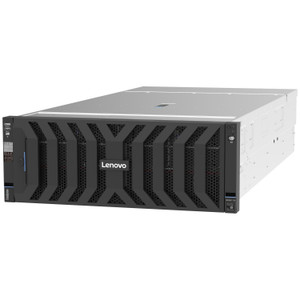
Best-fit deployment scenario: a Lenovo ThinkSystem 2U or 4U server configured as a dedicated AI inference node, where passive GPU cooling aligns with chassis-level thermal design and the 40GB memory ceiling comfortably covers production transformer model sizes without memory-overflow degradation.