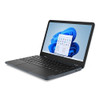
Lenovo 30J5005RUS ThinkStation P3 Ultra SFF G2 Commercial Workstation
Overview
The Lenovo ThinkStation P3 Ultra SFF G2 (30J5005RUS) is a compact, vPro-enabled commercial workstation built around Intel's Core Ultra 7 265T — a 20-core processor that delivers genuine multi-threaded throughput in a chassis that weighs just 9 lb and fits where a standard tower won't. If you're deploying video management software, running VMS servers at the edge, or provisioning analyst workstations for security operations centers, this machine is sized for the physical constraints of rack shelves, back-of-monitor mounts, and AV equipment rooms without sacrificing the CPU headroom that sustained camera stream decoding actually demands.
Intel vPro on the 265T means out-of-band remote management via Intel AMT — you can push BIOS updates, remotely power cycle, and diagnose hardware failures on machines that are locked in an equipment room or on a remote site, without dispatching a technician. For enterprise deployments managing dozens of VMS nodes, that's a real operational cost reduction.
Key Features
- Intel Core Ultra 7 265T (20 cores, vPro): The 265T's 20-core architecture handles concurrent video decoding, analytics processing, and OS workload without thermal throttling in a sealed SFF enclosure. vPro adds hardware-level remote management — critical for unattended edge installations where local hands-on access is expensive.
- 16 GB DDR5-6400 RAM (2x SO-DIMM, up to 128 GB): DDR5-6400 provides roughly 50% more memory bandwidth than DDR4-3200 at equivalent capacity — relevant when a VMS platform is simultaneously decoding high-resolution streams, writing to disk, and serving the playback interface. Two SO-DIMM slots allow expansion to 128 GB without replacing the unit, which matters if your VMS footprint grows after initial deployment.
- 512 GB PCIe 5.0 NVMe SSD (OS drive): PCIe 5.0 sequential read speeds exceed 10 GB/s on qualifying drives — the OS and application load times are effectively negligible. This drive is the system volume; video retention storage will typically be on a separate NAS or DAS connected via network or USB, not this internal SSD.
- Small Form Factor (Ultra SFF) chassis at 9 lb: At 9 lb, this unit ships and installs without special handling. The Ultra SFF form factor fits on a 1U shelf bracket or behind a display using a VESA mount adapter — usable in control rooms where rack space costs money and desktop footprint is constrained.
- No optical drive: Omitting the optical bay keeps the chassis compact and eliminates a failure-prone mechanical component. Deployment and imaging should be via network (PXE/WDS) or USB — plan accordingly if your IT provisioning workflow still relies on disc media.
- Intel vPro / Intel AMT remote management: AMT operates independently of the OS state — if Windows hangs or the drive fails to boot, AMT still responds on the network. For remote sites, this means you can recover or reimage a failed VMS node without a site visit, as long as the unit has power and a network connection.
- DDR5 SO-DIMM form factor (2 slots): The SO-DIMM slot configuration is worth noting at procurement time — DDR5 SO-DIMMs are not interchangeable with DDR5 UDIMMs used in full-size towers. Budget for correct module type if you're standardizing memory upgrades across a mixed workstation fleet.
Integration and Compatibility
The ThinkStation P3 Ultra SFF G2 runs standard x86-64 Windows, making it compatible with the full range of commercial VMS platforms — Milestone XProtect, Genetec Security Center, Axis Camera Station, Hanwha Wisenet WAVE, and others — without driver exceptions or OS-level workarounds. vPro compatibility enables integration with Intel Endpoint Management Assistant (Intel EMA) for cloud-based out-of-band management, which pairs well with enterprise IT environments already using Microsoft Intune or SCCM for endpoint management.
The 30J5005RUS ships with 512 GB of internal NVMe storage intended for the operating system and application layer. For network video recorder or VMS server deployments requiring multi-terabyte retention, plan for external storage — direct-attached USB or networked RAID/NAS — since this form factor does not accommodate additional internal drives beyond the factory-installed SSD. Review your VMS vendor's hardware compatibility list to confirm this CPU generation and memory configuration meet their minimum requirements for your target channel count.
As part of the broader Lenovo ThinkStation lineup, the P3 Ultra SFF G2 sits in the commercial workstation tier — above consumer-grade PCs in build quality and support lifecycle, below the Lenovo ThinkStation P-Series GPU workstations intended for rendering and AI inferencing. For security deployments needing a reliable, manageable, compact compute node, it occupies a practical middle ground. If your deployment also involves PoE network switches or structured cabling infrastructure, pre-sales engineering can help size compute and network resources together.
Frequently Asked Questions
Q: What processor does the 30J5005RUS use, and how many cores does it have?
A: The 30J5005RUS is configured with the Intel Core Ultra 7 265T, a 20-core vPro-enabled processor. E-cores boost up to 4.60 GHz. This gives it solid multi-threaded throughput for VMS, analytics, and concurrent workload environments.
Q: How much RAM does the ThinkStation P3 Ultra SFF G2 ship with, and can it be expanded?
A: It ships with 16 GB of DDR5-6400 RAM in a single SO-DIMM module. There are two SO-DIMM slots total, and the system supports up to 128 GB maximum — leaving one slot open for a straightforward memory upgrade without replacing the installed module.
Q: What storage does the 30J5005RUS include, and is there room for additional internal drives?
A: The unit ships with a 512 GB PCIe 5.0 NVMe SSD. Based on available specifications, the Ultra SFF chassis does not support additional internal drive bays — video retention storage for VMS deployments should be planned as external NAS or DAS.
Q: Does the ThinkStation P3 Ultra SFF G2 support Intel vPro remote management?
A: Yes. The Core Ultra 7 265T is a vPro processor, which enables Intel AMT out-of-band remote management. This allows remote power control, BIOS access, and system recovery independent of OS state — a meaningful capability for unattended remote-site deployments.
Q: What is the weight of the 30J5005RUS, and does it support VESA mounting?
A: The unit weighs 9.00 lb. As an Ultra SFF form-factor machine, it is physically compatible with VESA mount adapters for behind-display or rack-shelf installation, though confirm bracket compatibility with Lenovo's accessory catalog for your specific mounting scenario.
The 30J5005RUS is the configuration I'd reach for when a deployment needs a compact, remotely manageable compute node and the team can't afford to roll a truck every time something goes wrong at a remote site. The Core Ultra 7 265T's 20-core architecture is meaningful here — not because any single VMS stream needs that many cores, but because a properly deployed VMS node is doing decoding, writing, analytics, and serving the UI simultaneously, and thread starvation is a real failure mode on underpowered machines.
Technical Highlights:
- DDR5-6400 at 16 GB (expandable to 128 GB): The 6400 MHz clock is the fastest DDR5 SO-DIMM speed in mainstream production — higher bandwidth per channel than DDR5-4800 by roughly 30%. For stream-heavy VMS workloads, memory bandwidth is often the actual bottleneck before CPU utilization becomes the issue. The two-slot design means a single 64 GB upgrade gets you to 80 GB total without discarding the factory module.
- PCIe 5.0 NVMe SSD (512 GB): PCIe 5.0 on the system drive means application launch and OS operations are effectively instant. More practically, it eliminates the I/O contention you get on slower drives when the OS is paging and the VMS application is simultaneously indexing video metadata.
- Intel vPro / AMT: AMT operates on a dedicated management partition with its own network stack. It survives OS crashes, failed updates, and ransomware events that brick the OS. For a VMS node at a remote location, this is the difference between a 15-minute remote recovery and a $500 site visit.
Deployment Considerations:
- The 512 GB NVMe is the OS volume only — it is not sized for video retention. Size your NAS or DAS storage separately based on camera count, resolution, and retention policy before ordering. A 30-camera deployment at 1080p/15fps with 30-day retention typically requires 8–12 TB minimum.
- DDR5 SO-DIMM modules are not interchangeable with DDR5 UDIMMs. If you're standardizing memory upgrades across a fleet that includes both SFF and tower workstations, confirm module form factor before bulk-ordering RAM — mixing these up is a common procurement mistake on mixed-chassis deployments.
This machine is a strong fit for security operations center analyst workstations and edge VMS nodes in distributed enterprise deployments where remote manageability and a minimal physical footprint are both hard requirements — not just nice-to-haves.