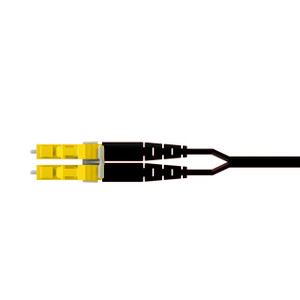
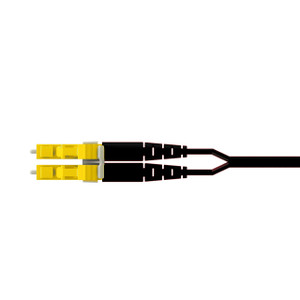
Panduit FS2EPKDKDNDM007 Opti-Core OM4+ Code D Keyed LC Duplex Fiber Patch Cord
The Panduit FS2EPKDKDNDM007 delivers OM4+ Signature Core performance with Code D keyed duplex LC connectors—combining ultra-low insertion loss with physical-layer security for mission-critical datacenter and telecom fiber links. This 7-meter plenum-rated patch cord prevents unauthorized connections through precision-machined keying, ensuring only matching Code D components can mate. The 1.6mm zipcord jacket and yellow color coding simplify deployment in dense 40G/100G environments where every dB of loss budget and every layer of access control matters.
Key Features
- Code D Keyed Connectors: Physical security layer—only matching keyed components can connect, preventing unauthorized access or accidental cross-connections in secure facilities
- OM4+ Signature Core Fiber: Ultra-low insertion loss performance exceeding standard OM4 specifications for extended reach in 40GBASE-SR4 and 100GBASE-SR4 applications
- Plenum Rated (OFNP): UL-listed for installation in air-handling spaces without conduit, meeting strict fire and smoke safety codes
- 7-Meter Optimized Length: Purpose-built for cross-rack and intra-row datacenter connections—long enough for flexible routing, short enough to preserve loss budget in multi-tier spine-leaf architectures
- Duplex LC Form Factor: Industry-standard small-form-factor connector enables 2x the port density of SC while maintaining push-pull latching and field-proven reliability
- Yellow Jacket Color Coding: Instant visual identification of OM4/OM4+ multimode fiber per TIA-598-C standard, reducing deployment errors in mixed-fiber environments
Panduit's Signature Core fiber technology delivers measurably lower insertion loss than commodity OM4 patch cords—typically 0.15 dB or less per mated pair compared to the 0.35 dB TIA maximum. In 100GBASE-SR4 applications using MPO-to-LC breakout architectures, every 0.1 dB recovered extends maximum reach or provides margin for future adds and moves. The OM4+ designation indicates Panduit's tighter manufacturing tolerances on core geometry and polish quality, verified through 100% factory testing. Code D keying adds a mechanical dimension: each connector features a precision-molded key position that physically blocks insertion into non-Code D ports. In secure government, financial, or healthcare facilities, keyed fiber prevents both accidental mis-patching and deliberate unauthorized taps—an attacker cannot simply plug a rogue device into a keyed infrastructure port. The 1.6mm zipcord construction uses a flat figure-8 profile that's easier to dress and terminate in tight spaces than round cordage, and the OFNP plenum jacket meets NEC Article 770 for installation above drop ceilings and in HVAC plenums without expensive conduit runs.
The 7-meter length is purpose-engineered for modern datacenter topologies. In a typical row-based deployment with top-of-rack switches feeding a centralized spine layer, 7 meters covers cross-rack hops, vertical cable tray runs, and slack for service loops without the excess coiling (and loss accumulation) of over-length cordage. For telecom central offices and co-location facilities, this length bridges equipment frames to fiber distribution panels while leaving enough dress for future re-routes. LC duplex connectors remain the dominant choice for 10G/25G/40G/100G server and switch optics—they're half the size of SC, self-latching for accidental pull protection, and supported by every major transceiver vendor. Yellow jackets follow the TIA-598-C color code for OM4 multimode, ensuring installers and operations staff instantly recognize fiber type during maintenance or troubleshooting. Panduit ships these cords individually bagged with protective dust caps on both ends; carton quantity is 10 for volume deployments.
Panduit Opti-Core patch cords are backed by the company's global fiber warranty and comply with RoHS environmental directives for lead-free, low-halogen construction. The Code D keying system is part of Panduit's broader Physical Layer Security portfolio—facilities deploying keyed fiber typically pair it with keyed copper connectivity and lockable enclosures for defense-in-depth. For integrators building or upgrading 40G/100G networks in secure or high-compliance environments, the FS2EPKDKDNDM007 delivers measurable performance gains (lower loss, extended reach) and measurable risk reduction (physical access control) in a single field-proven component. Choose this cord when your design calls for both technical excellence and security that an unauthorized user can't bypass with a $10 transceiver.