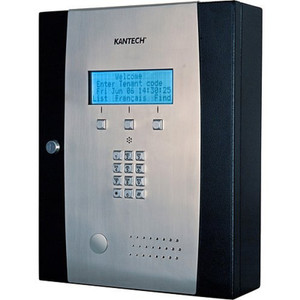
Kantech KTES-US Telephone Entry System 250 Tenants
Overview
The Kantech KTES-US is a telephone-integrated access control system purpose-built for multi-tenant properties that need to scale without replacing core infrastructure. Starting at 250-tenant capacity and expandable to 3,000 tenants, the KTES-US lets authorized residents or office tenants remotely grant visitor entry via standard telephone infrastructure. This approach eliminates per-unit hardware installation, making retrofits practical for existing buildings where running new wiring or installing individual buzzer systems would be costly or disruptive.
The modular architecture means you can provision the system incrementally as occupancy grows. A 200-unit apartment complex can deploy at 250 tenants; as you add a second building, you scale to 500 or 1,000 tenants without decommissioning or swapping the core controller. For property managers evaluating entry systems, this phased growth model directly reduces total cost of ownership and keeps operational complexity flat during expansion.
Key Features
- Telephone-based entry authorization: Tenants answer calls or receive a prompt on any phone line (mobile, desk, or unit handset) to approve visitor entry. No proprietary apps, no additional device purchases per tenant — integrates with existing phone service.
- 250-tenant baseline expandable to 3,000: Deploy at 250 tenants; add capacity in logical increments without hardware replacement. A property manager running two or three buildings can consolidate all entry logic under a single KTES-US controller, simplifying oversight and reducing redundant systems.
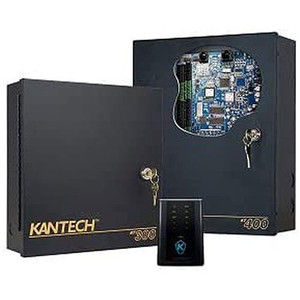
- Modular controller architecture: The control unit accommodates expansion modules. Adding tenants means adding capacity to the existing frame, not installing a second system in a different location.
- Reliable gate and door release integration: Wired relay outputs trigger electric locks, magnetic doors, or gate strike mechanisms. Standard 12/24VDC control outputs integrate with conventional access hardware already installed in most properties.
- Tenant communication and coordination: Property staff can preview visitor requests, log access events, and audit which tenants authorized which entries. Useful for security investigations and lease compliance audits.
- US model designation (KTES-US): Configured for North American telephone switching standards, DTMF signaling, and electrical codes. International models use different phone signaling protocols and will not function correctly in US deployments.
Ideal Use Cases
Multi-unit residential: Apartment buildings, condominiums, and townhouse communities where residents expect to manage visitor access remotely. Tenants with hearing loss can use text-relay services through their phone provider.
Commercial office buildings: Tenant-occupied office parks where each company should control its own lobby or suite access. A tenant moving out doesn't leave behind proprietary hardware — just remove them from the tenant database.
Mixed-use properties: Properties combining retail, office, and residential access zones can use separate KTES-US zones for different tenant groups, or run a single consolidated system if all access flows through a main entry point.
Phased expansion scenarios: New construction or acquisition of adjacent properties. Start small; grow the system without operational interruption or capital-intensive forklift upgrades.
Integration Considerations
The KTES-US relies on analog or digital phone lines for tenant notification. Properties migrating away from traditional phone service (POTS) toward VoIP should confirm SIP gateway compatibility with the installer before committing. Relay outputs are 12/24VDC dry-contact — verify that existing gate strikes or magnetic locks accept this voltage and control type; some older systems may require additional relay modules or power supplies. Property management software integration depends on controller features — confirm event logging and tenant database export capabilities with the manufacturer before purchase if you need to synchronize the KTES-US with your leasing or security management platform.
Frequently Asked Questions
Q: Can I expand the KTES-US from 250 to 3,000 tenants after the initial deployment?
A: Yes. The modular architecture allows you to add expansion capacity as occupancy grows. No system replacement required.
Q: Does the KTES-US work with VoIP phone systems?
A: Compatibility depends on your VoIP provider and whether SIP gateways or analog adaptors are deployed. Consult with your phone system administrator and the KTES-US installer before purchase if your property has migrated fully to VoIP.
Q: What voltage do the relay outputs deliver?
A: The controller provides 12/24VDC dry-contact relay outputs for gate strikes and magnetic locks. Verify compatibility with your existing hardware before ordering.
Q: Can property staff log and review visitor entries after the fact?
A: Yes. The system maintains access logs showing which tenant authorized which entry. This supports auditing and helps resolve disputes or security concerns.
Q: Is the KTES-US suitable for a single building only, or can it manage multiple properties?
A: A single KTES-US controller can manage tenants across multiple buildings if they share a common phone network or VoIP provider. Confirm your phone system configuration with the installer.
Q: What happens if a tenant's phone line is busy or unanswered?
A: The system should attempt fallback notification (secondary phone number, on-site staff alert, or recorded message). Confirm fallback procedures with the manufacturer or installer for your specific deployment.
Ted PerryPerspective based on aggregated IP Security Depot and affiliated engineering team experience.
The Kantech KTES-US solves a critical property management problem: how to grant visitor access at scale without installing hardware in every unit or office. Telephone-based authorization bypasses the cost and disruption of retrofitting existing properties with individual intercom panels or smart locks. For a 200-unit apartment complex facing upgrading an aging entry system, the KTES-US's modular 250-to-3,000 tenant scaling makes it a practical alternative to rip-and-replace solutions.
Technical Highlights:
- Expandable tenant capacity (250 to 3,000): Modular controller design means you provision only what you need and add capacity as the property grows. Eliminates the capital and operational friction of mid-lifecycle system replacement — a real advantage for properties with multi-year lease cycles or acquisitions.
- Telephone integration (no proprietary apps): Tenants use their existing phone lines or mobile numbers to approve entry. No app downloads, no device compatibility hassles, no tenant training. Works with hearing-relay services if your property must accommodate ADA requirements.
- 12/24VDC relay outputs: Integrates with standard gate strikes, magnetic locks, and buzzer hardware already wired into most properties. Verify voltage compatibility with existing hardware; some older systems may need a separate relay module.
Deployment Considerations:
- Phone network dependency: VoIP migration or POTS line discontinuation can break tenant notification. Confirm your property's long-term phone strategy and SIP gateway availability before committing.
- Fallback handling: If a tenant's line is busy or unanswered, the system must have a defined fallback (secondary number, on-site staff alert, or time-limited access window). Clarify these rules with the installer — they drive user acceptance and security policy.
For properties managing 200+ units across one or multiple buildings, the KTES-US's ability to consolidate access control under a single modular controller and scale incrementally makes it a sound long-term investment. It favors retrofit scenarios and properties where tenant autonomy and phone-based simplicity outweigh the need for mobile app integration or advanced analytics.