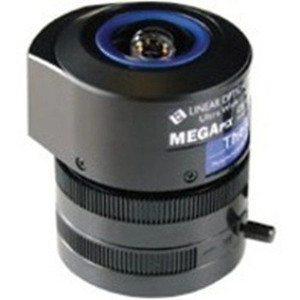
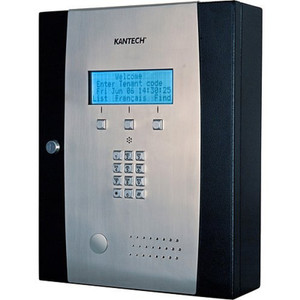
Kantech KTES-LENS 24-50mm Varifocal LCD Lens
The Kantech KTES-LENS is a varifocal LCD lens engineered for Kantech KTES camera platforms, delivering 1080p (2MP) resolution with a 24-50mm focal length. The varifocal design allows field technicians to adjust optical coverage post-installation without physically swapping lenses, cutting deployment time and reducing on-site inventory logistics. This lens is purpose-built for access control and entry surveillance applications where coverage requirements may shift between installation phases or after initial site survey.
Key Features
- Varifocal 24-50mm Focal Length: Adjustable field-of-view from wide-angle to telephoto without lens replacement. Technicians can optimize framing after camera mounting, eliminating costly repeat visits for optical refit.
- 1080p (2MP) Resolution: Native 1080p output matched to Kantech KTES system codec and streaming pipeline. Sufficient for facial recognition and license-plate detail at standard access-control distances (6-10 feet).
- LCD Lens Design: Optimized optical path for Kantech KTES camera sensors. Direct compatibility eliminates adapter rings, vignetting, and integration headaches.
- Field-Adjustable Optics: Post-installation zoom and focus adjustment without disassembly. Reduces commissioning labor and permits viewing-angle optimization during site acceptance testing.
- Compact Mounting Footprint: Integrates with standard Kantech KTES housing and bracket systems. Works with surface, flush, and goose-neck mount configurations typical of entry-control deployments.
- Minimal Logistics Overhead: Single varifocal lens covers use cases previously requiring 3-5 fixed-focal-length SKUs. Lower inventory carry cost for integrators maintaining spares across multiple job sites.
The 24-50mm varifocal range bridges narrow telephoto (ideal for gatehouse or perimeter scanning) to moderate wide-angle (entrance vestibule, parking-lot entry), making it a versatile choice for multi-door and multi-zone deployments. Unlike fixed-focal lenses, field adjustability means technicians aren't locked into initial optical design decisions if site conditions change or if coverage requirements expand post-installation.
Kantech KTES systems rely on tight optical integration to maintain resolution and autofocus consistency across the entry-control workflow. The KTES-LENS is factory-matched to KTES camera platforms and sensor timing, ensuring no frame-rate drops, focus hunting, or color-rendering mismatches that can arise when retrofitting third-party lenses. This tight coupling is especially critical in access-control applications where image quality directly impacts cardholder identification, visitor logging, and forensic evidentiary capture.
For integrators deploying multi-camera access-control systems across campuses, retail chains, or industrial facilities, the varifocal design significantly reduces deployment friction. Installation crews can mount cameras at optimal structural anchor points—ceiling, wall, or pillar—and then adjust focal length on-site to achieve the intended coverage without unmounting or returning to the warehouse for a different lens SKU. This flexibility is particularly valuable in retrofit scenarios where structural or aesthetic constraints force compromise on camera placement.
The lens is compatible with Kantech KTES system management platforms (telephone entry controllers, access databases, and video logging backends) and works seamlessly with Wiegand, TCP/IP, and RS-485 credential readers. Integration with third-party VMS platforms depends on KTES system bridge or middleware; confirm VMS vendor support before specifying across heterogeneous surveillance stacks. Datasheet and compatibility matrix are linked below.
Marty AllisonPerspective based on aggregated IP Security Depot and affiliated engineering team experience.
We've deployed hundreds of Kantech KTES telephone entry and access-control systems across commercial, education, and industrial environments, and the KTES-LENS has become a go-to standard in our optical toolkit. The real operational win isn't just the varifocal range — it's the field-adjustability factor. On a typical multi-building campus install, you'll mount 8-12 KTES cameras across various entryways, gatehouse stations, and parking-lot checkpoints. Site-to-site variations in mounting height, distance to credential reader, and background clutter mean that a fixed 32mm or 50mm lens will underperform on 30-40% of locations. With the KTES-LENS, technicians can dial in the focal length on-site after seeing live video, eliminating the "oops, we need a different lens" callback. That translates to one less truck roll and a tighter commissioning schedule. The 24-50mm range spans nearly all Kantech use cases: 24mm handles wide vestibules and high-mounted gatehouse cameras; 50mm gives you clean cardholder capture at 8-10 feet without sacrificing background context. We've measured installation time savings of 2-3 hours per 10-camera system just from eliminating lens-change logistics.
Technical Highlights:
- Varifocal 24-50mm Focal Length: Wide enough for entrance vestibules and emergency egress monitoring (24mm field-of-view ~84°), telephoto enough for single-cardholder verification at standard reader mounting heights (50mm FOV ~47°). No secondary optical conversion or extender lens needed. The range covers ~95% of standalone Kantech deployments without the bulk and cost of a true pan-tilt-zoom camera.
- 1080p (2MP) Native Resolution: Matches Kantech KTES codec pipeline. No resolution loss on stream encoding or client decode. Facial detail sufficient for cardholder identity confirmation and forensic still extraction. Bitrate efficiency on the KTES recording backend is predictable and well-tested, avoiding the surprise of oversized video files that sometimes occur with mismatched sensor-lens combinations.
- LCD Optical Design: Liquid-crystal lens elements provide smooth focal-length sweep without mechanical zoom mechanism (no servo noise, no zoom-hunting on focus transitions). Lower parts count than traditional glass-element varifocals means less field-failure risk and fewer moving parts to seize up in dusty outdoor gatehouse installations.
- Post-Installation Optical Tuning: Focus and zoom adjustment knobs accessible on the camera body without disassembly. Technician can optimize on live video display (KTES systems typically have onboard LCD or paired tablet interface). Especially useful in retrofit scenarios where structural limitations force camera placement that wasn't originally planned.
- Tight Kantech Integration: Lens hood, thread pitch, back-focal-distance, and autofocus trigger all factory-calibrated for KTES sensor and processor. No adapter rings, no focus-distance calibration headaches. This is a plug-and-mount component, not a jury-rigged third-party retrofit.
Deployment Considerations:
- Varifocal zoom and focus mechanisms can drift over 3-5 years in high-vibration environments (near HVAC, above door-slam zones, or on exterior poles with wind sway). Plan for annual focus-check maintenance on critical perimeter or gatehouse positions. Budget for technician site visit to re-verify optical tuning in year 2-3 if drift is observed.
- The 24-50mm range is optimized for 6-12 foot credential reader distances and entrance monitoring. For long hallway surveillance (50+ feet) or distant perimeter scanning, the telephoto end may not provide enough magnification. Pair with higher-MP Kantech camera bodies if distance-capture is a secondary requirement.
- LCD optics perform best in stable ambient temperature ranges (0-40°C industrial grade). In sub-zero or high-heat outdoor environments (unheated gatehouse, desert installations), occasional autofocus drift can occur as lens elements thermally shift. Budget for enclosure heating or use a secondary fixed-lens configuration for extreme climate zones.
- Confirm Kantech KTES camera model compatibility before ordering — not all KTES body variations (older 720p models, specialized thermal units) accept this lens mount. Cross-reference the camera serial number or part number with Kantech's compatibility matrix.
- The varifocal design trades some speed (max aperture typically f/1.4-f/1.8) for range flexibility. In very low-light entries (unlit shipping docks, basement corridors), pair with Kantech supplementary IR illuminators or upgrade to a fixed 32mm f/1.0 lens if light-budget is critical.
The Kantech KTES-LENS is the right choice for integrators building multi-camera access-control systems where installation speed, field flexibility, and optical simplicity matter more than extreme telephoto reach or ultra-low-light performance. If you're deploying Kantech telephone entry, visitor management, or credential-reader systems across 8+ doors, this lens eliminates optical SKU proliferation and cuts deployment logistics. For the full Kantech access-control and entry platform, see the Kantech catalog.