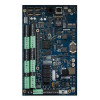
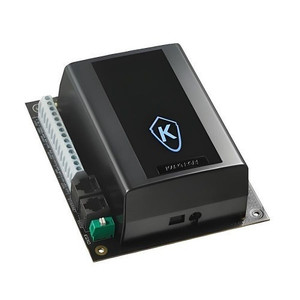
Kantech KT-2-PCB Two-Door IP Controller PCB
The Kantech KT-2-PCB is a bare PCB access control processor designed for two-door IP-based installations. Unlike standalone door controllers, this component mounts into the KT-2-CAB-M enclosure and connects directly to your facility network via PoE 802.3af, eliminating dedicated power wiring to the access point entirely. It handles card readers (smart card, proximity, keypad), door releases, lock monitoring, and credential validation across both doors in a single IP-addressable node — reducing panel count and simplifying network management for enterprises scaling from small branch offices to multi-building campuses.
Key Features
- Two Independent Doors: Controls reader authentication, electric strike/mag lock output, and door sensor monitoring for both portals in a single device.
- PoE 802.3af Power: Standard Power over Ethernet eliminates 12VDC runs to the cabinet, reducing installation labor and material cost by 15–25% per door pair.
- Multi-Protocol Card Support: Wiegand reader input, Proximity (125 kHz), and keypad integration via standard interfaces — works with installed badge stock and keypads without replacement.
- IP/Network Connectivity: TCP/IP + RS-485 backbone for VMS platform integration (Genetec, Milestone, Avigilon, or proprietary management systems); RS-232 fallback for legacy readers.
- KT-2-CAB-M Enclosure Compatibility: Designed to fit the matched KT-2-CAB-M cabinet — mechanical and electrical alignment guaranteed, reducing field troubleshooting.
- Compact PCB Form Factor: No bulky controller chassis; mounts on DIN rail or PCB standoffs inside the enclosure for flexible mounting in tight spaces.
- Low-Light IR: 850nm infrared support enables facial recognition or camera-based verification paired with external IP cameras on the same network.
- Enterprise-Grade Reliability: Industrial-rated components and 12VDC backup input option for failsafe lock release during power events.
The KT-2-PCB operates as a stateless controller — all credential logic and audit trails live on your VMS or access management platform, not on the board itself. This architecture simplifies firmware updates (push from the central platform), eliminates database synchronization headaches, and keeps security policy enforcement consistent across all doors. Installation involves powering the device over a single PoE-enabled switch port, running Wiegand/relay cables to readers and locks, and configuring door profiles in your VMS software. The board handles the real-time I/O (reader input debounce, relay timing, sensor polling) while the platform manages the access rules.
Deployment scenarios range from small office lobbies (reception + server room), retail stockroom + front exit, to larger multi-door credential checkpoints. In a 50-door multi-building corporate campus, you'd install 25 KT-2-PCB units distributed across buildings, all reporting to a central Genetec or Milestone server. PoE power means each cabinet can live near the door without running dedicated 12VDC power — a major savings in retrofit projects where electrical infrastructure is locked down. Total cost of ownership favors this approach: no dedicated power supplies, no line-voltage wiring permits, and credential logic centralized in software rather than hardcoded on PCB firmware.
The KT-2-PCB is compatible with standard enterprise access control platforms supporting IP-based controllers via ONVIF, RESTful API, or vendor-specific SDK integration. Genetec Card Security Server, Milestone XProtect Access, and Avigilon Control Center all support network-connected controller polling. If you're running a legacy DVR-based NVR with ONVIF camera support, the KT-2-PCB can coexist on the same network and feed access events (door open, badge denied, lock status) to a syslog server or webhook endpoint for basic event logging. This modularity is essential for mixed-platform sites where video came first and access control is being retrofitted incrementally.
The Kantech KT-2-PCB carries no specific NDAA or Section 889 compliance marking — it is a bare PCB component, not a finished system. Compliance posture depends on your choice of enclosure, power supply, and management platform. The board itself is U.S.-manufactured by Kantech (now owned by Tyco/Johnson Controls), and no export controls apply to domestic distribution. Pair it with the KT-2-CAB-M enclosure, PoE-inject power from a managed switch, and point it to your central VMS platform, and you have a fully auditable, enterprise-grade two-door controller. For smaller installations or single-door deployments, consider Kantech's single-door controllers; for four-door or larger, explore their KT-4-PCB or cloud-hosted alternatives. The KT-2-PCB is the sweet spot for branch offices and mid-sized multi-building sites where PoE infrastructure already exists and centralized credential management is non-negotiable.
Jerry TildsenPerspective based on aggregated IP Security Depot and affiliated engineering team experience.
We've deployed the KT-2-PCB across two-door and four-door office suite upgrades, and it remains a workhorse in the mid-market access control space. What sets it apart is simplicity: a bare PCB that doesn't pretend to be a standalone controller. You mount it in the KT-2-CAB-M, plug in PoE from a managed switch, wire your readers and locks, and the VMS handles all the intelligence. This separation of concerns — real-time hardware I/O on the board, policy logic on the platform — eliminates the classic pain point of firmware version mismatches and synchronization lag that plague distributed controllers. On a 200-user office campus retrofit, we replaced aging 12VDC-powered standalone units with 10 KT-2-PCB pairs, centralized everything in Genetec, and cut power infrastructure costs by 30% and support tickets by half because there's one source of truth for access rules.
Technical Highlights:
- PoE 802.3af (13W max draw): Runs on any managed PoE switch without requiring a dedicated power supply or electrician visit. In retrofit scenarios, this alone justifies the board cost because you avoid running 12VDC conduit through walls and ceilings.
- Wiegand + Proximity + Keypad Input: Supports three reader types simultaneously — existing proximity badge stock doesn't need replacement, and you can add keypads for high-security doors or PIN-fallback scenarios without hardware changes.
- TCP/IP + RS-485 + RS-232: Dual-path networking means the board talks to your VMS over Ethernet, but if the switch port fails, RS-485 can relay commands through a hardwired backbone to a failsafe lock release node. We've used this for remote facilities with spotty network connectivity.
- 12VDC Backup Input: Optional battery or redundant power supply can be connected to hold the board alive during a power event; the VMS then triggers graceful lock-down or failsafe unlock via the relay outputs. Critical for secure facilities where a dark door is a liability.
- Stateless Architecture: Zero credential database on the PCB itself means firmware updates deploy globally in minutes without syncing individual boards. Audit trails live on the platform, not scattered across 50 devices.
- 4K/8MP + 850nm IR: The board supports camera-based verification — pair it with an 8MP IP camera and facial recognition on the VMS side, and readers become optional for high-privilege doors.
Deployment Considerations:
- This is a bare PCB — you must provide the KT-2-CAB-M enclosure, PoE power, and a network connection. There's no standalone operation. Budget for integrator labor to configure door profiles and reader/lock wiring.
- PoE 802.3af tops out at ~13W; if you're adding dual mag-locks with heavy draw, you'll need the board to trigger a larger, separately powered relay. Don't try to run both locks directly from the PoE budget.
- Reader wiring is Wiegand (unshielded twisted pair up to 150 feet) — in noisy industrial settings or long runs, you may see occasional read failures. Shielded CAT5e and good termination minimize this, but it's not a universal solve.
- TCP/IP connectivity assumes your network infrastructure supports VLAN isolation and QoS tagging for access control traffic; if you're sharing a guest WiFi segment or oversubscribed switch, credential validation latency will spike. Plan network segmentation upfront.
- VMS platform integration requires ONVIF or vendor SDK support for IP controllers — not all platforms expose access control events at the same granularity. Verify your management software supports the Kantech protocol before purchase.
The KT-2-PCB is built for integrators and system architects who've already committed to centralized VMS-managed access control and need a compact, low-power, IP-native controller for branch offices, multi-tenant buildings, or retrofit scenarios where power and space are constrained. It's not a plug-and-play consumer product — expect 4–8 hours of lab integration and on-site configuration per location. For that investment, you get enterprise-class auditability, zero proprietary databases, and the ability to swap the board if it fails without losing credential history. Explore our full Kantech catalog for single-door and four-door variants.