Panduit RGCBNJ660PY StructuredGround™ Equipment Bonding Jumper
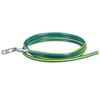
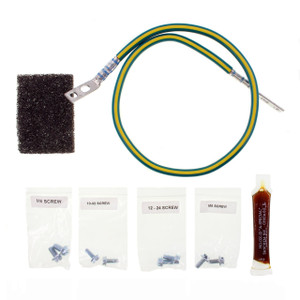
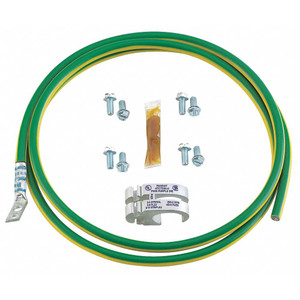
The Panduit RGCBNJ660PY is a UL-listed, CSA-certified 6 AWG equipment bonding jumper engineered for rack and cabinet grounding in mission-critical telecom and data center environments. Measuring 60 inches in length with green/yellow insulation for instant NEC Article 250 identification, this jumper bonds equipment enclosures to overhead or underfloor grounding infrastructure using factory-installed HTAP compression lugs that meet 600V application requirements when terminated with Panduit or specified competitor crimp tools and Panduit dies. Designed to comply with TIA-607-C and international grounding standards, it addresses the core installation challenge of maintaining low-impedance fault paths across non-conductive rack mounting hardware and paint finishes that can compromise ground continuity.
Key Features
- 6 AWG stranded copper conductor sized per NEC Table 250.122 for typical 60A-100A circuit protection in telecom/IT equipment installations
- 60-inch length accommodates overhead ladder rack to equipment runs, underfloor grid to cabinet base connections, and rack-to-busbar bonding in standard data center floor heights
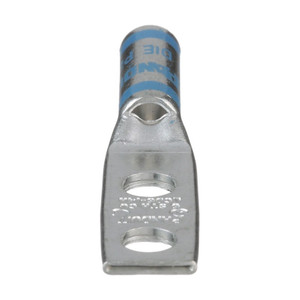
- Factory-installed HTAP compression lugs eliminate field termination errors and provide gas-tight connections that resist thermal cycling and vibration loosening
- Green/yellow insulation meets NEC 250.119 grounding conductor identification requirements for immediate inspector recognition
- UL listed and CSA certified for 600V applications when crimped with Panduit CT-series tools or specified Burndy/Thomas & Betts equivalents using Panduit color-coded dies
- RoHS compliant construction for global deployment in EU and California installations requiring lead-free terminations
Data center and telecom installers routinely encounter three grounding obstacles that this jumper directly solves: insufficient wire gauge for high-fault-current environments (6 AWG handles up to 100A overcurrent protection per 250.122), inadequate length for modern raised-floor or overhead tray configurations (60" reaches typical grid-to-rack distances without splicing), and field termination inconsistency (pre-installed HTAP lugs deliver factory-controlled crimp quality). The StructuredGround™ platform addresses TIA-607-C requirements for telecommunications bonding backbone (TBB) and telecommunications grounding busbar (TGB) interconnections, ensuring that rack-mounted servers, switches, and storage arrays maintain code-mandated ground-fault return paths even when mounted on powder-coated steel or anodized aluminum frames that act as insulators.
Installation follows the established data center grounding hierarchy: bond the jumper from the equipment rack's threaded grounding stud (typically M6 or 10-32 on the rear vertical rail) to the nearest TGB or underfloor copper grid intersection point, torque HTAP lug hardware to manufacturer specification (typically 50-70 in-lb for 6 AWG terminations), and verify less than 1 ohm resistance across the bond using a low-resistance ohmmeter per IEEE 1100 Emerald Book testing protocols. The 60-inch length suits standard 24-inch raised-floor installations where the grid runs beneath the floor tiles and the rack sits on a pedestal base — measure diagonally from the rack grounding point to the nearest grid cross-member, add 6-8 inches for termination hardware clearance, and confirm the path avoids sharp edges that could abrade the insulation jacket during seismic events or maintenance access.
This jumper ships in cartons of 10 pieces (individual package quantity of 1 per UPC 07498360851), making it the practical choice for contractors outfitting multi-rack deployments where consistent termination quality and NEC color-coding eliminate the variability of bulk wire and field-applied lugs. When bonding meets inspection-ready standards out of the package, you reduce commissioning delays and avoid the rework costs of failed ground-fault testing during final acceptance.