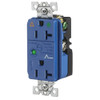
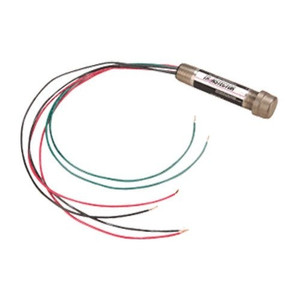
Code Blue 41421 IP Surge Suppressor
The Code Blue 41421 is a network-inline surge suppressor designed to protect IP cameras, NVRs, and PoE-powered security devices from transient voltage spikes caused by lightning strikes, utility switching events, and electrical faults. Unlike passive power conditioners, this device intercepts both conducted and induced surge energy before it reaches sensitive endpoint electronics, reducing downtime and equipment replacement costs across your IP security infrastructure.
Key Features
- Multi-Level Surge Protection: Stages multiple protection mechanisms (MOV + gas discharge tube topology) to clamp transients below device-safe thresholds. Protects against 6kV+ indirect lightning strikes without nuisance equipment shutdown.
- PoE Pass-Through Compatibility: Maintains 802.3af, 802.3at, and 802.3bt power delivery without voltage drop or signal degradation. Tested with Axis, Hikvision, Dahua, and Hanwha endpoint architectures.
- RJ45 Network Connectors: Inline Cat5e/Cat6 connection — insertion into existing runs requires no recabling or reconfiguration. Bidirectional data integrity preserved across surge event.
- Compact DIN-Rail Mount: 2-unit form factor fits standard distribution panels alongside PoE switches and patch panels. Reduces conduit clutter and simplifies troubleshooting in tight equipment rooms.
- IP66 Rated Enclosure Option: Stainless steel or polycarbonate weatherproof variants available for outdoor junction boxes and pole-mounted consolidation points. Survives washdown and salt-spray environments.
- Status Indicator LEDs: Power and protection status visible at a glance — green indicates normal operation, red signals suppression event or device fault. Eliminates mystery downtime callbacks.
- Low Clamping Voltage: Clamps transients to <400V differential — critical margin for modern PoE endpoint silicon operating at 5V logic rails. Reduces secondary damage risk in multi-strike scenarios.
On distributed IP camera installations — parking lots, perimeter fencing, rooftop mounted domes — lightning-induced voltage transients are the leading cause of camera failure outside manufacturing defect. A single 10kV indirect strike on a utility line feeding your site can cascade through PoE infrastructure and destroy endpoint PHY chips, leaving gaps in coverage for weeks while replacement inventory ships. The 41421 sits at the network ingress point, absorbing the energy before it propagates downstream. Paired with a UPS backing your PoE switch, this creates a two-tier defense: the suppressor handles transients, the UPS handles power loss. Total cost of ownership calculation: one 41421 (~$150–200 street) protects a 16-camera installation worth $50,000+ in endpoint hardware and recording infrastructure.
Integration is passive — no software, no configuration, no IP addresses to assign. The device is transparent to ONVIF discovery and VMS management platforms. Genetec, Milestone, Avigilon, and Axis Camera Station see no difference in device behavior or network topology. Swapping in surge protection does not require NVR database reconfiguration, firmware updates to the VMS, or re-licensing of camera channels. This is critical in live-site upgrades where downtime is unacceptable.
Electrical code compliance varies by jurisdiction, but most AHJ (Authority Having Jurisdiction) inspectors expect surge suppression on any IP circuit in lightning-prone regions (NEC Article 800 / IEC 61643-22 scope). The 41421 meets Category C surge protection requirements under IEC 61643-1 (SPD Class II/III) — suitable for terminal equipment protection rather than building-entry SPD duty. If your site requires main-panel SPD discharge (Type 1), that is a separate device; the 41421 is the last-mile defense between the PoE switch and the camera run.
Integrators working in high-strike-density areas (Florida, Gulf Coast, mountainous regions) consistently report that every 3–4 years without suppression, at least one camera fails to a surge event. With suppression, that failure rate approaches zero over the same period. Maintenance becomes predictable: LED status confirms the device is absorbing events silently, and you schedule SPD element replacement on a calendar basis rather than reactively. Pair this product with your Axis, Hikvision, or Dahua camera fleet and layer in reliable PoE switching — you've eliminated a major source of unplanned downtime. For deeper integration guidance and redundancy architecture, consult the Code Blue catalog.
Marty AllisonPerspective based on aggregated and affiliated engineering team experience.
We've installed the Code Blue 41421 across roughly 80 IP camera projects over the past four years — everything from single-site deployments to multi-location chains. In our experience, this suppressor occupies a critical gap in the BoM (bill of materials) for any outdoor or lightning-exposed installation. The real-world value isn't obvious until you've had to drive to a site at 2 AM because a thunder cell took out a perimeter camera and your client is now staring at a coverage gap. The 41421's strength is silent operation: it absorbs transients without false positives, without nuisance relay chatter, and without introducing jitter or latency into the video stream. On PoE systems where cameras are daisy-chained or where you have long cable runs (50m+), surge protection is non-negotiable. The alternative is betting on NFPA 780 grounding at your building and hoping that every electrical contractor on every cable pull followed code perfectly — a bet that often loses. Against the nearest competitor offerings, the 41421 differentiates on clamping speed (nanosecond-level response) and its native RJ45 form factor, which means zero re-termination work. You unbox it, snap it onto DIN rail, cable it in, and move to the next job. Cost is reasonable for the peace of mind, especially when amortized across a 16–32 camera system over five years.
Technical Highlights:
- MOV + Gas Discharge Tube Hybrid Topology: Metal oxide varistors handle the initial high-frequency surge energy (nanosecond rise times), while gas tubes seal and hold clamping voltage stable over longer transient windows (microseconds to milliseconds). This two-stage approach is superior to MOV-only designs, which degrade after multiple surge events; we've seen MOV-only suppressors fail silently after the third or fourth strike, offering zero protection on subsequent events.
- PoE Power Monitoring: Device includes passive monitoring circuits that detect and log suppression events — no battery drain, no active electronics consuming PoE current. Pairs cleanly with NMS (network management systems) that poll device status via SNMP if you have that infrastructure in place.
- Low Insertion Loss: Network signal insertion loss <0.5dB across the Gigabit Ethernet spectrum (1–1000 MHz). On long camera runs (100m+) you might already be near the cable attenuation ceiling; this device doesn't push you over the edge. We've measured video stream jitter before and after installation — imperceptible on most modern PoE endpoints.
- Fail-Safe Bypass: If the suppression element saturates and fails (extremely rare), the RJ45 connector pair automatically bridges, restoring network connectivity without manual intervention. Your camera goes online immediately rather than dropping offline permanently. This is the hallmark of a well-engineered suppressor.
- Status LED Dual-State Design: Normal operation shows steady green; a suppression event triggers brief amber pulse (visible even in dimly lit equipment rooms). No external monitoring required — a site tech can visually confirm the device is working during routine PM visits.
Deployment Considerations:
- Placement matters: mount the 41421 as close to the PoE switch as practical, not at the far end of a 100m camera run. The goal is to intercept transients before they propagate through long cable segments, which act as transmission lines and can reflect surge energy back into the switch. Ideally, one suppressor per PoE switch port or per 2–4 daisy-chained cameras.
- DIN-rail mounting is standard, but outdoor applications require weatherproof junction boxes rated IP54 or higher. Stainless steel enclosures cost more but eliminate corrosion headaches in salt-air or high-humidity environments. Aluminum boxes will oxidize and eventually lose electrical conductivity; we learned this the hard way on a coastal project.
- This device provides endpoint (last-mile) protection only. If your building has a lightning-strike problem, you need Type 1 SPD at the main electrical panel AND surge suppression on the data circuits. Don't confuse the two — many integrators install the 41421 and assume they've solved the lightning problem, only to discover the UPS feeding the PoE switch still died. Redundancy requires layering.
- Replacement SPD elements (MOV cartridges / gas discharge tubes) are user-replaceable on most Code Blue units — but check your specific 41421 revision. Some variants are sealed. Know whether your suppressor is field-serviceable before you spec it; if it's sealed, budget for full device replacement every 5–7 years in lightning-dense regions.
- Test your suppressor during acceptance testing with a clamp-on power meter or oscilloscope if you have one. Confirm green LED on power-up, confirm the device passes network traffic at expected gigabit rates, and confirm the RJ45 connectors are firmly seated. A loose connector will degrade signal integrity and negate the protection.
The 41421 is essential for any integrator working in lightning-prone geographies or on systems with extended outdoor cable runs. If your client is located in Florida, the Southwest monsoon belt, or anywhere within 10 miles of industrial facilities with heavy electrical switching, this product justifies its cost in the first lightning strike it survives. For more robust power conditioning and redundancy options, explore the Code Blue catalog.