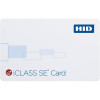
HID 3000PG1MN iClass 2K/2 SE Programmable Credential with Magnetic Stripe
When you're upgrading legacy magnetic stripe systems to multi-technology access control without ripping out existing infrastructure, you need credentials that bridge both worlds. The HID 3000PG1MN iClass SE card delivers 13.56 MHz contactless smart card technology alongside a magnetic stripe, letting you phase deployments at your pace while maintaining backward compatibility with older mag stripe readers still in service.
Key Features
- iClass SE platform with 2K bit (256 byte) memory configuration for storing multiple applications and credentials
- SIO (Standard Identifier Object) encoding in two application areas for flexible access control programming
- Integrated high-coercivity magnetic stripe for dual-technology compatibility during migration projects
- Glossy finish on both front and back surfaces for professional appearance and durability in high-use environments
- Programmed and ready to encode with facility codes and card numbers specific to your deployment
- Standard CR80 credit card dimensions (3.375" x 2.125") with matching construction for uniform visual presentation
- No slot punch, maintaining clean card edges for office and corporate environments
The dual-technology design solves a common integration challenge: you've invested in iClass readers for new construction or secure areas, but older buildings still run mag stripe locks that would cost tens of thousands to replace immediately. Instead of issuing two separate credentials or forcing premature hardware replacement, these cards work across both systems. Employees carry one card through the transition period, reducing helpdesk calls and credential management overhead.
The 2K/2 memory structure provides enough capacity for standard access control applications while keeping costs reasonable for bulk deployments. Program facility codes, add secondary credentials for cafeteria or parking systems, or store additional data fields without running into memory constraints typical of lower-capacity proximity cards. The glossy finish on both sides resists daily wear better than uncoated alternatives and accepts direct-to-card printing if you're adding photos or additional cardholder information. For integrators managing phased upgrades or maintaining mixed-technology estates, this card eliminates the "which reader is this door" question that complicates dual-credential deployments.