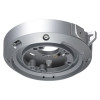
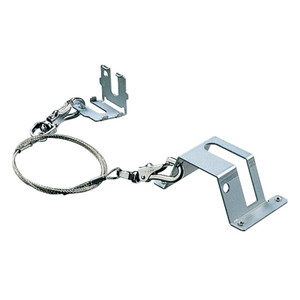
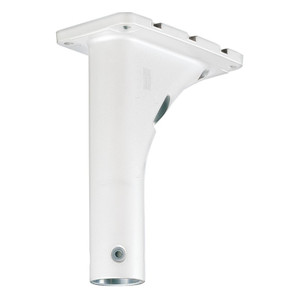
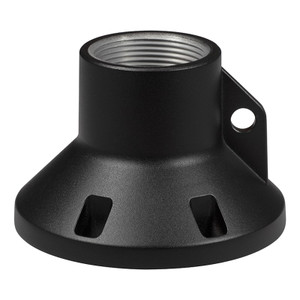
i-PRO WV-QCL500-S Ceiling Surface Mount Bracket for PTZ Cameras
The i-PRO WV-QCL500-S is a ceiling surface mount bracket engineered to support secure installation of PTZ (pan-tilt-zoom) cameras in networked surveillance deployments. Unlike recessed or flush-mount alternatives, this accessory delivers straightforward surface mounting without ceiling cutouts — a practical advantage when you want to avoid structural modification or when existing ceiling materials make recessing impractical.
Key Features
- Ceiling Surface Mount Design: Mounts directly to standard ceiling surfaces, eliminating the need for cutout preparation or recessed installation. This approach reduces labor and allows repositioning without patching drywall.
- Silver Finish: Matches standard suspended ceiling and white ceiling finishes for visual integration in offices, retail spaces, and commercial environments where appearance matters.
- 24VAC Power Support: Accommodates 24VAC power delivery, which is standard in many commercial HVAC and building automation systems. If your facility already distributes 24VAC through conduit or cable trays, this bracket integrates naturally without requiring dedicated PoE infrastructure.
- Ethernet Connectivity: Supports standard network cabling for PTZ control and video transmission. Ethernet-based control simplifies camera addressing and allows integration with existing network video management systems.
- HTTPS Encryption: Built-in support for HTTPS secures command and video traffic between the camera and your recording or management platform, meeting baseline cybersecurity requirements in most enterprise deployments.
- Audio Compatibility: The bracket design accommodates PTZ cameras with built-in or integrated audio modules, allowing two-way communication where needed for retail or facility management applications.
Deployment Context
The WV-QCL500-S is purpose-built for PTZ camera installations in indoor spaces — offices, retail stores, educational buildings, warehouses, and commercial facilities where overhead surveillance and room-level pan-and-tilt capability are required. Surface mounting is particularly valuable in retrofit scenarios, modular buildings, or leased spaces where permanent structural changes are restricted.
Power delivery via 24VAC means this bracket works in facilities with existing low-voltage AC infrastructure. If your site relies exclusively on PoE-powered cameras, you would use PoE switch ports instead of the 24VAC path, but the bracket itself remains compatible with both power architectures — the choice depends on your camera model and available network infrastructure.
When selecting a PTZ mounting solution, consider your ceiling type (drop-ceiling tile, drywall, concrete), available power distribution (PoE switches vs. 24VAC conduit), and whether future repositioning is likely. The WV-QCL500-S (often searched as WV QCL500 S) assumes surface mounting is preferable and that your PTZ camera draws power either from 24VAC or PoE delivered through the same Ethernet run.
Integration Notes
Pair this bracket with an i-PRO PTZ camera model that supports 24VAC input or PoE power. Confirm that your selected camera's connector type and mechanical dimensions align with the bracket's interface — consult the camera's installation guide alongside the bracket documentation. Network integration assumes standard Ethernet cabling to a managed network switch or PoE injector. HTTPS encryption is enabled at the camera level; ensure your network video management system and any edge recording devices support encrypted streams.
When to Choose a Different Mounting Solution
If your ceiling is concrete, corrugated metal, or otherwise unsuitable for surface mounting, consider a wall-mount or pendant-mount alternative. If recessed appearance is a hard requirement (e.g., cleanroom or sterile environments), a flush-mount or in-ceiling option would be more appropriate. If your facility has no 24VAC distribution and relies entirely on PoE, verify that your PTZ camera is rated for PoE++ (802.3bt Class 4 or higher) to supply sufficient power for motor-driven tilt and zoom operations — not all PoE cameras have adequate power for aggressive PTZ movement.
Frequently Asked Questions
Q: Can I mount the WV-QCL500-S on a wall instead of a ceiling?
A: The WV-QCL500-S is specifically designed for ceiling surface mounting. Wall mounting would require a different bracket type; consult the camera manufacturer's accessory list for wall-mount options compatible with your PTZ model.
Q: What PTZ camera models work with the WV-QCL500-S?
A: The bracket is engineered for i-PRO PTZ cameras. Check the camera's installation guide for compatible mounting brackets — mechanical interface and connector alignment vary by model.
Q: Does the bracket support both 24VAC and PoE power simultaneously?
A: The bracket itself supports 24VAC power delivery. PoE power is delivered through the Ethernet cable by your network switch or injector. You would use one power source or the other depending on your camera's input specification — not both simultaneously to the same camera.
Q: Is installation difficult for someone without AV experience?
A: Surface mounting is generally simpler than recessed installation because there is no ceiling cutout required. However, you must safely secure the bracket to solid ceiling material and run Ethernet and power cabling without creating trip hazards or violating building codes. Use qualified installers if you are unsure about electrical safety or ceiling load ratings.
Q: Does the bracket come with mounting hardware?
A: Refer to the product documentation for a complete list of included fasteners and tools. Standard surface-mount brackets typically include anchors, screws, and a template; verify the contents against your ceiling type before installation.
Q: Will the bracket fit inside a suspended drop-ceiling?
A: A surface-mounted bracket sits above (or flush against) the ceiling surface, not inside the plenum. Drop-ceiling installations typically use a recessed or in-tile bracket to hide the bracket above the tile. For drop ceilings, confirm whether a recessed variant is available for your PTZ model.
Marty AllisonPerspective based on aggregated IP Security Depot and affiliated engineering team experience.
The WV-QCL500-S is a straightforward surface-mount choice for indoor PTZ deployments, and the silver finish is more practical than it first appears. In office and retail environments, a visible bracket that blends with the ceiling material reads as intentional and professional, whereas mismatched hardware looks like an afterthought. The 24VAC power support is particularly valuable for older commercial buildings or facilities with existing low-voltage AC infrastructure — you avoid the capital cost of upgrading to a PoE-capable switch or running new power paths.
Technical Highlights:
- Surface Mount vs. Recessed: No ceiling cutout means faster installation and zero structural patching. In leased spaces or modular buildings, this is a deployment-cost advantage — install, adjust, remove, move to the next site without remediation.
- 24VAC Power Compatibility: Standard in commercial HVAC and building automation systems. If your facility already distributes 24VAC, you avoid PoE switch upgrades or Power-over-Ethernet budget constraints. Confirm your PTZ camera accepts 24VAC input before committing.
- Ethernet + HTTPS: Network control and encrypted video transmission are non-negotiable in enterprise deployments. The bracket itself is agnostic to codec or analytics — those sit on the camera — but the infrastructure (Ethernet, HTTPS) keeps command and video traffic secure.
Deployment Considerations:
- Verify your ceiling material can accept the bracket's fasteners without structural damage. Drywall requires anchors; concrete requires masonry fasteners. Suspended tile ceilings are borderline — tile alone won't hold a PTZ camera's weight; you must anchor to the structural frame above.
- PTZ motors draw variable power depending on pan, tilt, and zoom speed. If using 24VAC, ensure your power supply can sustain peak demand (typically 3–5 A during aggressive movement). PoE-powered PTZ cameras must be rated PoE++ (802.3bt) — standard PoE (802.3af at 15W) is insufficient for motor-driven motion.
- Plan Ethernet and power routing carefully. Surface mounting means cables are exposed; use cable management clips or conduit to avoid trip hazards and to keep the installation looking intentional.
Best suited for corporate offices, retail surveillance, educational facilities, and warehouses where ceiling-mounted PTZ coverage is needed and surface mounting aligns with your structural and aesthetic constraints. Skip this bracket if your facility mandate is completely hidden infrastructure (go recessed) or if you have no 24VAC available and your PTZ camera is not rated for sufficient PoE power.