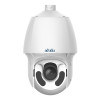
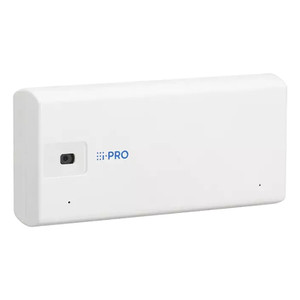
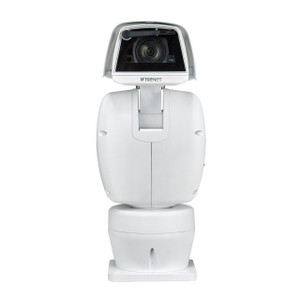
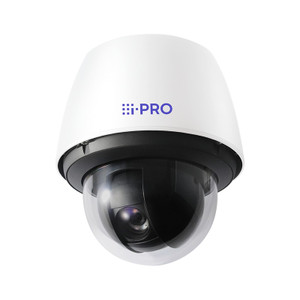
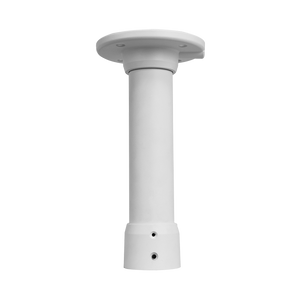
i-PRO M-200-P 2MP PTZ Network Camera
The i-PRO M-200-P is a motorized dome PTZ camera engineered for outdoor perimeter and wide-area surveillance where zoom range and low-light performance are non-negotiable. Built around a 33x optical zoom lens spanning 4.5–148.5mm and paired with H.265 compression, a 150-meter infrared illuminator, and three independent power options, the M-200-P delivers full HD resolution at 60 fps across dynamic outdoor scenes—from parking lots to warehouse perimeters and traffic monitoring zones. The camera's pan-tilt-zoom capability, combined with edge-based analytics, makes it a practical choice for facilities that need flexible framing without relying on multiple fixed cameras or constant manual control.
Key Features
- 33x Optical Zoom (4.5–148.5mm Motorized Lens): Optical zoom alone means you capture wide-area overview at 56.2° horizontal field of view, then tighten to 2.6° for face-level or license-plate detail at distance without losing pixels to digital interpolation. This zoom range eliminates the need for separate wide and telephoto cameras on most perimeter and traffic monitoring jobs. The 4x digital zoom extension is available if ultra-tight framing becomes necessary, but adds little practical value in real-world deployments; stick with optical unless you're cropping for playback analysis only.
- H.265, H.264, and MJPEG Codec Support: H.265 cuts storage and bandwidth overhead roughly 40–50% compared to H.264 for equivalent image quality. On 24/7 multi-camera warehouse or parking facility deployments, that translates to measurable reductions in NVR storage footprint and network utilization. At 60 fps and 1920 × 1080, motion blur on fast-moving vehicles or personnel remains minimal, avoiding the need to drop frame rate to save space.
- 120dB Wide Dynamic Range (WDR): Simultaneously captures shadow and highlight detail in high-contrast outdoor scenes. Loading docks with bright sunlight and deep shadow zones, or building entrances backlit by afternoon sun, retain usable detail across the full tonal range in a single frame instead of forcing you to choose between blown-out highlights or crushed shadows.
- Lighthunter Low-Light Sensor with 150m IR (492 feet): Achieves color imaging at 0.001 lux (F1.5, AGC on) and monochrome at 0 lux with infrared fill. The 150-meter IR reach means nighttime coverage extends across large parking areas and perimeter zones without separate flood lighting—a cost reduction for facilities that would otherwise require heavy exterior illumination infrastructure. Automatic infrared cutoff (ICR) switching ensures seamless day-to-night transitions without manual intervention or color shift artifacts.
- Pan 360° Continuous / Tilt –15° to 90° with Auto-Flip: Endless horizontal rotation allows the camera to track moving subjects without stopping or reversing. Auto-flip mode prevents upside-down video when the camera tilts past vertical, maintaining usable framing during full-tilt operations. The 90° upward tilt reaches ceiling-mounted positions in semi-outdoor covered spaces or interior high-bay areas if needed.
- IP66 Environmental Rating: Direct rain and dust won't compromise operation, making the M-200-P suitable for exposed warehouse roofs, open parking structures, and external loading areas. IP66 protects against high-pressure water spray from any direction; however, if full submersion or saltwater spray is a factor, evaluate a higher IP-rated variant or conformal coating options.
- Three Independent Power Paths (PoE+, AC 24V, DC 24V): PoE operation draws a maximum 48W, making it compatible with PoE+ injectors and switches—no separate power supply required at the camera. AC 24V and DC 24V options accommodate existing installations with centralized transformer infrastructure, reducing retrofit complexity in buildings with established low-voltage power distribution.
- On-Camera Motion, Intrusion, Line Crossing, and Audio Detection: Built-in edge analytics filter motion events by zone, detect unauthorized entry across perimeter lines, and trigger on sudden audio events—reducing false alarms and network load compared to offloading analytics to a central NVR. Tampering alarm alerts operators if the camera is physically obstructed or repositioned.
- 1/2.8" 2.0 MP CMOS Progressive Scan Sensor: High-sensitivity progressive scanning eliminates interlace artifacts on moving subjects. The sensor's dynamic range and low-light response mean you retain detail in both bright sunlight and pre-dawn/dusk conditions without image degradation or excessive noise.
Integration & Compatibility
The M-200-P supports ONVIF Profile S for interoperability with third-party network video recorders and video management systems. Standard RTSP/HTTP streaming allows integration into custom or legacy control architectures. On-camera analytics reduce processing overhead on multi-camera IP cameras installations, allowing smaller NVR processors to handle higher camera counts. PoE+ power draw of 48W fits within most enterprise-grade PoE switch budgets; verify available per-port power on your switch before deployment. For facilities with limited Ethernet backbone capacity, network bandwidth planning guides help you right-size trunk links and switch uplinks to accommodate multiple PTZ units streaming simultaneously.
When to Choose a Different Model
The M-200-P is a solid mid-range PTZ for general perimeter and area monitoring. If your application requires fixed wide-angle coverage without pan-tilt capability, consider a fixed-lens outdoor dome or bullet in the same i-PRO family—they offer simpler mounting and lower power draw. If you need higher resolution (4MP, 5MP) for license-plate or facial recognition at distance, look to higher-megapixel outdoor IP cameras or PTZ variants with extended zoom ranges. If your environment includes washdown hose-down scenarios or saltwater exposure, prioritize cameras with IP67+ and stainless-steel housings.
Frequently Asked Questions
Q: What's the maximum range at which the M-200-P can detect a face or license plate?
A: Detection range depends on lighting, resolution, and display size. At 2MP and 33x optical zoom (2.6° horizontal field of view), the camera can resolve a face-sized target at roughly 150–200 feet in daylight with good contrast. License-plate reading typically requires 4MP or higher resolution and closer range. Use the zoom to tighten the frame on high-interest areas, then record at full resolution for archival and forensic analysis.
Q: Does the M-200-P work with Milestone XProtect or other third-party VMS platforms?
A: Yes. ONVIF Profile S support ensures compatibility with ONVIF-capable video management systems, including Milestone, Genetec, and others. Verify your VMS version supports ONVIF streaming and PTZ control commands before deployment. Some legacy VMS versions may require firmware updates or specific driver configuration.
Q: Can the M-200-P be powered by standard 802.3af PoE, or do I need PoE+?
A: The M-200-P draws up to 48W peak power, which exceeds 802.3af (15.4W max). You must use PoE+ (802.3at, 30W per port) or higher. If your switch lacks sufficient PoE+ ports, consider a PoE+ injector or dedicated power supply using the AC 24V or DC 24V option instead.
Q: Is the 150m IR range sufficient for a large parking lot?
A: 150 meters (492 feet) covers most standard parking facilities without additional flood lighting. However, reflected IR performance degrades with dust, fog, and rain. Test the camera in your specific environment during night conditions to confirm usable range. If performance falls short, pair the M-200-P with supplemental LED or halogen flood lights to extend effective detection distance.
Q: What's the difference between H.265 and H.264, and which should I use?
A: H.265 achieves roughly 40–50% better compression than H.264 at equivalent visual quality, cutting storage and bandwidth costs significantly on 24/7 recording. Use H.265 if your NVR and client software support it. Fall back to H.264 if compatibility with older systems is required. MJPEG is useful for low-bandwidth scenarios or motion-triggered clips, but consumes 5–10x more storage than H.264 at the same resolution.
Marty AllisonPerspective based on aggregated IP Security Depot and affiliated engineering team experience.
I've deployed the M-200-P across warehouse perimeters and multi-level parking structures where zoom range and all-night visibility are the deciding factors. The 33x optical lens is the real workhorse here—it eliminates the need to install separate wide-angle and telephoto cameras, which cuts installation labor and network port overhead significantly. The 150-meter IR reach is legitimate for open-air applications, though you'll see performance degrade in fog or heavy dust; I always recommend a site-specific night test before finalizing camera count and placement.
Technical Highlights:
- 33x Optical Zoom Coverage: A single M-200-P replaces two or three fixed cameras on typical perimeter routes. You go from 56.2° wide for overview to 2.6° narrow for detail without any pixel loss. That's a real cost and network efficiency win on large deployments.
- H.265 Compression at 60 fps 1080p: Streaming 24/7 at full frame rate burns storage fast with H.264. H.265 cuts that footprint roughly in half. On a 30-camera parking facility, that's the difference between a 2TB and 4TB NVR—or between adding a second NVR and keeping a single unit.
- PoE+ Power Flexibility: The 48W peak draw requires PoE+, but the three power options (PoE+, AC 24V, DC 24V) let you match installation constraints to available infrastructure. In older buildings with sparse Ethernet, the 24V option avoids having to upgrade the PoE switch.
Deployment Considerations:
- IR performance drops predictably in fog, dust, and rain. Size your fleet assuming 60–70% of the 150m range in marginal conditions, not 100%. Supplement with fixed flood lights if nighttime coverage is critical to perimeter intrusion detection.
- The pan-tilt-zoom capability is powerful, but edge analytics (motion, intrusion, line crossing) are best used for triggering recording or alerts, not sole-source perimeter defense. Pair with strategically placed fixed cameras at entry points for redundancy.
Position the M-200-P as your primary coverage tool on large perimeter routes where zoom flexibility and low-light performance justify the PoE+ power budget and edge processing overhead. It's a strong fit for parking lots, loading dock areas, and warehouse rooflines where a smaller number of PTZ units outperforms dozens of fixed cameras in terms of installation cost and maintenance burden.