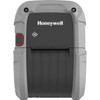
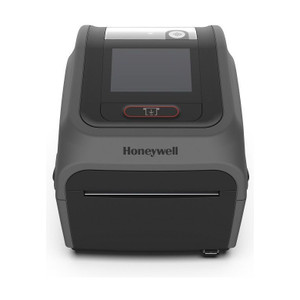
Honeywell RP2F00N0D10 Industrial Mobile Label Printer
The Honeywell RP2F00N0D10 is a compact, mobile-class direct thermal label printer built for on-demand barcode and shipping label production in warehouse, manufacturing, and logistics environments. It combines a Qualcomm Snapdragon processor with Android OS, delivering 203 DPI print resolution across a maximum 51.5 mm (2.0 in) print width. The RP2F00N0D10 weighs just 200 grams (7.1 oz), enabling field technicians and warehouse staff to carry it throughout the facility for point-of-activity labeling without the infrastructure overhead of fixed printer deployments.
Key Features
- Direct thermal printing at 203 DPI — eliminates ink, toner, and ribbon cartridges. No consumable replacement costs between labels, and no ribbon-jam downtime. Produces crisp, consistently scannable output for GS1-128, UPC, Code 128, and standard symbologies used in shipping, inventory, and compliance workflows.
- 2500 mAh Li-Ion battery — delivers multiple hours of continuous label production per charge. Supports fast recharge cycles, so the device can run one shift, charge during lunch, and cover an afternoon or evening shift without swapping units.
- Dual connectivity: Bluetooth 5.0 and Wi-Fi 802.11 a/b/g/n/ac — pairs instantly with mobile devices and tablets for label design on-the-spot, or connects to warehouse management systems and cloud-based label servers. USB support enables batch printing and firmware updates from a central PC.
- IP54 environmental rating — dust and water splash protection mean the printer tolerates humid loading docks, temperature extremes, and condensation without protective enclosures. Reduces operational friction when moving between climate-controlled and outdoor zones.
- 2-meter drop resistance onto concrete — survives accidental falls common in fast-paced warehouse operations. No need for shock-absorbing protective cases, lowering total cost of ownership and reducing downtime from device damage.
- Operating temperature -20° to 55°C — handles cold storage facilities, unheated receiving areas, and warm manufacturing floors without thermal throttling or battery performance loss. Critical for cross-dock and third-party logistics (3PL) operations spanning multiple climate zones.
- Android-based OS — native integration with enterprise mobility platforms, custom label applications, and print-queue management without proprietary software development. Familiar ecosystem reduces training overhead.
- Lightweight at 200 g (7.1 oz) — portable enough for all-day carry by field staff, yet durable enough to survive the rigors of warehouse deployment. No fatigue on wrist-worn holsters or belt mounts.
Deployment Scenarios
The RP2F00N0D10 excels in shipping and receiving operations, where labels must be printed at the dock during item intake or sortation. Inventory control teams use it for real-time asset tagging and location updates without returning to a fixed printer station. Returns processing and compliance labeling workflows benefit from portability—print a label at the point where a decision is made, not where a printer sits.
Cross-dock facilities, field service operations, and mobile warehousing tasks (such as cycle counting or bin relocation) see immediate productivity gains. The printer supports product tracking, supplier labeling, and parcel preparation in environments where fixed infrastructure is impractical or where print demand is distributed across a large facility.
Integration with warehouse automation systems occurs through Wi-Fi connectivity to label management platforms. Bluetooth pairing with mobile computers or tablets running warehouse management system (WMS) client apps enables offline label design and print-queue buffering when network connectivity is intermittent.
Connectivity & Integration
The RP2F00N0D10 supports Bluetooth 5.0 for pairing with mobile devices, tablets, and wearable label-design interfaces. Wi-Fi ac (802.11ac) integration connects to enterprise label servers, cloud-based print management, and real-time WMS systems. USB connectivity (via dock or cable) supports batch printing, template updates, and firmware provisioning from a central management PC.
The Snapdragon processor ensures responsive label rendering, template switching, and print-queue handling during peak periods. Android OS enables third-party label design and integration apps without requiring proprietary development frameworks or vendor-specific SDKs.
When to Choose a Different Model
If your labeling workflow requires wider media (4 inches or greater) or sustained high-volume printing (hundreds of labels per hour at a fixed station), a desktop or production-class printer in the Honeywell printer line will be more appropriate. The RP2F00N0D10 is optimized for portability and field deployment, not stationary high-throughput printing.
If you operate in environments with no power infrastructure (no charging stations, no docking), confirm battery life and charging logistics before deployment. The 2500 mAh capacity is adequate for mobile field use but requires daily or shift-end charging in facilities without midday power access.
Frequently Asked Questions
Q: What barcode symbologies does the RP2F00N0D10 support?
A: The 203 DPI thermal print engine supports all standard linear barcodes including GS1-128, Code 128, UPC-A, UPC-E, EAN-13, EAN-8, Code 39, Codabar, and others. It does not support 2D barcodes (QR, DataMatrix) due to the thermal printer's line-based architecture.
Q: How long does the 2500 mAh battery last under continuous use?
A: Battery life depends on label size, print speed, and connectivity duty cycle. Expect 3–6 hours of continuous printing per charge under typical warehouse conditions. Charge times are fast, typically 1.5–2 hours for a full recharge via USB dock or wall adapter.
Q: Can the RP2F00N0D10 print from a WMS application on a mobile device?
A: Yes. Pair the printer via Bluetooth 5.0 to a mobile device or tablet running your WMS client app. The Snapdragon processor and Android OS support native print spooling through standard Android print APIs. Wi-Fi connectivity is also available for direct integration with cloud-based label servers.
Q: Is the RP2F00N0D10 suitable for outdoor use?
A: The IP54 rating handles water splash and dust exposure, making it suitable for outdoor loading docks and uncovered receiving areas. However, it is not submersion-rated (not IP67). Avoid prolonged immersion or high-pressure water jets.
Q: What happens if the printer is dropped?
A: The RP2F00N0D10 is rated for 2-meter drops onto concrete without performance degradation. Rubber bumpers and internal shock absorption minimize component damage. Physical cracks or severe impact may still require repair, but routine drops typical of warehouse handling are expected and covered by the drop-test specification.
Q: Does the RP2F00N0D10 require special thermal paper?
A: Yes. Direct thermal printing requires thermal-sensitive label stock (not standard inkjet or laser paper). Thermal labels are widely available from consumables suppliers and are less expensive per label than ink or toner cartridges.
Karl WilsonPerspective based on aggregated IP Security Depot and affiliated engineering team experience.
The RP2F00N0D10 addresses a genuine operational gap: the need for printing at point-of-activity without the infrastructure cost of fixed label stations scattered throughout a warehouse. It's not a replacement for high-throughput production printers, but it's a smart choice when labeling decisions are distributed across a facility or when mobile staff need to respond to inventory events in real time. The Qualcomm Snapdragon processor and Android OS eliminate vendor lock-in, and dual Bluetooth/Wi-Fi connectivity provides flexibility for both offline and cloud-connected workflows.
Technical Highlights:
- Direct thermal at 203 DPI: No cartridge swaps, no ribbon jams, no ink waste. Consumable costs drop to thermal label media only—a significant advantage over years of operation. The 51.5 mm print width accommodates most shipping, pallet, and inventory labels without requiring label-template redesign.
- 2500 mAh battery with multi-hour runtime: A single charge covers a full warehouse shift. Fast recharge means the device can charge during breaks or overnight rotation without backup units. This beats tethered label stations that require USB power runs or separate AC infrastructure.
- IP54 + 2-meter drop resistance: Tolerance for dust, water splash, and accidental impact eliminates the need for protective cases or isolated printing stations. Operational durability directly reduces total cost of ownership through extended device lifespan and lower replacement frequency.
- Bluetooth 5.0 and Wi-Fi ac: Flexibility to pair with mobile devices for quick label design, or connect to enterprise label servers and WMS systems for batch operations. No proprietary mobile app required—Android print APIs mean integration with any WMS client that supports standard Android printing.
Deployment Considerations:
- Print width is 51.5 mm (2.0 in) maximum: If your workflow demands 4-inch labels or wider media, the RP2F00N0D10 is not the right choice. Confirm label dimensions before rollout.
- Thermal label dependency: You'll need to source thermal-sensitive media consumables. Verify supply chain availability and pricing in your region. Stock standard rolls to avoid print failures mid-shift.
- Battery charging logistics: In facilities without charging infrastructure (docks, charging stations), confirm that shift-end or overnight charging is feasible. Multi-shift operations may require a second battery or docking station.
Deploy the RP2F00N0D10 in shipping and receiving, cross-dock operations, or mobile inventory workflows where print frequency is moderate, label dimensions are under 51.5 mm width, and staff mobility justifies the investment in a portable solution. It's a legitimate alternative to fixed printers when the cost of running power and network to multiple locations exceeds the cost of a few mobile units. Expect robust field performance under warehouse and logistics conditions.