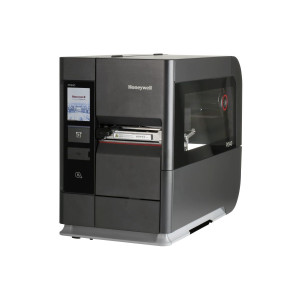
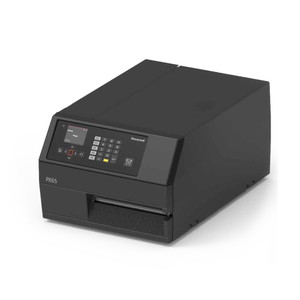
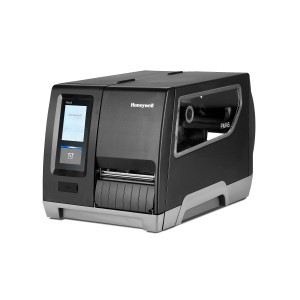
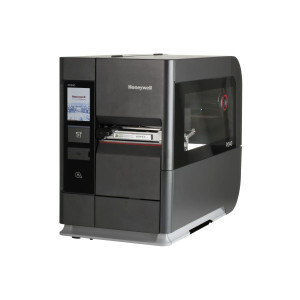
Honeywell PX940A00100000202 Industrial Label Printer 203 DPI
The Honeywell PX940A00100000202 is a thermal transfer label printer purpose-built for high-volume industrial production—warehouses, manufacturing floors, distribution centers, and compliance-heavy environments where barcode quality directly impacts supply chain velocity. It delivers 203 DPI resolution paired with ±0.2 mm print precision, meaning your barcodes scan reliably on first pass, reducing retakes and scan exceptions that cost time and accuracy downstream.
Key Features
- Print Speed: 25–350 mm/s (1–14 ips) — Variable speed control lets you dial up to 14 inches per second for high-throughput production runs, or drop to 25 mm/s for complex multi-barcode layouts where precision matters more than volume. This flexibility is critical if your workflow mixes fast commodity labels with slower regulatory or asset-tracking jobs on the same device.
- 203 DPI Resolution with ±0.2 mm Precision — 203 DPI is the industrial workhorse for barcode label printing. The ±0.2 mm repeatability ensures registration-sensitive applications (shipping labels with QR codes positioned exactly, compliance labels with multiple data zones) print consistently, reducing rework and manual verification overhead.
- 114 mm (4.5 in) Maximum Print Width — Handles standard shipping labels, GHS chemical compliance labels, asset tags, and rack labels. Not wide enough for box wrapping or roll stock broader than 4.5 inches, so verify your label stock dimensions before committing.
- Dual-Core ARM Cortex-A9 1 GHz Processor with 1 GB DDR3 SDRAM — Sufficient horsepower to compile complex variable-data templates with multiple barcodes, serial numbers, and graphics without queue backlog. 1 GB RAM allows the printer to buffer spool files, reducing network dependency if you're batching large label jobs from your WMS.
- Multiple Protocol Support: ZPL II, ZSim2, Direct Protocol, Fingerprint, IPL — Multi-emulation compatibility is a bridge asset if you're consolidating from legacy label systems or integrating with mixed-vendor environments. You can send jobs from existing WMS or ERP templates without reprogramming label formats—reducing migration cost and training overhead.
- Connectivity: Ethernet (10/100 Mbps), USB 2.0 Host/Device, RS-232, Bluetooth, NFC — Ethernet is your production path; USB for local job submission or driver installation; RS-232 for legacy integration if your WMS or barcode scanner outputs serial-only. Bluetooth/NFC are optional extras for mobile label requests, not core workflow.
- Ink-In/Out Ribbon System — Thermal transfer (not direct thermal) means you supply ribbon cartridges alongside label stock. This adds consumable cost but improves label durability and color/barcode contrast in humid or outdoor-facing tracking scenarios.
- 3.5-inch Color Touch LCD — Operator-facing display for job status, error codes, and configuration. Reduces training burden compared to button-matrix printers; allows localized label reprinting without network callback if a single label jams.
- 256 MB Flash Storage with 10–90% Non-Condensing Humidity Tolerance — On-board flash holds font sets, logo libraries, and template caches; environmental spec (10–90% RH) is standard for indoor warehouses but rules out fully open dock or unshielded outdoor mounting. If your facility experiences condensation or salt spray, consider environmental housing or mounting restrictions.
Integration and Deployment Context
The PX940A00100000202 integrates with standard WMS platforms (SAP, Oracle, Manhattan, Kinaxis, JDA) via Ethernet or USB driver. ZPL II support means your existing Zebra label templates may transfer with minimal adjustment. Deploy on a rolling cart with power/Ethernet drops for mobile use across zones, or mount in a fixed print station near pack-and-ship or receiving. Thermal transfer supplies (ribbon + label stock) must be sourced alongside the hardware—factor consumable lead times into your procurement cycle.
When to Choose a Different Model
If your labels exceed 4.5 inches wide, look to wider variants in the Honeywell industrial printer lineup. If you require faster speeds beyond 350 mm/s or higher DPI (300+ for micro-barcode or pharmaceutical serialization), consider models with 300 DPI or above. If direct thermal (no ribbon) is preferred to cut consumable cost, confirm whether a direct-thermal variant is available in your region.
What's in the Box
Verification of exact package contents is not available from the provided evidence. Contact the supplier or manufacturer directly for specific documentation on included cables, power supply, sample labels, or mounting hardware.
Frequently Asked Questions
Q: Is the PX940A00100000202 compatible with my existing ZPL template library?
A: Yes. The printer supports ZPL II natively, the industry standard for thermal label printing. Most legacy Zebra label templates will require no change or only minor adjustments to the PX940A00100000202. If you're migrating from a different vendor, test a sample batch first.
Q: What consumables do I need to stock alongside the printer?
A: Thermal transfer ribbon (ink-in/out cartridges) and label stock compatible with the 114 mm maximum width. Ribbon type (wax, resin-wax, or resin) depends on your label material and environment. Work with your label supplier to specify the right combination for barcode scanning reliability and durability.
Q: Can the PX940A00100000202 be networked across multiple locations?
A: Yes. The 10/100 Mbps Ethernet port allows centralized print queue management via your WMS or print server. Multiple printers can be deployed across a facility and fed from a single job spool, common in multi-zone warehouses.
Q: What is the print quality on uncoated label stock?
A: 203 DPI at ±0.2 mm precision is designed for coated label stock and thermally receptive papers. Uncoated or low-receptivity surfaces may show reduced contrast or barcode scanning reliability. Always pre-test your final label stock with a sample batch.
Q: Does the PX940A00100000202 support color label printing?
A: No. This is a monochrome thermal transfer printer. Color capability requires inkjet or color transfer printers, which are separate product families and slower for barcode-heavy workflows.
Q: What network security features are included?
A: Basic Ethernet connectivity and USB. For enterprise integration, confirm with your IT team whether the printer supports 802.1X authentication or firewall rule sets. Detailed security specifications are not provided in the available evidence.
Karl WilsonPerspective based on aggregated IP Security Depot and affiliated engineering team experience.
The PX940A00100000202 addresses a specific and proven use case: high-volume, warehouse-scale label printing where barcode scanning reliability and operator simplicity outweigh advanced features. The combination of 203 DPI resolution, ±0.2 mm precision, and variable print speeds (25–350 mm/s) delivers consistent, scannable output whether you're printing 50 labels per shift or 5,000. The multi-protocol emulation stack (ZPL II, ZSim2, Direct Protocol, Fingerprint, IPL) positions this device as a migration bridge if you're consolidating label systems from mixed vendors—a real cost saver in heterogeneous enterprise environments.
Technical Highlights:
- 203 DPI Thermal Transfer with ±0.2 mm Precision: This is the sweet spot for barcode density vs. scan reliability. At 203 DPI, your barcodes will scan on first pass in most warehouse lighting conditions, reducing exception handling and WMS callback costs. The ±0.2 mm registration ensures multi-zone labels (barcode + QR + serial number) align correctly without manual adjustment.
- Dual-Core ARM 1 GHz + 1 GB RAM: Sufficient processing power to handle variable-data batches with multiple barcodes, graphics, or fields pulled from your WMS database on-the-fly. The 1 GB DDR3 buffer prevents job queue collapse if you're spooling large print jobs from SAP, Oracle, or custom integration code.
- Multi-Protocol Support (ZPL II, ZSim2, Direct Protocol, Fingerprint, IPL): If you're migrating from Zebra, Datamax, or legacy thermal systems, your label templates may transfer with zero recoding. This cuts training time and reduces the risk of format drift during migration.
- Ethernet + USB + Bluetooth/NFC: Ethernet is your standard production feed; USB allows local reprinting or firmware updates without network dependency. Bluetooth/NFC are luxury extras for mobile label requests, not critical to core workflow.
Deployment Considerations:
- Thermal Transfer Ribbon Dependency: Unlike direct thermal, this printer requires ribbon cartridges alongside label stock. Budget consumable lead time (typically 1–2 weeks) and verify your label supplier stocks compatible ribbon types (wax, resin-wax, resin) for your environment before go-live.
- Environmental Limits: 10–90% non-condensing RH is standard for indoor logistics facilities but rules out unprotected dock or outdoor mounting. If your label station is near a warehouse door or dock with high humidity swings, invest in environmental housing or relocate the printer indoors.
- Label Width Cap at 114 mm: This is a single-pass printer designed for shipping, compliance, and asset labels up to 4.5 inches wide. If your workflow includes wider labels (pallets, large format), this is not your device.
Position the PX940A00100000202 in pack-and-ship, receiving, or light-assembly workflows where barcode accuracy and operator ease matter more than speed bells-and-whistles. Pair it with a 10/100 Ethernet connection to your WMS and stock 2–4 weeks of ribbon and label inventory to avoid production hiccups.