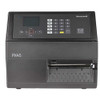
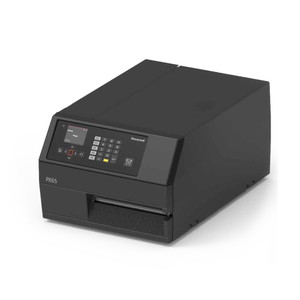
Honeywell PX45A00010020200 Industrial Label Printer 203 DPI
The Honeywell PX45A00010020200 is a production-grade industrial label printer engineered for high-volume thermal transfer printing in warehouse, manufacturing, and distribution environments. This configuration delivers 203 DPI resolution at speeds up to 300 mm/s (12 ips), with integrated rewinder and label taken sensor for fully automated label dispensing in continuous production workflows. Built for supply chain operations where barcode quality and print consistency are non-negotiable, the PX45 combines robust hardware with enterprise-grade connectivity and multi-vendor emulation support.
Key Features
- 203 DPI thermal transfer printing at up to 300 mm/s (12 ips): Delivers crisp, scanner-ready barcode output without sacrificing throughput—critical when processing 500+ labels per shift in distribution centers.
- Integrated rewinder with label taken sensor: Eliminates manual label handling and operator intervention, enabling unattended production runs and reducing labor-intensive touch points across shifts.
- 112 mm (4.4 in) DT / 110 mm (4.3 in) TT maximum print width: Accommodates standard shipping labels, compliance tags, product identification, and GHS compliance labeling without media waste or resizing.
- 256 MB SDRAM and 512 MB Flash memory: Handles complex label templates with graphics, barcodes, and variable data fields without queuing delays or throughput degradation—essential in WMS-driven environments where template complexity scales with SKU variety.
- Multi-emulation support: ZPL II, ZSim2, Direct Protocol, Fingerprint, IPL: Enables drop-in replacement of aging Zebra and Datamax systems without software reengineering or integration rework—a major cost advantage in printer consolidation projects.
- Ethernet (10/100 Mbps), USB 2.0 Device/Host, RS-232, and IEEE 1284 parallel: Provides WMS/ERP integration flexibility across legacy serial systems and modern network deployments. Ethernet support with HTTPS encryption aligns with modern warehouse automation stack requirements.
- Color LCD display: Superior visibility compared to monochrome displays in high-noise warehouse environments, improving job monitoring and troubleshooting speed.
- Industrial operating range: 5–40°C (41–104°F): Accommodates both ambient warehouses and climate-controlled facilities without thermal management complications.
Integration & Connectivity
The PX45A00010020200 integrates directly into warehouse management systems via Ethernet or legacy parallel/serial connections. Multi-emulation support eliminates the need for driver rewrites when replacing competing printer models. The color LCD display and integrated diagnostic interface reduce mean time to resolution when label quality issues arise, minimizing production hold-ups. Memory configuration (256 MB SDRAM + 512 MB Flash) is sufficient for template-heavy workflows without queuing delays—a differentiator for operations running complex variable-data labels across multiple facilities.
Deployment Considerations
The integrated rewinder is the critical differentiator for unattended production runs in distribution centers. This configuration excels in high-volume label environments (500+ labels/shift) where throughput consistency and automation reduce operator workload. Operating temperature headroom (5–40°C) provides margin for both ambient warehouses and climate-controlled logistics facilities. The IEEE 1284 parallel port and RS-232 support legacy WMS systems, while Ethernet enables modern API-driven integrations. Weight (12.6 kg / 27.8 lbs) and footprint (275 × 482 × 238 mm) fit standard dock or floor-mount workstations without facility modification.
Frequently Asked Questions
Q: Does the PX45A00010020200 support both direct thermal and thermal transfer printing?
A: Yes. Direct thermal (DT) supports 112 mm max width; thermal transfer (TT) supports 110 mm max width. You can switch between methods by changing media and ribbons—no hardware modification required.
Q: What is the maximum print width, and does it fit standard shipping labels?
A: Maximum print width is 112 mm (4.4 in) in direct thermal or 110 mm (4.3 in) in thermal transfer mode. This accommodates 4×6 in shipping labels and most compliance tag formats without cropping.
Q: Can the PX45A00010020200 replace my existing Zebra or Datamax printer without software changes?
A: Yes. The PX45 supports ZPL II (Zebra) and IPL (Datamax) emulation, allowing drop-in replacement with minimal label template rework or host software modification.
Q: What connectivity options are available for WMS integration?
A: Ethernet (10/100 Mbps), USB 2.0 Device, USB 2.0 Host, RS-232, and IEEE 1284 parallel. This breadth supports both legacy serial-driven WMS systems and modern network-based warehouse automation stacks.
Q: Does the integrated rewinder operate automatically, or does it require manual supervision?
A: The rewinder is fully automatic with a label taken sensor. It dispenses labels without operator intervention, enabling unattended production runs and reducing labor requirements during high-volume shifts.
Q: What environmental conditions must I account for during installation?
A: Operating temperature is 5–40°C (41–104°F) and humidity is 10–90% non-condensing. This range covers ambient warehouses and climate-controlled facilities. Storage temperature is -20–70°C (-4–152°F).
Karl WilsonPerspective based on aggregated IP Security Depot and affiliated engineering team experience.
The PX45A00010020200 occupies the sweet spot for mid-to-high-volume industrial printing. The 300 mm/s throughput combined with integrated rewinder automation makes this unit well-suited for distribution centers processing 500+ labels per shift. The memory configuration (256 MB SDRAM + 512 MB Flash) is sufficient for template-heavy workflows without queuing delays—a critical factor when you're managing complex variable-data labels across multiple SKUs and facilities.
Technical Highlights:
- 300 mm/s print speed at 203 DPI: Achieves crisp barcode output without sacrificing throughput. At this speed, a single unit can handle 1000+ labels per hour without media feed jams or quality loss—meaningful when consolidating multiple older printers into a single production line.
- Multi-emulation support (ZPL II, IPL, Direct Protocol): Eliminates the need for driver rewrites or label template conversion when replacing aging Zebra or Datamax systems. This is the cost differentiator in printer consolidation: swap hardware, keep the WMS untouched.
- Integrated rewinder with label taken sensor: Reduces operator touch and enables unattended production runs across multiple shifts. In a 24/7 distribution center, this automation translates directly to labor savings and improved throughput consistency.
Deployment Considerations:
- The 110–112 mm maximum print width is a hard constraint: ensure your label stock fits this footprint. Non-standard widths (wider than 4.4 in) will require a different printer class.
- Thermal transfer mode requires ribbon stock and adds consumables cost compared to direct thermal. However, transfer provides superior durability on high-handling cartons and polyester labels—trade-off your compliance and product lifecycle requirements accordingly.
- Ethernet connectivity with HTTPS support aligns modern WMS systems, but the IEEE 1284 parallel port and RS-232 support legacy warehouses running 15+ year-old systems. Don't assume modern integration out of the box if your WMS predates 2010.
This configuration is purpose-built for regional distribution centers and e-commerce fulfillment operations where barcode consistency and automation reduce labor variance. The rewinder differentiates this unit from print-only competitors—choose it when operator workload and throughput consistency directly impact your cost structure.