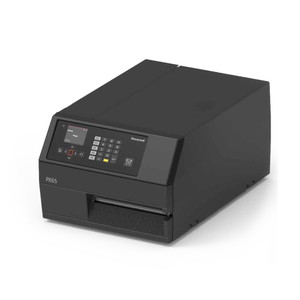
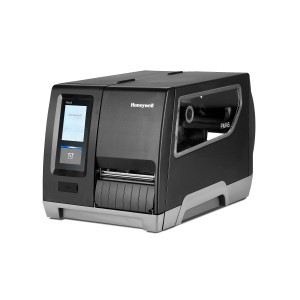
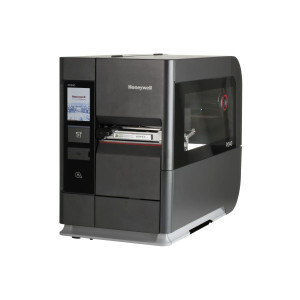
Honeywell PM45CA1000030200 Industrial Label Printer 203 DPI
The Honeywell PM45CA1000030200 is a fixed-station industrial label printer purpose-built for high-throughput barcode and compliance label production in warehouse, manufacturing, and distribution environments. This model delivers 203 DPI thermal transfer printing with integrated rewinder and label taken sensor, enabling automated label dispensing workflows that reduce manual handling and maintain consistent barcode quality across supply chain operations where scan reliability is non-negotiable.
Key Features
- 203 DPI Print Resolution: Delivers crisp, consistently scannable barcodes and graphics at typical warehouse scanning distances. 203 DPI strikes the practical balance between barcode clarity and label media cost—higher DPI variants exist but add material expense; lower DPI risks scan failures at volume. This resolution is the industry standard for shipping, GS1 compliance, and asset tracking applications.
- Print Speed Up to 300 mm/s (12 ips): Handles sustained production-level throughput without thermal head degradation. At 300 mm/s, a 4x6 shipping label prints in roughly 2 seconds, critical for high-velocity fulfillment centers and cross-dock operations. Speed matters on the floor—slower printers create queue backlogs.
- 108 mm (4.25 in) Maximum Print Width: Accommodates 4x6 shipping labels, GS1-128 compliance labels, product ID tags, and asset tracking stickers without media waste. Wider formats require different printer families; this width covers approximately 80% of warehouse label applications.
- Integrated Rewinder with Label Taken Sensor: Automates label dispensing and detects when each label is pulled from the output tray, eliminating manual label pickup and reducing application errors in fast-paced environments. This integration is the primary operational advantage over budget label printers—it converts a print device into a controlled labeling station.
- 256 MB SDRAM, 512 MB Flash Memory: Sufficient for complex variable data templates, multi-barcode formats, and graphics-rich label designs without network round-trips. Memory limits aren't usually a bottleneck at this specification level, but confirms the printer can handle typical enterprise label complexity without slowdown.
- Multi-Protocol Emulation (ZPL II, ZSim2, Direct Protocol, Fingerprint, IPL): Enables drop-in compatibility with legacy printer environments and unified driver management across heterogeneous fleets. No need to replace existing label design software or print workflows—the PM45C speaks the same command language as older Zebra/Datamax systems, reducing migration cost and operational disruption.
- 3.5-inch Color Touch LCD Display: Provides onboard job management, media configuration, and diagnostics without a host PC. Touchscreen allows operators to load label templates, adjust darkness, and clear jams from the machine itself—valuable in distributed warehouse setups where a PC isn't within arm's reach.
- Ethernet (10/100 Mbps), USB 2.0 Device/Host, RS-232: Multiple connectivity options support legacy serial-based WMS systems, modern Ethernet networks, and USB direct printing from workstations. Ethernet integration with WMS enables real-time label queuing and production analytics via LPR support, improving visibility into print volume and throughput.
- HTTPS Encryption and Android Operating System: Secure network integration for regulated environments (pharma, food, automotive). Android OS enables firmware updates and future app deployment without complete hardware replacement.
- Operating Temperature 5–40°C (41–104°F), Storage to -20–70°C: Suitable for standard warehouse and light manufacturing floors. Not recommended for freezer environments or outdoor installations without enclosure. Humidity tolerance of 10–90% non-condensing covers typical indoor conditions but avoid steam rooms or condensing environments.
- Fixed Hanger Mounting, 11.5 kg (25.4 lbs): Compact footprint (432 x 181 x 253 mm) fits standard industrial shelving and workbenches. Weight and mount type are suitable for wall or overhead installation in high-traffic pick lines without requiring substantial reinforcement.
Integration and Compatibility
The PM45C integrates with WMS platforms (SAP, Oracle NetSuite, Manhattan Associates), ERP systems, and cloud-based print management solutions via Ethernet and USB. Multi-protocol support reduces driver complexity across mixed environments, particularly valuable if you're consolidating printers from multiple vendors. LPR analytics provide production queues and job visibility, supporting capacity planning and troubleshooting. HTTPS encryption allows secure network deployment in SOX, FDA, or HIPAA-regulated facilities. For organizations standardizing on Android-based printers, the PM45C fits within a broader modernization roadmap.
Applications
Optimal for shipping label generation (4x6 labels), regulatory compliance labeling (pharmaceutical, food, chemical), product identification tags, asset and inventory tracking, and high-density barcode production in fulfillment centers, manufacturing plants, and distribution hubs. The rewinder with label taken sensor is particularly effective in line-side label application, reducing manual handling and error in fast-paced picking and packing workflows.
When to Choose a Different Model
If you require print widths larger than 108 mm (e.g., 6-inch-wide compliance labels), consider a wider industrial printer in the Honeywell or industrial label printer family. If your application demands extreme durability in outdoor or harsh chemical environments, evaluate enclosed or sealed variants. For ultra-low-volume, occasional label printing, consider desktop thermal printers without rewinders to reduce initial cost.
Frequently Asked Questions
Q: What label stock does the PM45CA1000030200 support?
A: The printer accepts 203 DPI thermal transfer ribbons and a wide range of label media (polyester, kraft, synthetic, glossy coated stock). Media roll diameter typically maxes at 5 inches; consult the datasheet for specific media compatibility and darkness settings per stock type.
Q: Can the PM45C integrate with my existing WMS software?
A: Yes. Multi-protocol support (ZPL II, Direct Protocol) and Ethernet connectivity allow the PM45C to integrate with major WMS platforms and ERP systems. Your IT team will configure IP addressing and print queue settings; no special APIs required for standard label printing.
Q: Does the PM45CA1000030200 require a separate power supply?
A: Yes. The printer operates on 110–240V AC. A power cord is required; PoE is not supported on this model.
Q: What is the print quality at 203 DPI, and will barcodes scan reliably?
A: 203 DPI is the industry standard for warehouse barcode labels and produces sharp, consistently scannable output at typical scanning distances (12 inches and beyond). GS1-128 and UPC barcodes printed at 203 DPI meet commercial scanner requirements. Scan reliability depends on label media, ribbon quality, and print darkness settings—all configurable via the LCD display.
Q: How long does the rewinder mechanism typically last?
A: The rewinder and label taken sensor are designed for industrial daily use. Maintenance involves occasional sensor cleaning (compressed air). Typical service life is 3–5 years under normal operating conditions; contact the manufacturer or an professional service provider for replacement parts.
Q: What warranty does Honeywell provide on the PM45CA1000030200?
A: Warranty terms vary by region and reseller. Standard industrial printer warranties typically cover 1–3 years of parts and labor. Verify warranty details with your specialty retailer before purchase.
Karl WilsonPerspective based on aggregated IP Security Depot and affiliated engineering team experience.
The PM45CA1000030200 is a proven industrial workhorse for organizations requiring consistent, high-quality barcode output at scale. The 203 DPI resolution strikes an optimal balance between print clarity and media cost efficiency for typical supply chain applications—a proven sweet spot that hasn't changed in 15 years because it works. The integration of a rewinder with label taken sensor adds genuine operational value by enabling automated label dispensing workflows, particularly critical in high-throughput environments where manual label application becomes a bottleneck at volume.
Technical Highlights:
- 300 mm/s Print Speed: Translates to roughly 2 seconds per 4x6 label. In a fulfillment center running 500+ units per hour, this speed avoids queue backup and keeps the operation flowing. Speed matters on the floor—don't underestimate it.
- Multi-Protocol Emulation (ZPL II, ZSim2, Direct Protocol, Fingerprint, IPL): Critical asset for enterprises managing heterogeneous printer fleets. Unified driver management without legacy system replacement saves integration time and reduces per-printer training burden across warehouse teams.
- 256 MB SDRAM + 512 MB Flash: Sufficient for complex variable data (batch numbers, lot codes, graphics). No network dependency for template rendering—label jobs process locally, reducing WMS latency and improving fault tolerance if network hiccups occur.
- Integrated Rewinder with Label Taken Sensor: Transforms the printer from a print-only device into a controlled labeling station. Label taken detection eliminates manual pickup errors and enables automated line-side application in pick-to-label workflows.
Deployment Considerations:
- The 108 mm print width is the primary constraint—verify your label formats (4x6 shipping labels, compliance stickers, product IDs) fit this spec. Wider media requires a different printer family.
- Rewinder and label taken sensor require occasional maintenance (sensor cleaning, motor inspection) to maintain automation reliability. Budget for preventive maintenance on high-utilization lines.
- Fixed hanger mounting means this is a workbench or wall-mount station, not a mobile or portable printer. Site it near your packing line, not in a central print room—closer proximity reduces label transport time and damage risk.
Best deployment scenario: High-volume fulfillment centers, cross-dock operations, and manufacturing plants with consistent 4x6 label demand and automated picking lines. The rewinder alone justifies the cost if you're printing more than 500 labels per shift. For occasional printing or variable label sizes, evaluate lighter, cheaper alternatives.