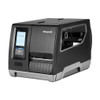
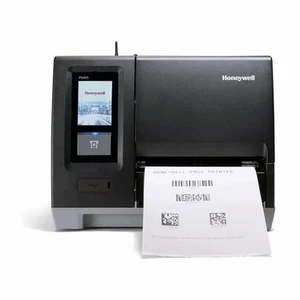
Honeywell PM45A00000000201 B1 Industrial Label Printer 203 DPI
The Honeywell PM45A00000000201 B1 is a production-class thermal label printer engineered for high-volume enterprise labeling across warehouse, manufacturing, and distribution operations. With 203 DPI resolution and support for both Direct Thermal and Thermal Transfer printing, this printer handles diverse label media and demanding workflows without compromising reliability. The 108 mm (4.25 in) maximum print width accommodates standard shipping labels, compliance documentation, product identification, and asset tracking applications across logistics, healthcare, and retail environments.
Key Features
- 203 DPI Resolution: Produces consistently scannable barcode output—QR codes, Code 128, and industry-specific symbologies render crisply without smudging, reducing scan errors and downstream data entry corrections across your label stream.
- Dual Thermal Printing Modes: Switch between Direct Thermal (lower media cost for temporary labels) and Thermal Transfer (ribbon-based, longer shelf life for archival compliance)—no hardware change required, only configuration.
- 3.5-inch Color Touch LCD Display: Operator-friendly interface for job management, diagnostics, and real-time status monitoring—reduces setup time and training overhead compared to text-only panels.
- Multi-Protocol Emulation (ZPL II, ZSim2, Direct Protocol, Fingerprint, IPL): Minimizes migration friction from legacy systems; existing label templates and print drivers work without modification, protecting your software investment.
- 256 MB SDRAM and 512 MB Flash Memory: Supports sustained high-volume print queues without bottlenecking—handles batch jobs and on-demand printing without performance degradation during peak warehouse shifts.
- Comprehensive Connectivity: Ethernet (10/100 Mbps), Wi-Fi (802.11 a/b/g/n/ac), dual USB 2.0 Host ports, and RS-232 enable integration with warehouse management systems (WMS), ERP platforms, and cloud-based label-as-a-service solutions. Wi-Fi deployment eliminates cable runs in congested warehouse layouts.
- Android-Based Operating System with HTTPS Encryption: Enterprise-grade security for print job data; supports network authentication for regulated industries requiring audit trails on label production.
- LPR Analytics Support: Print job logging and compliance reporting—critical for pharmaceutical, food safety, and medical device labeling audits.
Physical Specifications and Environmental Tolerance
Measuring 483 x 295 x 284 mm (19.0 x 11.6 x 11.2 in) and weighing 12.1 kg (26.7 lbs), the PM45 occupies a compact footprint on warehouse shelves or manufacturing floors while maintaining accessibility for ribbon and label media replacement. Operating temperature range of 5 to 40°C (41 to 104°F) covers most climate-controlled warehouse environments; humidity tolerance of 10–90% non-condensing prevents condensation-induced paper jams during seasonal temperature swings. Storage capacity extends from -20 to 70°C (-4 to 152°F), allowing safe transportation and off-season storage without thermal stress on electronics or printhead.
Integration and Deployment Considerations
The PM45's native support for ZPL II and ZSim2 emulation reduces software rewrite costs when migrating from legacy Zebra or Datamax installations. USB Host ports enable direct connection to scanners or mobile devices for label verification workflows. Ethernet and Wi-Fi allow centralized print queue management across multiple PM45 units, supporting hub-and-spoke warehouse architectures. The color touch interface provides real-time feedback on media status, toner/ribbon levels, and network connectivity—minimizing silent failures that disrupt shift operations.
Frequently Asked Questions
Q: Can the PM45A00000000201 B1 print on both direct thermal and thermal transfer media without hardware modification?
A: Yes. The PM45 supports both Direct Thermal and Thermal Transfer printing modes via software configuration. You select the mode through the touch display or embedded web interface without changing the printhead or mechanics.
Q: What protocol emulations does the PM45A00000000201 B1 support?
A: The PM45 emulates ZPL II, ZSim2, Direct Protocol, Fingerprint, and IPL. This compatibility allows existing label templates and print drivers to work without modification, reducing migration effort from competing industrial printers.
Q: What are the memory specifications of the PM45A00000000201 B1?
A: The printer includes 256 MB SDRAM for active processing and 512 MB Flash storage for label templates, fonts, and configuration data. This configuration supports sustained high-volume print queues without bottlenecking.
Q: Does the PM45A00000000201 B1 offer wireless connectivity?
A: Yes. The PM45 supports Wi-Fi (802.11 a/b/g/n/ac) in addition to Ethernet, USB, and RS-232. Wi-Fi enables cable-free deployment and integration with modern warehouse management systems and cloud-based print solutions.
Q: What environmental conditions does the PM45A00000000201 B1 operate in?
A: Operating temperature range is 5 to 40°C (41 to 104°F) with humidity tolerance of 10–90% non-condensing. These specifications cover most climate-controlled warehouse and manufacturing environments.
Q: Does the PM45A00000000201 B1 support LPR analytics for compliance reporting?
A: Yes. The printer supports LPR (Label Printing Record) analytics, enabling print job logging and compliance audit trails for regulated industries including pharmaceuticals, food safety, and medical device manufacturing.
Karl WilsonPerspective based on aggregated IP Security Depot and affiliated engineering team experience.
The PM45A00000000201 B1 occupies solid middle ground in industrial label printing—not an entry-level desktop unit, but more approachable than high-end production systems. The dual thermal printing modes (Direct Thermal and Thermal Transfer) provide real operational flexibility: use direct thermal for ephemeral warehouse pick labels, switch to ribbon-based for FDA-regulated pharmaceutical or serialized product labels without swapping equipment. That flexibility matters when your operation spans both temporary and permanent labeling workflows.
Technical Highlights:
- 203 DPI + Multi-Protocol Emulation: 203 DPI is the workhorse standard for barcode/QR output in logistics. Supporting ZPL II, ZSim2, Direct Protocol, Fingerprint, and IPL means you can run this PM45 alongside or as a replacement for Zebra, Datamax, or older Honeywell systems without rewriting label templates or print driver code.
- 256 MB SDRAM + 512 MB Flash: Enough memory to queue high-volume print jobs without stalling. In a busy DC running 500+ labels/hour, this buffer prevents the bottleneck you'd hit with lighter specs.
- Wi-Fi 802.11ac + Ethernet + USB + RS-232: Four connectivity options mean you're not locked into a single integration path. Wi-Fi lets you place the printer anywhere in the warehouse without cable runs; RS-232 preserves legacy system bridges; Ethernet handles WMS/ERP integration; dual USB hosts enable barcode scanner or mobile device pairing for verification workflows.
Deployment Considerations:
- Operating Range (5–40°C, 10–90% humidity non-condensing): Suitable for climate-controlled warehouses and manufacturing floors, but not for cold storage (-20°C) or humid dock environments without additional housing. If you're in a freezer facility or outdoor staging area, plan accordingly.
- Size and Weight (483 x 295 x 284 mm, 12.1 kg): Desktop or shelf-mounted, not portable. Ribbon/label media replacement is straightforward, but you'll need bench space for maintenance. Not a choice for mobile or vehicle-mounted printing.
- Android OS with HTTPS: Enterprise security is built in, but you're responsible for network segmentation and firmware updates. LPR analytics logging is available—use it if you face pharma, FDA, or audit requirements.
Deploy the PM45A00000000201 B1 in distribution centers, manufacturing floors, and healthcare asset management where you need reliable, multi-mode thermal output without unnecessary complexity. The protocol compatibility and memory headroom deliver good ROI for operations migrating from legacy systems or consolidating multiple printer models into one platform.