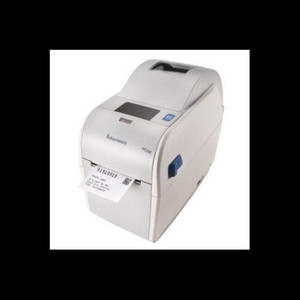
Honeywell PM45-IND-01 Industrial Label Printer
The Honeywell PM45-IND-01 is a purpose-built industrial label printer engineered for enterprise environments requiring continuous, mission-critical printing operations across warehouse, distribution, manufacturing, and field service deployments. This configuration delivers enterprise-grade reliability, intuitive operation, and seamless integration into existing IT infrastructure—a solid foundation for multi-shift operations where print accuracy, durability, and centralized management are non-negotiable.
Key Features
- Dual Print Methods (Direct Thermal and Thermal Transfer): Choose between direct thermal for consumable-free printing or thermal transfer for maximum label durability. This flexibility means you're not locked into one media type—critical when your supply chain includes both temporary shelf labels and permanent asset tags that must survive harsh warehouse conditions without fading or damage.
- 4.25-inch (108 mm) Maximum Print Width: Accommodates standard and wide-format labels without requiring a larger footprint. This width range covers the majority of enterprise barcode and shipping label applications, reducing the need for multiple printer models across departments and simplifying inventory management.
- 3.5-inch Color Touch LCD Display: Provides real-time status monitoring, job queuing, and diagnostic feedback directly at the device. Operators can verify print quality, check supply levels, and troubleshoot without walking to a connected workstation—reducing downtime in fast-paced warehouse environments where every minute of idle print time compounds across shift operations.
- Android Operating System with Centralized Management: Built on Android, the PM45-IND-01 allows IT teams to remotely configure, update, and monitor printers across multiple locations. This eliminates the need for on-site visits to adjust network settings or deploy firmware patches, significantly reducing operational overhead in distributed deployments spanning multiple warehouses or regional distribution centers.
- Multi-Connectivity Options (Ethernet 10/100 Mbps, Dual USB 2.0 Host, RS-232, 802.11 a/b/g/n/ac Wi-Fi): Support for both wired and wireless networks ensures flexible placement and easy integration into existing IT infrastructure. Ethernet provides stable, low-latency connections for high-volume printing; Wi-Fi enables mobile printing scenarios where cable runs are impractical. Dual USB 2.0 Host ports support external label design stations or data collection devices without requiring additional hubs.
- Multiple Label Programming Language Support (ZPL II, ZSim2, Direct Protocol, Fingerprint, IPL): Full backward compatibility with ZPL II workflows means legacy label templates and print server configurations continue to work without modification. This compatibility dramatically reduces migration costs when upgrading from older printer models and eliminates costly label template redesign efforts.
- Enterprise Security (HTTPS Encryption, LPR Analytics Support): HTTPS-encrypted communications protect label data and print commands in transit. LPR (Line Printer Remote) analytics allow centralized monitoring of print job success rates, failure logs, and supply consumption—essential for compliance auditing and capacity planning in regulated industries like pharmaceuticals, food and beverage, and automotive.
- Processor & Memory (256 MB SDRAM, 512 MB Flash): Sufficient memory to handle complex label designs and large print queues without performance degradation. This capacity supports both simple asset labels and data-rich shipping documents that combine graphics, barcodes, and text, enabling single-pass printing of multi-element layouts.
- Operating Temperature Range (5°C to 40°C / 41°F to 104°F): Suitable for climate-controlled warehouses and manufacturing floors; however, this range excludes unheated loading docks or outdoor shipping areas that may fall below 5°C. Plan for heated enclosures if deployed in cold environments such as frozen food distribution or seasonal outdoor staging areas.
- Humidity Tolerance (10–90% Non-Condensing): Handles typical warehouse humidity without condensation damage to the printhead or internal electronics. This range is adequate for standard indoor warehouse conditions but may require dehumidification if your facility regularly approaches 90% relative humidity during summer months or in coastal regions.
- Compact Footprint (483 x 295 x 284 mm; 12.1 kg): Weighs 26.7 lbs and fits standard desk or wall-mount configurations without dominating workspace. The footprint is suitable for integration into label stations, shipping departments, or mobile printing carts used in picking and packing operations.
Integration & Compatibility
The PM45-IND-01 (often searched as PM45 IND 01) integrates into existing enterprise print server architectures via Ethernet or Wi-Fi without requiring dedicated power supplies—a significant advantage when scaling across multiple warehouse locations. Support for ZPL II programming ensures compatibility with label design software already deployed in your organization. LPR analytics integration provides visibility into print-job metrics, enabling IT teams to monitor supply levels and predict consumable replacement intervals before stockouts occur. RS-232 connectivity supports legacy serial-based label systems or standalone data collection devices. For organizations managing multiple label printers, Android's centralized device management capabilities reduce configuration drift and simplify firmware patch deployment across a distributed fleet.
When to Choose a Different Model
If your operation requires print widths exceeding 4.25 inches—for example, large format shipping labels or wide warehouse signage—consider a higher-capacity variant in the Honeywell industrial printer family. Similarly, if your environment regularly operates outside the 5–40°C temperature range or requires IP67 (full submersion) rating for outdoor shipping areas, evaluate ruggedized models with extended environmental specs. For operations requiring embedded RFID encoding on labels, verify feature availability before committing to the PM45-IND-01; confirm RFID module support with your systems integrator.
Frequently Asked Questions
Q: Does the PM45-IND-01 support RFID encoding?
A: The base PM45-IND-01 specification provided does not explicitly list RFID encoding capability. Consult the manufacturer datasheet or your systems integrator to confirm RFID module availability and compatibility for this model family.
Q: What's the maximum print speed on the PM45-IND-01?
A: Print speed specifications are not included in the available technical data. Contact the manufacturer or your integrator for throughput rates (typically measured in inches-per-second for thermal printers).
Q: Can the PM45-IND-01 operate outdoors or in freezing warehouses?
A: The operating temperature range is 5°C to 40°C (41°F to 104°F). Unheated loading docks or outdoor staging areas below 5°C fall outside this specification. Plan for heated enclosures if deployment requires cold-environment operation.
Q: Is the PM45-IND-01 compatible with Zebra label templates?
A: Yes. The PM45-IND-01 supports ZPL II (Zebra Programming Language), enabling use of existing Zebra label templates and print-server configurations without modification.
Q: What network protocols does the PM45-IND-01 support?
A: The printer supports Ethernet (10/100 Mbps), Wi-Fi (802.11 a/b/g/n/ac), dual USB 2.0 Host ports, and RS-232 serial connectivity. LPR (Line Printer Remote) analytics is available for centralized monitoring.
Q: What's the warranty period for the PM45-IND-01?
A: Warranty information is not available in the current product specification. Contact the manufacturer or your specialty distributor for warranty terms and service options.
Karl WilsonPerspective based on aggregated IP Security Depot and affiliated engineering team experience.
The Honeywell PM45-IND-01 is a solid mid-range thermal printer for warehouse operations where you need dual-method flexibility without overcomplicating infrastructure. The 256 MB SDRAM and 512 MB Flash gives you enough headroom for batched print jobs and complex label layouts, and the Android OS backbone means you can push firmware updates and configuration changes remotely—a real time-saver when you're managing multiple printing stations across a distributed facility.
Technical Highlights:
- 4.25-inch Print Width (108 mm): Covers ~95% of standard shipping, asset tag, and barcode label scenarios. You avoid the footprint and cost penalty of a 6-inch printer if you don't need it, but confirm your wide-format labels fit before committing.
- Dual Thermal Methods (Direct + Transfer): Direct thermal cuts consumables for temporary labels; thermal transfer survives moisture and handling for asset tags and shipping labels that live outdoors or in harsh conditions. Switching between methods is straightforward, but each requires separate media inventory—budget accordingly.
- 256 MB SDRAM + 512 MB Flash: Sufficient for queuing 50+ complex label jobs without the printer choking. Multipage label sets or graphics-heavy designs don't create bottlenecks. If you're pushing thousands of print jobs per shift, monitor queue depth—this isn't a bulletproof high-volume engine.
- Android with Centralized Management: Remote config and firmware updates beat on-site visits. HTTPS encryption protects print data in flight. LPR analytics let you track job success rates and predict supply stockouts.
- Operating Range: 5–40°C (41–104°F): Climate-controlled warehouses and distribution centers fit fine. Frozen food facilities, unheated loading docks, and outdoor staging areas below 5°C require heated enclosures—budget roughly $500–$1500 for a weatherized cabinet if you go that route.
Deployment Considerations:
- Confirm your label design software supports ZPL II output. If you're still using legacy IPL or direct-protocol templates, migration effort is minimal—the printer handles all of them—but you'll need to test before go-live.
- Wi-Fi (802.11 a/b/g/n/ac) is convenient for mobile carts and split-level warehouses, but Ethernet (10/100 Mbps) is more stable for steady-state print farm deployments. Don't rely on Wi-Fi for real-time pick-and-pack in high-RF-noise environments (near radio paging systems or wide-area wireless networks).
- The 10–90% humidity spec is adequate for standard indoor warehouses but doesn't account for condensation on startup after cold transport. Allow printhead warm-up time if moving units between unheated storage and warm production areas.
- No RFID encoding listed in base specs. If you need on-label RFID encoding (for apparel, automotive parts, or pharmaceutical tracking), verify module availability with the manufacturer before integrating into your label-print workflow.
Choose the PM45-IND-01 if you're consolidating multiple smaller 4-inch printers into centralized label stations, or if you need Android-based remote management across a 3–5 printer fleet. Skip it if you require print widths above 4.25 inches, RFID encoding out of the box, or operation below 5°C without auxiliary heating.