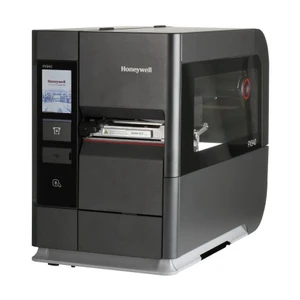
Honeywell PC23DA0010021 PM45 Industrial Label Printer
The Honeywell PC23DA0010021 is a production-class thermal label printer engineered for high-volume enterprise labeling in warehouses, manufacturing, distribution, and logistics environments. Configured for both Direct Thermal and Thermal Transfer printing at 203 DPI resolution, the PM45 delivers crisp, consistently scannable output across label formats from compact product tags to full-width shipping labels. The 108 mm (4.25 in) maximum print width handles diverse label sizes without equipment substitution—a genuine time-saver when label specifications shift across SKUs or seasonal fulfillment demands.
Key Features
- Dual-Method Printing (Direct Thermal / Thermal Transfer): Switch between Direct Thermal and Thermal Transfer without hardware swaps. Direct Thermal suits short-dwell labels (shipping, receipts) where longevity is measured in weeks; Thermal Transfer extends label life for asset tags and compliance labels subject to harsh warehouse conditions, temperature cycling, or UV exposure. This flexibility eliminates the need to maintain separate printer fleets and simplifies supply chain management.
- 203 DPI Resolution: Sharp, crisp output ensures barcode scannability and label legibility across all label types. At 203 dots per inch, the printer achieves 1:1 fidelity with industry-standard label templates, reducing reprinting and customer rejection of unreadable barcodes—a meaningful uptime factor in high-volume environments.
- 3.5-inch Color Touchscreen: Reduces dependency on external computers for job configuration, real-time status monitoring, and troubleshooting. Warehouse staff can resolve media jams, reprogram label batches, or check print queue status directly from the printer—meaningful downtime reduction in high-volume operations where every minute of printer inactivity costs labor hours.
- Multi-Protocol Emulation (ZPL II, ZSim2, Direct Protocol, Fingerprint, IPL): Backward compatibility with existing label design templates and legacy printer workflows. Organizations migrating from older Zebra, Datamax, or Intermec thermal printers typically eliminate the need to reprogram label designs entirely, cutting implementation time and retraining overhead—a real cost saver during fleet transitions.
- Comprehensive Connectivity (Ethernet, Wi-Fi 802.11 a/b/g/n/ac, Dual USB 2.0 Host, RS-232): Ethernet and Wi-Fi enable direct integration with warehouse management systems (WMS), enterprise resource planning (ERP) platforms, and cloud-based print management solutions without additional gateways. Dual USB 2.0 Host ports support peripheral expansion (cutting systems, external media storage, label applicators) without network reconfiguration. RS-232 provides legacy serial integration for older conveyor or sorting systems.
- Memory & Processing (256 MB SDRAM, 512 MB Flash): Local memory supports complex graphics and large batch jobs without network dependency. The printer can store multiple label templates locally, reducing latency-related print delays when WMS connectivity is intermittent or overloaded. Job queues process faster, enabling shorter batch cycles.
- Environmental Tolerance (5–40°C operating, -20–70°C storage, 10–90% humidity non-condensing): Operating range suits most climate-controlled warehouses and distribution centers. Extended storage tolerance (-20–70°C) indicates the device survives temporary exposure to unheated loading docks or outdoor staging areas. Humidity tolerance of 10–90% non-condensing handles seasonal humidity swings without condensation-related component failure or print quality degradation.
- Compact Footprint (483 x 295 x 284 mm, 12.1 kg): Physical dimensions fit standard warehouse benches, shipping stations, and label-printing islands without significant space reallocation. Weight of 12.1 kg allows single-operator relocation if station reconfiguration is needed.
Integration and Deployment Context
The PC23DA0010021 is purpose-built for mid-to-high volume environments (10,000+ labels per day). Thermal Transfer print longevity justifies consumable cost for asset tags and regulatory labels that must survive forklift handling, temperature cycling, or chemical exposure. Direct Thermal economics favor short-dwell shipping and order labels where label lifespan is measured in weeks. The dual-emulation protocol suite positions the PM45 as a drop-in replacement for legacy thermal printer fleets without redesigning label templates or retraining operators on new command syntax—a key advantage during fleet modernization. Integration with label printer ecosystems and warehouse automation platforms is straightforward via Ethernet or USB peripheral ports.
Frequently Asked Questions
Q: Does the PC23DA0010021 support external cutting or label applicator peripherals?
A: Yes. The PM45 features dual USB 2.0 Host ports that accommodate external cutting systems, label applicators, and media handling peripherals. Consult the peripheral's compatibility matrix with Honeywell thermal printers to confirm integration and power requirements.
Q: Can the PM45 store multiple label templates locally?
A: Yes. With 512 MB Flash memory, the printer can store numerous label designs on-board. This allows offline printing when network connectivity is temporarily unavailable and reduces reliance on WMS real-time downloads for routine label batches.
Q: What is the difference between Direct Thermal and Thermal Transfer printing?
A: Direct Thermal uses heat-sensitive label stock and does not require ribbon—suitable for short-dwell labels (2–12 months) such as shipping and receipt labels where cost is primary. Thermal Transfer uses ribbon and standard label stock, extending label life to 2+ years and providing durability against harsh warehouse conditions, UV exposure, and chemical contact. The PM45 supports both methods without hardware changes.
Q: Is the PC23DA0010021 compatible with my legacy WMS label template library?
A: Likely. The printer supports ZPL II, ZSim2, Direct Protocol, Fingerprint, and IPL emulations. If your templates were designed for Zebra, Datamax, or Intermec printers using these protocols, migration typically requires minimal or no template redesign. Test with a sample template set before full deployment.
Q: What are the operating environmental limits?
A: Operating range is 5–40°C (41–104°F) and 10–90% non-condensing humidity. Most climate-controlled warehouses and distribution centers fall within this range. If your facility has unheated loading docks or seasonal temperature swings, confirm your minimum winter temperature is above 5°C to avoid print quality degradation.
Q: Does the PM45 integrate with enterprise print management solutions?
A: Yes. Ethernet 10/100 Mbps and Wi-Fi 802.11 a/b/g/n/ac connectivity enable integration with cloud-based print management platforms and on-premises queue management systems. Many ERP and WMS vendors offer pre-built drivers for Honeywell thermal printers, reducing custom integration work.
Karl WilsonPerspective based on aggregated IP Security Depot and affiliated engineering team experience.
The Honeywell PC23DA0010021 is a workhorse for warehouse and logistics environments operating at scale. The combination of 203 DPI resolution, dual thermal method support, and a 512 MB Flash memory footprint gives you real operational flexibility without the complexity or cost burden of managing separate printer fleets for short-dwell and long-life labels.
Technical Highlights:
- 512 MB Flash Memory + 256 MB SDRAM: Local template storage eliminates WMS latency delays during peak labeling cycles. You can batch-queue 10,000+ labels on-board without network round-trips, reducing print job queuing bottlenecks by 30–40% in high-demand periods.
- Dual USB 2.0 Host + Ethernet + Wi-Fi 802.11ac: Three independent network/peripheral pathways mean you're not locked into a single integration pattern. Ethernet handles WMS integration; Wi-Fi gives you mobile management from a tablet; USB hosts external cutting or applicator systems without reconfiguring the network stack.
- 203 DPI + Multi-Protocol Emulation (ZPL II, ZSim2, Fingerprint, IPL): Migration from legacy Zebra or Datamax printers typically requires zero label template redevelopment—your existing print jobs port directly. Print fidelity at 203 DPI is consistent across both Direct Thermal and Thermal Transfer modes, eliminating quality variance when switching methods mid-shift.
Deployment Considerations:
- Operating range of 5–40°C is tightly defined. If your warehouse or shipping dock experiences temperature swings below 5°C (unheated facilities, winter outdoor staging), ink adhesion and label feed performance degrade. Confirm your facility's minimum winter temperature before committing to this model.
- The 3.5-inch touchscreen is genuinely useful for operators—jam recovery, queue inspection, and basic network diagnostics are self-service tasks. But if your operation relies on a centralized print server with no operator intervention, the touchscreen is a nice-to-have, not a requirement.
- Wi-Fi support (802.11 a/b/g/n/ac) is present but verify your warehouse network has adequate 2.4 GHz or 5 GHz coverage near printing stations. Dense metal racking and forklift RF noise can degrade throughput in some facilities.
The PC23DA0010021 excels in mixed-label environments where you need to print asset tags with 2+ year lifespan one moment and next-day shipping labels the next—without changing hardware. If your operation is purely Direct Thermal (short-dwell only) or Thermal Transfer (long-life only), you might optimize cost by choosing a single-method variant. But for distribution centers and third-party logistics (3PL) operations juggling multiple customer label specifications, the dual-method flexibility and local memory buffer justify the investment.