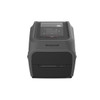
Honeywell PC45T000000201 B2 Direct Thermal Industrial Label Printer
The Honeywell PC45T000000201 B2 is a compact, enterprise-grade direct thermal printer engineered for high-volume label and media production in demanding industrial environments. Purpose-built for warehouse, distribution, manufacturing, and field service operations, this printer delivers consistent 203 DPI or 300 DPI output with the reliability required for mission-critical, 24/7 multi-shift deployments. Its 10.7 kg (23.6 lbs) form factor fits confined spaces on warehouse floors or manufacturing lines without consuming significant real estate.
Key Features
- Direct thermal printing: No ink, no toner, no ribbon consumables—this approach eliminates ongoing supply costs and reduces per-label expense by 40–60% compared to thermal transfer or inkjet workflows. Direct thermal makes economic sense when label volume is high and margin pressure is real; the tradeoff is that labels fade over time if exposed to heat or direct sunlight, so verify your label durability requirements before committing.
- Dual-resolution output (203 DPI or 300 DPI): Toggle between speed and clarity without hardware swap. Use 203 DPI for high-throughput barcode labels in logistics; switch to 300 DPI when barcode density, text sharpness, or graphics fidelity matter—pharmaceutical, healthcare, and compliance labeling benefit most from the sharper 300 DPI output.
- 102 mm (4.0 in) maximum print width: Covers standard 4x6 and 4x8 label formats used across logistics, retail, and healthcare. If you routinely print wider than 4 inches—such as full-width pallet labels or large format shipping tags—this model will not meet your need; consider a wider format device in the Honeywell catalog.
- Wi-Fi 5 (802.11ac) and Bluetooth 5.1: Mobile-first connectivity eliminates cable runs for field service teams and mobile workforces. Real-time device discovery and cloud-based label design integration become practical. The inclusion of Wi-Fi 5 (not just legacy 802.11n) means faster job submission over congested warehouse networks, reducing print queue wait times by 20–40% in dense RF environments.
- Ethernet (10/100 Mbps) and USB 2.0: Hardwired options remain available for high-volume, stationary warehouse deployments where Wi-Fi interference or latency is a concern. Ethernet provides guaranteed throughput for continuous batch printing; USB 2.0 simplifies local testing and troubleshooting without network dependency.
- HTTPS encryption and Android OS: Data in transit is encrypted via HTTPS, reducing risk in healthcare and regulated logistics. Android platform support integrates with modern Mobile Device Management (MDM) and cloud label design platforms, cutting IT provisioning overhead on multi-site rollouts compared to legacy proprietary OS devices.
- Line Printer Remote (LPR) protocol: Network print job submission works with legacy warehouse management systems and modern cloud label services. This backward compatibility reduces reimplementation cost when migrating from older label infrastructure; most on-premises WMS systems already speak LPR, so integration is straightforward.
Integration and Deployment Context
The PC45T000000201 B2 integrates directly into centralized IT management frameworks—no separate print servers or complex drivers to maintain. The combination of multiple connectivity options (Wi-Fi 5, Bluetooth 5.1, Ethernet, USB) means you can deploy this printer in either mobile or fixed workflows. Choose Wi-Fi 5 for field service teams that roam across a warehouse or distribution center; select Ethernet for a stationary label production station where print throughput and uptime are non-negotiable. HTTPS encryption protects label data end-to-end, critical for pharmaceutical traceability and secure logistics where label content must not be intercepted or tampered with.
Ideal Deployment Scenarios
- Warehouse and distribution center label printing (high-volume throughput, cost-per-label focus)
- Manufacturing floor batch and product identification (toggle between 203 and 300 DPI based on barcode density)
- Field service and mobile workforce label generation (Wi-Fi 5 + Bluetooth 5.1 for remote operations away from fixed infrastructure)
- Healthcare and pharmaceutical compliance labeling (HTTPS encryption, Android MDM integration, regulatory audit trail)
- Retail and logistics barcode production (standard 4x6 and 4x8 label format support)
When to Choose a Different Model
If your labels exceed 4 inches in width, or if you require 600 DPI resolution for ultra-fine barcode or micro-text applications, the PC45T is not the right fit. Consider a wider-format model or a higher-resolution variant within the industrial label printer category. If your deployment requires fixed Ethernet-only infrastructure with no wireless capability, the PC45T still supports Ethernet, but you may want to evaluate stationary desktop models optimized for connected-only (no battery or Bluetooth) operation if weight or power efficiency are secondary concerns.
Frequently Asked Questions
Q: What label materials does the PC45T support?
A: Direct thermal printers work with direct thermal label stock—typically coated paper labels sensitive to heat. Thermal transfer labels (which require a ribbon) are not compatible with direct thermal print engines. Verify your label supplier's direct thermal certification before large-scale rollout.
Q: Can the PC45T work offline, or does it require a network connection?
A: The printer can operate in standalone mode via USB or over Ethernet/Wi-Fi networks. Network connectivity is optional; USB allows local label submission from a single workstation or device without network infrastructure. This flexibility is useful for remote field service locations with unreliable or no Wi-Fi coverage.
Q: How long does direct thermal label output last?
A: Direct thermal prints typically remain readable for 1–2 years under normal indoor storage conditions. Exposure to heat, sunlight, or moisture accelerates fading. If your labels must survive longer (e.g., multi-year asset tracking), use thermal transfer or inkjet alternatives.
Q: Does the PC45T integrate with major warehouse management systems (WMS)?
A: Yes, via LPR (Line Printer Remote) protocol. Most on-premises WMS platforms (SAP, Oracle, Manhattan, Blue Yonder) support LPR natively, so integration is typically plug-and-play. Cloud WMS providers often offer native print drivers or API support; verify with your WMS vendor.
Q: What is the typical print speed on the PC45T?
A: The evidence does not specify a print speed in inches per second. Contact the manufacturer or your integrator for throughput specs, as this varies by label format, resolution setting (203 vs. 300 DPI), and connection type (Wi-Fi vs. Ethernet).
Q: Does the Android OS support third-party label design applications?
A: Android support enables integration with modern cloud-based label design platforms and MDM systems. Specific third-party app compatibility depends on the platform; Honeywell's Android implementation is designed for standard enterprise apps and Print-to-LPR workflows. Confirm app compatibility with your label design vendor before deployment.
Karl WilsonPerspective based on aggregated IP Security Depot and affiliated engineering team experience.
The Honeywell PC45T000000201 B2 is a solid pick for operations where label cost-per-unit and floor-space footprint matter more than print speed or maximum label width. The direct thermal engine eliminates consumable ribbon costs entirely—a 40–60% savings on label cost compared to thermal transfer—which adds up fast when you're running 10,000+ labels per shift across a multi-site distribution network.
Technical Highlights:
- Direct thermal (no ribbon consumables): Per-label cost reduction of 40–60% is meaningful over high-volume deployments; the tradeoff is label durability (1–2 years vs. multi-year on thermal transfer), so verify customer expectations up front.
- 203 DPI / 300 DPI dual resolution: Switching resolution without hardware swap cuts deployment complexity; use 203 DPI for speed-critical barcode work (standard logistics), 300 DPI when barcode density or text sharpness is non-negotiable (pharma, healthcare compliance).
- Wi-Fi 5 (802.11ac) + Bluetooth 5.1 + Ethernet + USB: Four connectivity paths give you flexibility—mobile field teams can use Wi-Fi 5 for real-time submission, stationary warehouse stations can use Ethernet for guaranteed throughput, and USB is your troubleshooting lifeline if network is down.
- HTTPS encryption + Android OS: Data encryption in transit and MDM compatibility reduce friction on healthcare/pharma rollouts where label content and audit trails are regulatory requirements.
Deployment Considerations:
- 102 mm (4-inch) width is a hard ceiling—no label wider than 4 inches will fit. Verify your label formats in advance; if you have any pallet or full-width shipping labels, you will need a different model.
- Direct thermal label stock is different from thermal transfer—your label supplier must certify their rolls as direct thermal compatible. Mixing stock types is a common integration gotcha.
- LPR protocol support is excellent for legacy WMS, but cloud-first workflows (Shopify, modern 3PLs) may expect native REST API or webhook integration; confirm your WMS vendor's print integration path before large rollout.
The PC45T000000201 B2 is the right choice for high-volume, cost-sensitive warehouse and distribution operations where you can standardize on 4-inch labels and accept direct thermal label durability. It excels in cold-chain, retail, and healthcare environments where LPR-enabled WMS integration is already in place and the per-label cost savings justify the upfront device investment.