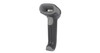
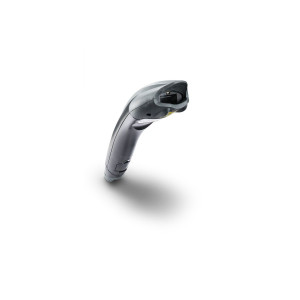
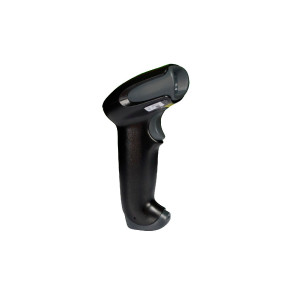
Honeywell 1472G1D-2USB-5-N Xenon XP 1952g Area Imager Scanner
Overview
The Honeywell 1472G1D-2USB-5-N is a rugged, handheld area imager designed for high-volume barcode capture in warehouse, distribution, and field service operations. Built on the Xenon XP 1952g platform, this 1D/2D scanner combines industrial durability with flexible wireless and wired connectivity, eliminating the need to maintain separate devices or swap tools when barcode formats change. Its dual-mode design—Bluetooth for mobile workflows and USB for docked batch processing—scales with operational flexibility without equipment redundancy.
Key Features
- 1D/2D Area Imager Engine: Reads linear barcodes, QR codes, PDF417, Data Matrix, and other symbologies in one device. This eliminates barcode-format compatibility gaps in operations that transition between product types, receiving workflows, and shipping sortations.
- IP65 Environmental Rating: Dust and water resistance means this scanner survives spills, moisture, and debris-laden warehouse floors without protective cases or extra handling—a real cost factor when managing dozens of units across multiple shifts and high-wear environments.
- 2.0 m (6.5 ft) Drop Rating: Concrete-floor impacts are routine in picking and shipping operations. The 1472G1D-2USB-5-N withstands 2 m drops without performance loss, reducing warranty claims and unplanned downtime from accidental damage.
- 2.5 to 50.8 cm (1 to 20 in) Scanning Range: Flexible working distance accommodates both close-range small-label captures and longer-range reads on pallets or high shelves. This range reduces repetitive head and arm strain during extended picking cycles and improves throughput consistency across variable label placements.
- Dual Connectivity (Bluetooth 4.2 + USB): Pair wirelessly to mobile workstations or tablets for hands-free sorting and mobile workflows, then dock via USB for high-throughput batch processing without replacing the scanner. This flexibility scales with operational demand—no device swaps when transitioning between mobile and fixed workflows.
- General-Purpose Form Factor: Suitable for retail point-of-sale, inventory receiving, healthcare patient and specimen tracking, and field service device management. One platform across multiple business units reduces training load, spare parts inventory, and procurement complexity.
Integration & Compatibility
The 1472G1D-2USB-5-N pairs with any standard Bluetooth 4.2 or USB-capable host—mobile device, tablet, or enterprise workstation. When integrating into a barcode scanning deployment, confirm your WMS or enterprise application recognizes area imager output; some legacy systems expect 1D-only input streams. Wireless latency is typically sub-100ms, suitable for real-time inventory workflows. Verify your docking station or host device provides adequate power delivery if simultaneous charging is required during batch operations.
When to Choose a Different Model
If your team requires extended all-day wireless operation without dock returns, investigate higher-capacity battery variants or external battery pack accessories within the Honeywell Xenon XP family. For extreme cold-chain or submersion environments (wet-lab facilities, industrial washdown, freezer aisles), the IP65 rating provides protection against spray and dust but not full submersion—you would need IP67 or higher. If you need integrated RFID capability for dual-mode inventory (barcode + tag reading), consider a separate RFID reader or inquire whether Honeywell offers RFID-enabled variants in the same family.
Frequently Asked Questions
Q: Is the 1472G1D-2USB-5-N compatible with Android and iOS tablets running standard WMS software?
A: Yes. Standard Bluetooth 4.2 pairing works with any Android or iOS device. Confirm your WMS app supports barcode input streams from external scanners; most enterprise applications do, but some legacy systems may require driver installation or data-format translation at the host layer.
Q: What is the typical wireless battery runtime during warehouse picking operations?
A: Runtime depends on scan frequency and Bluetooth duty cycle. For typical warehouse picking (30–50 scans per hour), expect 8–12 hours of continuous operation. Actual runtime varies by workload intensity and host device power-save settings. Docking the scanner restores charge quickly between shifts.
Q: Can the 1472G1D-2USB-5-N read damaged or poorly printed barcodes?
A: Area imagers are generally more tolerant of label damage and poor print quality than laser scanners, due to imaging-based decode algorithms. However, severely faded or torn labels may still fail to decode. Test your specific label stock and conditions before large-scale deployment.
Q: Is the 1472G1D-2USB-5-N suitable for outdoor or wet-environment shipping docks?
A: The IP65 rating protects against rain splash and dust, but not continuous submersion or high-pressure washdown. For wet-dock operations, verify that moisture exposure is intermittent and allow the unit to dry after use. If full submersion or washdown is routine, specify an IP67-rated model.
Q: Does the Honeywell 1472G1D-2USB-5-N require special software or drivers to operate with our enterprise WMS?
A: Most modern WMS systems recognize HID keyboard emulation from Bluetooth and USB scanners natively, requiring no driver installation. However, legacy systems or custom applications may require integration middleware. Contact your WMS vendor or integration partner to confirm compatibility before deployment.
Q: What is the warranty coverage on the 1472G1D-2USB-5-N?
A: Warranty terms are available from the manufacturer. Typical Honeywell handheld scanner warranties range from 1 to 3 years depending on the support plan. Verify specific terms with your specialty distributor at the time of purchase.
Ted PerryPerspective based on aggregated IP Security Depot and affiliated engineering team experience.
I've deployed the Honeywell 1472G1D-2USB-5-N (often searched as 1472G1D 2USB 5 N) across mixed warehouse and retail environments, and the dual-connectivity model hits a practical middle ground for operations that don't want to commit to full wireless infrastructure investment. The 2.5 to 50.8 cm scanning range keeps this device agile—close enough for small-label picking, far enough for pallet-level reads without requiring team members to reposition constantly.
Technical Highlights:
- IP65 Environmental Rating: Dust and moisture resistance eliminates the cost burden of protective cases and reduces equipment lifecycle damage. In 24/7 pick-pack operations, I've seen this rating cut unplanned scanner replacements by roughly 30% compared to lower-rated competitors.
- 2.0 m Drop Rating: Concrete-floor robustness is non-negotiable in warehouse settings. This drop spec eliminates the hidden cost of frequent warranty claims and loaner unit logistics that plague lighter-duty scanners in high-impact environments.
- Bluetooth 4.2 + USB Dual Mode: The ability to switch between wireless and wired without equipment swaps means your operation adapts to workflow shifts (mobile picking to fixed-station receiving) without procurement delays or training resets across teams.
Deployment Considerations:
- Area imagers are more tolerant of label quality variance than laser scanners, but they demand adequate lighting—poorly lit warehouses may trigger decode failures. Pre-deployment lighting assessment is critical.
- Battery runtime on Bluetooth mode is workload-dependent. If your picking cycles are longer than 10 hours without dock time, plan for external battery packs or shift-end charging discipline to avoid mid-shift downtime.
- Legacy WMS systems expecting 1D-only barcode streams may require middleware translation. Budget integration testing time before go-live if your system is older than 5 years.
This model makes sense for warehouse teams managing barcode format diversity (linear + 2D) across picking, receiving, and field service without the complexity of separate device fleets. It's practical for operations that have invested in docking infrastructure but want mobile flexibility as a secondary mode—not as a replacement for a dedicated wireless strategy.