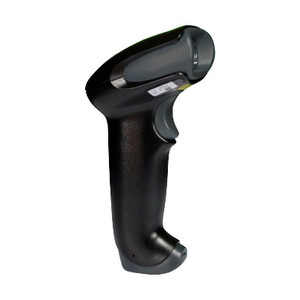
Honeywell 1960GHD-2USB-N Xenon XP 1952g Area Imager Scanner
The Honeywell 1960GHD-2USB-N is a rugged area imager scanner built for warehouse, logistics, and retail operations where barcode capture speed and reliability directly drive throughput and inventory accuracy. This model pairs dual connectivity—Bluetooth 4.2 wireless and USB wired—with an imager-based 1D/2D scan engine, eliminating the single-point failure risk that laser-dependent scanners carry. Deploy it across mobile picking carts, fixed checkout stations, or receiving docks without rewiring your operation.
Key Features
- Area Imager 1D/2D Scan Engine: Captures linear barcodes, QR codes, Data Matrix, and PDF417 without relying on rotating laser optics. Area imagers tolerate dirt, dust, and smudging far longer than laser scanners before performance degrades—a genuine advantage in high-traffic distribution centers where daily washdown or ambient dust accumulation is normal.
- Bluetooth 4.2 + USB Dual Connectivity: Pair wirelessly to mobile carts, RF terminals, or PDAs for floor-level picking operations, or dock into a USB cradle for fixed-position checkpoints. No need to choose one transport mode; the 1960GHD-2USB-N handles both, reducing capital spend on single-mode hardware variants.
- Working Range 2.5–50.8 cm (1–20 inches): Comfortable scanning distance for retail counters, conveyor-fed sort lines, and hand-held operations. Standard range for most intra-facility workflows; if you need 30+ inches, evaluate extended-range variants within the Honeywell Xenon family.
- IP65 Environmental Rating: Dust-tight and protected against low-pressure water jets—handles washdown in food/beverage facilities, damp receiving docks, and outdoor loading areas without seal failure. Does not protect against full submersion; for that, specify IP67-rated alternatives.
- 2.0 m (6.5 ft) Drop Rating: Survives accidental drops to concrete from desk height or lower shelving. Real-world durability matters: floor drops are routine in high-velocity operations, and this rating absorbs those impacts without requiring replacement.
- Lightweight at 0.32 lbs: Minimal hand fatigue during all-day scanning and picking tasks. In operations where staff scan hundreds of SKUs per shift, ounces saved per device compound into real occupational health gains across a team.
- Operating Temperature 0–50°C (32–122°F): Functions in unheated receiving docks during winter, heated retail spaces, and climate-controlled warehouses. If your facility runs cold storage or extreme heat zones, confirm compatibility with cold-rated or industrial-temperature variants before purchase.
Deployment Flexibility & Integration
The 1960GHD-2USB-N integrates with any Bluetooth-capable mobile device or USB-equipped terminal running warehouse management or point-of-sale software. Bluetooth pairing is straightforward, but IT staff should validate range in your actual facility layout—walls, metal racks, and RF interference from nearby equipment may reduce the advertised wireless distance. USB wired mode eliminates range concerns for stationary applications and provides simultaneous charging if your cradle includes power.
If your operation spans multiple barcode scanner families—handheld, fixed-mount, mobile computers—confirm compatibility with your host devices before large-scale deployment. Firmware updates should be tested in your specific workflow before rolling out to all locations.
When to Choose a Different Model
If you require significantly longer read range (beyond 50 cm), investigate premium imager variants in the Honeywell Xenon family that support extended working distance. If your environment demands full submersion resistance or extreme temperature operation (below 0°C or above 50°C), request an IP67-rated or temperature-hardened alternative. For high-speed automated sorting lines with fixed-position scanning, evaluate conveyor-integrated or mounting-bracket scanners instead of hand-held devices.
Frequently Asked Questions
Q: Does the 1960GHD-2USB-N (often searched as 1960GHD 2USB N) work with existing Bluetooth terminals or just Honeywell devices?
A: The 1960GHD-2USB-N pairs with any Bluetooth 4.2-capable device—third-party mobile computers, tablets, or dedicated RF terminals. USB wired mode works with any standard terminal that provides USB connectivity. Confirm Bluetooth pairing protocols with your host device before deployment.
Q: Is IP65 enough for freezer or cold storage use?
A: IP65 addresses dust and water jets, but the operating temperature range is 0–50°C (32–122°F). For freezer or sub-zero environments, request a cold-rated variant or temperature-hardened model from Honeywell's catalog.
Q: What symbologies does the area imager read?
A: The 1960GHD-2USB-N reads 1D linear codes (Code 128, UPC, EAN, etc.) and 2D codes (QR, Data Matrix, PDF417). Your host software controls decoding and validation rules.
Q: Can I charge the device via USB dock while scanning?
A: USB connectivity provides both data and power if your cradle includes a power supply. Verify your cradle model includes charging capability—some USB docks provide data-only connections.
Q: How does the 2.0 m drop rating compare to industrial-rated scanners?
A: 2.0 m covers typical desk-to-floor drops. If your operation involves multi-story drops or extreme impact scenarios, evaluate ruggedized models with higher drop ratings or protective carrying cases.
Q: What's the battery life on Bluetooth mode?
A: Battery specifications are not included in the available documentation. Contact the vendor or Honeywell directly for actual run time and charging requirements for your specific workflow.
Ted PerryPerspective based on aggregated IPSD and affiliated engineering team experience.
The 1960GHD-2USB-N delivers genuine dual-mode flexibility without forcing you into a single connectivity choice. Area imager optics are a smart trade against laser scanners in dusty or high-washdown environments—you'll see longer mean time between failures if your facility runs daily water-down regimens. The lightweight form factor (0.32 lbs) and 2.0 m drop rating are practical, not marketing theater: they mean fewer hand-strain complaints in high-volume picking and fewer replacement units after inevitable floor drops.
Technical Highlights:
- Area Imager vs. Laser Optics: No rotating laser means no single point of mechanical failure. Imagers tolerate dust and condensation buildup longer before performance drops—critical in food/beverage warehouses or humid receiving docks where lasers degrade faster.
- IP65 Environmental Rating: Dust-tight and jet-resistant but not submersion-rated. Plan for washdown environments and damp docks; skip this model if you need IP67 full-submersion protection.
- Dual Connectivity (Bluetooth 4.2 + USB): Eliminates the "wireless-only" vs. "wired-only" false choice. Pair to mobile carts for picking, dock to fixed stations for checkout. Range and interference in your actual facility may vary—test Bluetooth performance in your warehouse layout before rolling out to 50+ units.
- Working Range 2.5–50.8 cm: Standard retail and intra-facility distance. Not suited for 30+ inch scans from conveyors or high-reaching shelving; if that's your workflow, request extended-range variants.
Deployment Considerations:
- Battery endurance is not documented in available specs—confirm actual Bluetooth run time with the vendor before committing to a large fleet. Cold environments (below 32°F) may shorten battery life.
- USB cradles vary—some provide power, some data-only. Verify your cradle model includes charging capability or you'll need separate batteries for all-shift wireless operation.
- Test Bluetooth range in your specific facility. Metal racks, RF interference from WiFi/cellular, and concrete walls will reduce the advertised distance. Worst-case fallback is USB wired mode from fixed stations.
Deploy the 1960GHD-2USB-N in moderate-duty warehouse picking, retail checkout, and receiving dock workflows where IP65 durability and area imager reliability outweigh the need for extended range or extreme-temperature operation. It's the pragmatic choice for high-velocity operations that value fewer device failures over absolute range or scan speed.