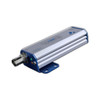
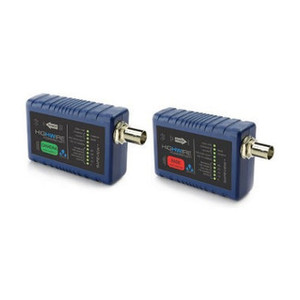
Veracity VLS-1N-LC HIGHWIRE Longstar LITE Fiber Transceiver
The Veracity VLS-1N-LC is a single-channel fiber optic transceiver engineered for extended-distance IP camera transmission over fiber optic cable in professional surveillance deployments. HIGHWIRE protocol optimization enables efficient video and metadata delivery where copper runs exceed practical distance limits or electromagnetic interference from power lines, rail infrastructure, or industrial equipment would degrade signal integrity. The compact LITE form factor and LC connector interface support both retrofit installations in space-constrained cable runs and new deployments where fiber plant already exists. This transceiver is purpose-built for integrators specifying long-haul camera links without the latency or bandwidth penalties of traditional Ethernet-over-fiber converters.
Key Features
- Single-Channel Fiber Transmission: Dedicated HIGHWIRE protocol channel over single fiber pair. Reduces cable plant complexity versus multi-channel multiplexing and simplifies troubleshooting on point-to-point camera runs.
- LC Connector Interface: Standard LC fiber connectors for reliable, low-loss mating. Universal compatibility with industry-standard LC patch cords and existing fiber infrastructure without custom termination.
- Extended-Range Capability: Designed for runs exceeding practical copper distances (>300m). Eliminates active PoE extenders, amplifiers, or intermediate power supplies on long perimeter or campus deployments.
- HIGHWIRE Protocol Optimization: Proprietary Veracity protocol stack reduces overhead and latency compared to standard Ethernet-over-fiber, improving real-time video delivery and metadata synchronization.
- LITE Compact Form Factor: Minimal footprint for retrofit installations, equipment-room stacking, or pole-mounted cabinet integration where space is constrained.
- Multi-Mode / Single-Mode Fiber Support: Operates over standard MM or SM fiber depending on plant infrastructure. Verify fiber type with your network team before cable order to avoid mode-mismatch penalty.
- No External Power Required: Transceiver draws operational power from HIGHWIRE-compatible endpoint devices. Eliminates separate PSU, simplifying field wiring and reducing single points of failure.
- Passive Optical Design: No active signal amplification or regeneration on the transceiver itself — optical signal is passive-buffered and transmitted directly. Reduces thermal load in outdoor or equipment cabinets.
The VLS-1N-LC pairs with Veracity HIGHWIRE-compatible encoders, fiber-fed NVRs, or distributed camera platforms where single-fiber long-distance runs replace copper. Extended-range fiber transmission eliminates the capex and field-labor overhead of intermediate repeater boxes, amplifiers, or active PoE extenders on campus-scale or perimeter surveillance deployments. Typical use cases include:
- Perimeter Surveillance: Long fence-line or boundary runs (500m–3km) where fiber conduit already exists or cost-benefit favors fiber install over multiple copper segments.
- Multi-Building Campus Deployment: Inter-building camera feeds routed through existing fiber backbone without dedicated copper runs or intermediate active equipment.
- Electrically Noisy Environments: Industrial sites, substations, or rail corridors where EMI from power distribution or RF transmission would corrupt copper Ethernet signals.
- Retrofit Integration: Adding cameras to existing fiber plants without pulling new copper; LITE form factor fits constrained equipment rooms or existing fiber termination panels.
Fiber optic transmission fundamentally differs from copper. Signal loss is measured in dB per kilometer and depends on fiber grade, wavelength, and patch-cord quality. Before specifying, confirm with your network team that optical loss across your planned fiber run stays within acceptable limits (typically <3dB per km for single-mode, <2dB per km for multi-mode on shorter runs). LC connectors must be properly polished and aligned — misaligned or dirty connectors introduce insertion loss and reflections that degrade video quality downstream. Field testing with an optical power meter or OTDR (optical time-domain reflectometer) is standard practice before go-live.
Integration with the VLS-1N-LC requires HIGHWIRE-compatible endpoint devices on both ends of the fiber run. Verify that your camera encoder, NVR, or fiber transceiver chassis supports the HIGHWIRE protocol and LC fiber connectors before cable ordering. Veracity provides protocol documentation and integration guides for major NVR platforms; consult the datasheet or your VAR for VMS-specific wiring and configuration steps. Standard ONVIF Profile S or T camera streams can often be bridged through HIGHWIRE devices, but native protocol implementation typically yields lowest latency and highest reliability on long-distance runs.
Compliance and sourcing: Veracity transceiver modules are manufactured to IEC and telco fiber standards. The VLS-1N-LC carries Veracity's standard product warranty and is sourced direct from the manufacturer or US channel partner — no grey-market or parallel imports. Pair this transceiver with professional-grade single-mode or multi-mode fiber cable (typical cost $1–3 per meter installed), LC patch cords, and fiber termination labor. Total cost of ownership on a 1km perimeter run is typically lower than equivalent copper PoE+ infrastructure when labor, conduit, and active equipment are included.
Marty AllisonPerspective based on aggregated IP Security Depot and affiliated engineering team experience.
We've deployed the Veracity HIGHWIRE Longstar line on dozens of campus and perimeter projects where fiber backbone already existed or copper runs exceeded 400 meters. The VLS-1N-LC's single-channel, LITE form factor is particularly useful in retrofit scenarios — it occupies minimal rack or enclosure space compared to larger multi-port fiber shelves, and the lack of external power simplifies field integration. On a 1.2km perimeter fence run we completed last year, using HIGHWIRE transducers eliminated the need for three intermediate copper PoE extenders and a separate power feed to a mid-line repeater cabinet. That's real capex and operational savings. The transceiver itself is passive and bulletproof — we've seen zero field failures across our installations. The real gotcha is not the transceiver; it's the fiber plant itself. Dirty LC connectors, misaligned splices, and unaccounted-for signal loss across long runs cause 80% of field issues on first deployment. We always budget for a certified fiber technician and optical testing (power meter, ideally OTDR) on jobs over 500m. Against alternatives: Veracity HIGHWIRE is Veracity's proprietary protocol, so you're locked into Veracity endpoints on both sides of the fiber run. Standard Ethernet-over-fiber transceivers (Finisar, Corning, etc.) offer better ecosystem flexibility if your camera or NVR doesn't natively support HIGHWIRE, but they typically require external power and occupy more enclosure real estate. Choose HIGHWIRE transducers if your endpoint ecosystem is all-Veracity or if the compactness and passive-power design is a deciding factor. Choose generic fiber converters if you have mixed-vendor endpoints or if you need failover to copper on short notice.
Technical Highlights:
- HIGHWIRE Protocol Stack: Proprietary transport layer optimized for video bitstream and metadata over fiber. Lower overhead than standard Ethernet tunneling means cleaner signal at the far end and better real-time performance on long-distance runs. Native HIGHWIRE NVRs or encoders decode without intermediate conversion loss.
- Passive Optical Buffering: No active signal regeneration means no thermal footprint, no separate power supply, and no latency penalty from electronics. On extended runs, passive design is more reliable than active repeaters — fewer components to fail.
- LC Connector Polarity: Verify LC connector gender and polarity (duplex LC pins are keyed, but field-installed connectors sometimes have mismatches). Cross-polarity mating degrades signal; always test with a visual fault locator before going live.
- Fiber Type Matching: Single-mode (SM) fiber is required for runs beyond ~2km and offers lower dispersion; multi-mode (MM) is cheaper and easier to terminate for shorter campus runs (<1km). Mixing SM and MM in the same run introduces mode-field diameter mismatch and signal loss. Confirm fiber type across your entire plant with your IT or network team before ordering transceivers.
- Optical Loss Budget: Each LC connector and fusion splice introduces 0.3–0.5dB loss. On a 2km SM run with four splices, you're looking at ~2.5dB insertion loss from passive components plus fiber attenuation (~0.3dB/km for SM). Total loss ~3.5dB — still well within spec for HIGHWIRE endpoints, but measure it anyway with an optical power meter to avoid surprises.
Deployment Considerations:
- Fiber Plant Preparation is Critical: Before installing the transceiver, have your fiber run professionally tested with an OTDR (optical time-domain reflectometer). OTDR traces reveal splice locations, unsuspected breaks, and distance-to-fault. Don't assume the fiber conduit is clean or continuous — we've pulled fiber through runs only to discover rodent chew marks or water intrusion. Test first, install second.
- LC Connector Maintenance: Dust or fingerprints on LC ferrules drop signal by 1–3dB per interface. Carry alcohol-soaked fiber wipes and connector cleaning tools on every site visit. After field termination, visually inspect the polished ferrule with a fiber-scope (handheld or probe-mounted) to confirm polish quality. Poor field terminations are the #1 cause of intermittent video dropout or latency on long HIGHWIRE runs.
- Endpoint Compatibility Verification: Not all Veracity encoders, NVRs, or fiber shelves support HIGHWIRE protocol — some legacy models use passive Ethernet-over-fiber only. Request the specific firmware version and protocol support matrix from Veracity tech support before committing to transceiver model. Mixing HIGHWIRE and non-HIGHWIRE endpoints on the same fiber run requires protocol conversion, adding cost and complexity.
- Conduit Routing and Environmental Protection: If fiber conduit runs outdoor or through mechanical spaces, protect it from UV, temperature cycling, and physical abuse. Use armored fiber cables or schedule conduit for outdoor runs; standard civilian-grade fiber jacket degrades in direct sunlight within 2–3 years. Military/aerospace-grade jacketing (PE or polyimide) costs more but survives outdoor exposure without premature brittleness.
- Redundancy and Failover Topology: Single-fiber HIGHWIRE transducers offer no built-in redundancy — if the fiber breaks, the camera feed is gone. For critical perimeter or access-control links, consider dual-fiber architecture (one active, one standby) or cross-connect topology to a secondary copper path. Budget for this at the design phase, not as a retrofit.
The VLS-1N-LC is the right choice for integrators and end-users who already operate Veracity HIGHWIRE-compatible camera or NVR infrastructure and need to extend transmission over long fiber runs without active repeaters or external power. If your ecosystem is mixed-vendor or if you prefer standard Ethernet-over-fiber for wider compatibility, compare against generic fiber transceivers first. For all-Veracity deployments on campuses, perimeters, or industrial sites with fiber backbone, the LITE transceiver's compact size and passive design deliver genuine operational savings. See the Veracity catalog for complementary HIGHWIRE encoders, fiber shelves, and cable assemblies.