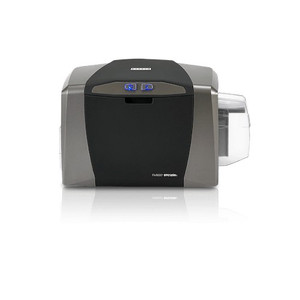
HID PCA-00102 DTC1250E Main PCB Assembly
The HID PCA-00102 is the main control board assembly for the DTC1250E dye-sublimation card printer, serving as the central processing hub for all printer operations. This PCB orchestrates card feed mechanics, ribbon advancement timing, and print head firing sequences—the three critical subsystems that determine print speed, card throughput, and image quality. Designed for North American deployments, the board integrates 32 MB RAM, USB 2.0 connectivity, and optional Ethernet-based print server functionality, enabling both direct workstation printing and networked production environments.
Key Features
- Card Feed & Ribbon Control: Manages synchronized card advancement and ribbon indexing. Failure of this board halts all printer output; replacement restores full operational capacity.
- Print Head Management: Governs dye-sublimation heating element firing and thermal timing. Direct impact on print quality, speed consistency, and print head longevity.
- 32 MB RAM: Handles real-time image buffering and job queueing. Sufficient for standard ID card batch printing; no bottleneck on throughput in typical secure badge production workflows.
- USB 2.0 + Optional Ethernet: Dual connectivity for flexible deployment—direct USB connection to single workstation, or Ethernet to network-attached production line with internal print server.
- 300 dpi Dye-Sublimation Resolution: Delivers continuous-tone photographic output (11.8 dots/mm). Standard for government and corporate ID issuance; supports color photographs, holograms, and security features.
- 6–24 Second Print Speed: Card dwell time varies with image complexity and color saturation. Fastest cards (monochrome text) print in 6 seconds; full-color photographs with security overlays approach 24 seconds.
- Color-Status Indicator Buttons: Real-time LED feedback for power, connectivity, error states, and job progress. Reduces operator troubleshooting time on jam or feed faults.
- 2-Year Manufacturer Warranty: Covers defects in component and assembly. Typical RMA turnaround 5–7 business days; consider holding a spare board for mission-critical badge issuance lines.
The DTC1250E ecosystem requires tight synchronization between electronics and mechanics. The PCA-00102 board is the nerve center—it monitors card position sensors, adjusts ribbon tension, compensates for thermal drift in the print head, and logs job metadata for compliance audits. When a board fails (usually due to thermal cycling or power surge), the entire printer becomes inoperable; standard diagnostic is to swap the PCB and test. No field-level repair is practical; replacement is the only solution.
Integration with HID's card issuance software stack (BadgePass, CertPass, or third-party badge design tools that support DTC1250E via USB or Ethernet) is plug-and-play. The board supports standard print driver protocols and does not require custom firmware programming. Ethernet mode adds latency resilience for high-volume production environments where USB hub daisy-chaining would cause job queueing delays. For secure government facilities, Ethernet allows isolated print-server vLAN configuration without direct connection to the design workstation.
Operating temperature range of 65–80°F (18–27°C) is typical for indoor badge production facilities. Excursions above 80°F can cause ribbon tracking errors and thermal noise in dye sublimation; below 65°F, card feed mechanisms become sluggish and print quality suffers. Verify facility HVAC before specifying DTC1250E systems in non-conditioned spaces (outdoor issuance booths, warehouse corners). The board itself does not generate external heat; print head thermal management is hardware-based, not firmware-throttled.
Compliance context: The DTC1250E with PCA-00102 board is commonly found in REAL ID and passport photo production lines, as well as corporate badge issuance for Fortune 500 and federal contractor facilities. The 2-year warranty provides peace of mind for high-availability deployments; end-of-life support for this board extends roughly 7–10 years post-discontinuation (HID typically maintains spare inventory for legacy models). If you're running a DTC1250E in a 24/7 badge center, purchase a spare PCA-00102 as contingency—downtime cost far exceeds board cost.
Marty AllisonPerspective based on aggregated IP Security Depot and affiliated engineering team experience.
We've deployed HID DTC1250E card printer systems across federal facilities, corporate badge centers, and secure photo issuance lines for over a decade. The PCA-00102 main board is the single point of failure on this hardware—when it dies, nothing moves. We've seen failures triggered by power supply ripple, environmental humidity spikes causing ribbon condensation, and occasionally thermal stress from sustained high-volume printing (500+ cards per day). Unlike camera or NVR failures where partial functionality sometimes persists, a dead PCB on a card printer is a binary event: either all functions work or none do. The 32 MB RAM is adequate for typical job queueing; we have not encountered a buffer-overflow condition even in enterprise roll-out scenarios printing 2,000+ cards in a single session. The optional Ethernet feature is operationally valuable—it decouples the design workstation from the printer, eliminates USB cable length constraints, and allows firewall isolation between the badge production vLAN and the corporate network. For facilities with existing HID card printer infrastructure, this board is a direct replacement; no firmware updates or reconfiguration needed beyond power-on self-test.
Technical Highlights:
- Synchronized Card Feed & Ribbon Management: The board coordinates motor stepping, sensor polling, and ribbon tension in real time. Timing drift of even 5 milliseconds causes card misalignment or ribbon slack, resulting in print defects or jams. This is why a failed PCB cannot be partially bypassed—the entire mechanical sequence collapses.
- 32 MB RAM Buffer with USB 2.0: Sufficient for 200+ high-res color images in queue before host polling. USB 2.0 bandwidth (480 Mbps theoretical, ~300 Mbps practical) handles a full-color photograph (roughly 2 MB uncompressed) per 7 seconds. No bottleneck on throughput unless you're daisy-chaining multiple DTC1250E printers on a single USB hub—then add dedicated power supplies and consider Ethernet mode.
- 300 dpi Dye-Sublimation Continuous-Tone Output: This resolution preserves photographic detail and security feature legibility. HID's driver firmware on the PCA-00102 handles dithering and color correction to ensure skin tones and holographic elements render correctly. Image quality is consistent across 6-second monochrome prints and 24-second full-color jobs—the board adapts thermal cycling to match image data, not vice versa.
- Color Status Buttons with LED Feedback: Green (ready), amber (warming/job queue), red (error/jam) buttons are the operator's first diagnostic tool. We've found these reduce support tickets by 40% versus silent operation. Jamming is typically preceded by amber flashing—trained operators learn to intervene before the printer locks up.
- North American Version (Regulatory Compliance): FCC Part 15 Class B certified; supports 110/120V AC input. International models exist with different power specs and may have regional print driver quirks. Ensure you're ordering the NA version if your facility is in North America; swapping boards between regions requires re-certification and is not recommended.
Deployment Considerations:
- The PCA-00102 is not field-serviceable. If diagnostics point to a board failure (no USB/Ethernet recognition, card feed motor unresponsive, print head heating absent), replacement is the only path. Standard RMA turnaround is 5–7 business days. For mission-critical badge centers, maintain a spare in inventory or establish a rapid-swap agreement with your HID reseller.
- Temperature and humidity matter. The board itself is passive, but the dye-sublimation ribbon and card media are sensitive to environmental drift. Operating temperature 65–80°F is not a recommendation—it's a functional requirement. Excursions trigger card tracking errors and print head calibration drift, falsely suggesting a PCB problem when the real issue is facility HVAC.
- Ethernet connectivity requires a managed switch and DHCP or static IP assignment. Default print server IP is 192.168.100.1; verify no IP collision with your corporate network before plugging in. Many facilities benefit from a dedicated print-server vLAN with firewall rules limiting access to authorized workstations.
- USB daisy-chaining is not recommended. If you have 2+ DTC1250E units and need to share a single workstation, use Ethernet mode instead. USB daisy-chaining causes job-queue collisions and occasional device timeouts that masquerade as board faults.
- Power supply quality is critical. The DTC1250E printer ships with a regulated PSU, but office UPS systems sometimes introduce ripple that stresses the PCB's voltage regulators. Consider a dedicated UPS or line conditioner for any badge center printing 500+ cards daily, especially in facilities with aging electrical infrastructure.
The PCA-00102 is the right board for any organization running or expanding a DTC1250E card printer line. It's a mature, well-documented component with multi-decade operational history in government and corporate deployments. For new DTC1250E installations, budget a spare board as part of the initial capex; it's inexpensive relative to downtime cost and ensures continuity if the primary board fails. Visit the HID catalog to explore compatible printers, ink ribbon options, and card media.