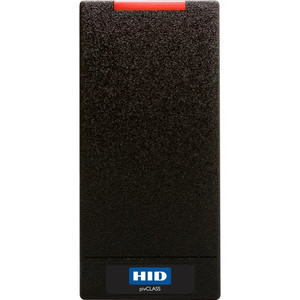
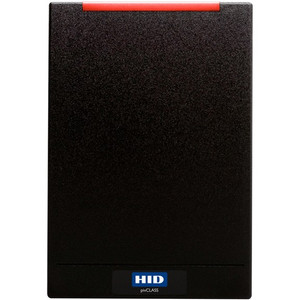
HID 900LHRNEK0003Q RP10-H PIVCLASS SE Dual HF/LF Reader
The HID 900LHRNEK0003Q is a dual-frequency smart card and proximity reader designed for enterprise access control deployments that require support for multiple credential standards on a single device. This PIVCLASS-compliant reader accepts both high-frequency (13.56MHz HF: STD, SIO, SEOS, FIPS, CAK) and low-frequency (125kHz LF: CST) credentials — including DESFire, iCLASS, MIFARE, HID proprietary formats, SEOS, and NFC — eliminating the operational complexity and capex of separate HF and LF reader installations. RS-485 full-duplex communication with optional Wiegand output reduces wiring overhead by enabling daisy-chain topology across multiple readers on a single twisted pair. FIPS 200-bit encryption and optional tamper detection support Government and high-security access control architectures.
Key Features
- Dual HF/LF Card Support: Reads HF (STD/SIO/SEOS/FIPS/CAK) and LF (CST) credentials in a single device. Eliminates separate reader procurement and wiring for mixed-credential environments.
- RS-485 Full-Duplex + Wiegand Output: 485FDX protocol with daisy-chain capability enables cost-effective multi-reader installations on one twisted pair. Wiegand fallback supports legacy access control panels.
- FIPS 200-bit Encryption: Government-grade encryption for credential transmission and tamper events. Required for PIV, FICAM, and federal security deployments.
- PIVCLASS Compliance: Certified for U.S. Federal FISMA and PIV card environments. Integrates with enterprise credentialing infrastructure without custom firmware.
- Daisy-Chain Architecture: Multiple readers on single RS-485 line reduces cable runs and electrical infrastructure cost. Optional tamper detection per reader supports zone-level breach monitoring.
- Status Feedback: Red and green LED indicators with audible buzzer (configurable) provide real-time read validation and installation diagnostics — eliminates guesswork during commissioning.
- 12V DC Powered: Standard low-voltage supply (verify panel/power module current capacity). Open-collector output compatible with strike, relay, and supervised alarm circuits.
- Compact Bracket Mount: Black finish with standard STD-1 mounting bracket; surface installation with no frame recessing. Available in black or white with silver trim baseplate.
In enterprise deployments, credential diversity is a fact of life — some staff carry legacy HID proximity cards, others use DESFire badges, and government contractors may require PIV or SEOS compliance. The RP10-H consolidates these requirements into a single reader footprint. The RS-485 daisy-chain topology is particularly valuable for multi-entrance facilities: a 20-door facility can be wired with two daisy-chain runs instead of 20 individual reader pulls back to the panel, cutting installation labor by 30-40% and reducing future troubleshooting points. FIPS encryption on the wire ensures that credential data cannot be captured or replayed in transit — critical for Government and financial institutions.
Communication flexibility is built in: RS-485 is the native interface for modern OSDP-capable panels and access control servers, while Wiegand output ensures backward compatibility with legacy systems that lack 485 support. Open-collector output configuration allows integrators to wire the reader into existing relay logic without additional interface modules. The optional tamper sensor detects physical tampering (cover removal, cutting) and reports the event through encrypted channels — useful for high-security zones where evidence-chain integrity matters.
Installation requires attention to termination discipline: RS-485 requires proper 120-ohm line termination at the far end (typically at the panel), and Wiegand wiring must follow your specific panel's pin assignments and data formatting. Improper termination causes read range degradation (dropping from typical 6-10cm to 2-3cm) and intermittent communication faults that manifest only under load. Verify your panel documentation before installation. Power draw is modest — confirm your 12V DC supply has headroom for the reader plus adjacent devices (strike solenoids, buzzers, LED flashers). The buzzer tone can be disabled in firmware if needed for silent or low-noise deployments.
The RP10-H ships with a 2-year manufacturer warranty and out-of-the-box support for PIVCLASS and FIPS compliance — no firmware modification or third-party drivers required. It integrates with enterprise access control platforms that support RS-485 or Wiegand input (Salto, Gallagher, Genetec Synergis, Lenel OnGuard, etc.). For Government deployments, verify that your procurement vehicle (GSA schedule, SEWP, etc.) includes the 900LHRNEK0003Q — HID maintains FedRAMP and CMMC approval for compliant sales channels.
Marty AllisonPerspective based on aggregated IP Security Depot and affiliated engineering team experience.
We've deployed the HID RP10-H across multi-site enterprises where credential diversity is the norm rather than the exception. What differentiates this reader from single-frequency alternatives is the operational simplicity it brings to facilities with mixed HID, DESFire, and legacy proximity card populations. Instead of managing two reader types (HF and LF) with separate wiring runs, installers spec one device per door, reducing commissioning time and future maintenance complexity. The RS-485 daisy-chain capability is where real project economics show up: on a 50-door campus expansion, daisy-chaining readers across four backbone runs instead of fifty individual reader pulls saves approximately 40 hours of labor, significant conduit cost, and meaningful reduction in network termination points. In our experience, fewer wiring points means fewer intermittent communication faults down the line.
The FIPS 200-bit encryption and PIVCLASS compliance make this reader the de facto standard for Federal contractors, GSA customers, and any organization with FICAM requirements. Credential data is encrypted in transit — an important distinction from legacy Wiegand-only readers that transmit 26-bit badge numbers in the clear. We've had integrators push back initially on the complexity of RS-485 termination, but the payoff is undeniable: proper termination yields 6-10cm read range; improper termination drops that to 2-3cm and causes intermittent faults that are hellish to diagnose after the fact. Our field teams now spec termination resistors (120-ohm, 1/4W) and label them clearly at installation — saves rework calls weeks later.
Technical Highlights:
- Dual-Frequency Architecture (HF + LF): Single reader eliminates the capex and wiring overhead of separate HF and LF devices. In a 20-door facility, one card reader type vs. two translates to 50% fewer SKUs to stock, 50% fewer spare modules in inventory, and unified firmware update procedures.
- RS-485 Full-Duplex with Daisy-Chain: Multiple readers on one twisted pair reduce conduit fill and cable termination labor. Daisy-chaining 10 readers vs. star topology saves roughly 200 feet of 18/2 cable and eliminates nine splice points at the panel — real money on labor and future troubleshooting.
- FIPS 200-bit Encryption: Credential and tamper data encrypted on the wire; meets PIV, FICAM, and Federal CMMC requirements without custom integration. Non-negotiable for Government and regulated industry deployments.
- Open-Collector Output: Compatible with any relay logic or strike circuit; no interface module needed. Wiegand fallback ensures backward compatibility with legacy access control panels that predate RS-485 adoption.
- Optional Tamper Sensor: Detects physical attack (cover removal, cutting). Tamper events are encrypted and logged at the panel level — essential for high-security zones and chain-of-custody audit trails.
- Status LED + Buzzer: Real-time read feedback during commissioning. Buzzer tone configurable or disabled per deployment noise profile — critical detail in silent alarm centers or low-distraction environments.
Deployment Considerations:
- RS-485 termination is non-negotiable: the far end of every daisy chain must be terminated with a 120-ohm, 1/4W resistor. Improper termination causes read range collapse and intermittent communication faults. Verify your panel's termination scheme before installation — many panels have built-in terminators that must be enabled in firmware.
- Wiegand output requires pin-to-pin mapping at the panel: Green/Data0, Red/Data1, Yellow/common ground. Legacy panels vary in pinout; cross-check the panel datasheet before wiring. Swapped polarity causes complete read failure.
- Power supply headroom: 12V DC, verify the supply can handle this reader plus any downstream devices (strike solenoids, output relay coils, LED modules). A single 1A supply can source RP10-H + one strike solenoid; larger installations need distributed power or higher-capacity supplies.
- Read range is 6-10cm (2.5-4 inches) under ideal conditions — typical for proximity and HF card readers. Metal door frames and reinforced concrete can reduce range by 20-30%; account for this in layout. Test with actual credentials before final commissioning.
- Firmware updates require HID software or panel-level access; verify your support contract includes firmware patches for compliance updates. PIVCLASS and FIPS compliance updates are intermittent but important for Federal deployments.
The RP10-H is the right choice for enterprise and Government deployments where credential diversity is a given and compliance (PIVCLASS, FIPS, PIV) is non-negotiable. For single-credential facilities (all HID or all DESFire), a single-frequency reader offers lower capex; for mixed environments, the RP10-H's consolidation and daisy-chain efficiency pay for itself on the first 10-20 door project. Explore the full range of HID readers and access control solutions in the HID catalog.