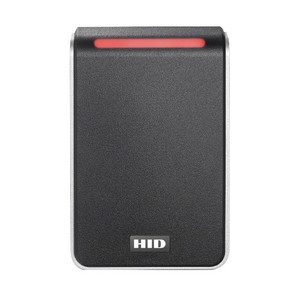
HID 40NKS-00-00BMMD SIGNO 40 Pigtail Reader Blemished
The HID 40NKS-00-00BMMD is a pigtail-mounted proximity and NFC reader designed for commercial and institutional access control systems seeking multi-protocol flexibility without field wiring complexity. It supports 125 kHz proximity cards, 13.56 MHz NFC credentials (including DESFire, iCLASS, MIFARE, and HID proprietary formats), and communicates via encrypted OSDP v2 or legacy Wiegand 32-bit protocols. The factory-disabled audio/visual feedback delivers silent operation — ideal for reception areas, offices, and sensitive spaces where reader beeps compromise user experience. This unit carries a blemished cosmetic finish: fully functional and field-tested, but with exterior surface imperfections that do not impact operational reliability or credential read performance. Backed by a 2-year manufacturer warranty.
Key Features
- Multi-Credential Support: Reads 125 kHz proximity, 13.56 MHz NFC, DESFire, iCLASS, MIFARE, and HID formats on a single reader. Eliminates credential standardization friction across campuses or migrations from legacy card stock.
- OSDP v2 Protocol: Encrypted command/response channel with per-transaction authentication. Isolates credential data from network sniffing and supports modern ACS platforms (HID Keyman, Genetec, Hanwha, etc.).
- Wiegand 32-bit Fallback: Native EM format support and legacy Wiegand interface maintains compatibility with installed access control hardware deployed before OSDP adoption.
- Pigtail Connectivity: Wired pigtail connector (no RJ-45 termination required on-site). Reduces installation labor and minimizes wiring errors on retrofit projects with tight conduit runs.
- Silent Operation: LED and buzzer factory-disabled. Re-enable selectively via ACS software if feedback is needed for specific doors or credential types.
- 12V DC Powered: Standard low-voltage supply compatible with any PoE++ injector or dedicated 12V DC panel loop. Pigtail draw is minimal, supporting daisy-chaining on a single supply circuit.
- Black/Silver Finish: Anodized aluminum faceplate with silver trim baseplate. Neutral appearance suits modern building aesthetics. Blemished cosmetic finish does not affect durability or environmental rating.
- 2-Year Warranty: Full manufacturer coverage on parts and defects. Blemished units receive identical warranty terms as new-condition stock.
The SIGNO 40 pigtail form factor is purpose-built for constrained installations where wall-mounted readers must integrate into existing conduit runs without retrofitting junction boxes. Unlike flush-mount readers that require precise backbox preparation, the pigtail reader ships ready for connection to standard door-frame hardware. OSDP v2 encryption ensures that credential transactions are isolated from eavesdropping on shared network infrastructure — a critical security posture for multi-tenant or high-security facilities. The ability to read both legacy proximity and modern NFC credentials on the same reader eliminates the operational overhead of parallel reader deployments during technology transitions.
Integration with HID Mobile Access platforms enables NFC-over-Bluetooth workflows, where authorized smartphone users can tap their device against the reader without needing a physical card. On campuses supporting bring-your-own-device (BYOD) access policies, this reduces credential issuance overhead and improves audit trails for electronic credential provisioning. The reader itself does not include a keypad; if PIN-based entry or multi-factor authentication (card + PIN) is required, pair this reader with a separate HID keypad module on the same OSDP bus — both devices share the same control panel connection and ACS logic.
Deployment on existing Wiegand-based systems is straightforward: the reader outputs 32-bit EM format over Wiegand pins, allowing drop-in replacement of legacy proximity-only readers without ACS software changes. However, for new installations or systems already running OSDP v2, the encrypted OSDP channel is preferred — it eliminates the credential-in-plaintext vulnerability inherent to Wiegand. Silent operation (disabled buzzer and LED) is particularly valued in open-office, lobby, and hospitality environments where audible feedback on every card tap creates distraction. ACS administrators can selectively re-enable audio/visual feedback on high-security doors or entry points where visual confirmation of successful credential read is operationally important.
This unit is blemished stock — factory-tested and fully functional, but carrying cosmetic surface marks or finish irregularities that do not affect field performance. Blemished readers are sourced direct from the manufacturer or authorized US distributor and carry the same 2-year warranty as new-condition units. Total cost of ownership favors blemished inventory for behind-the-scenes door locations (electrical rooms, loading docks, server closets) where appearance is secondary to capability. For customer-facing entry points, new-condition readers may be preferred to maintain aesthetic consistency.
Marty AllisonPerspective based on aggregated IP Security Depot and affiliated engineering team experience.
We've deployed the SIGNO 40 pigtail reader across mixed-credential environments — retrofit campuses transitioning from proximity-only to NFC, university housing with legacy Wiegand panels, and new healthcare builds requiring encrypted OSDP v2 from day one. The pigtail form factor solves a real installation pain point: on wall-mounted door frames where conduit entry is constrained, a traditional flush-mount reader forces you to either enlarge the backbox (expensive, disruptive) or run new conduit (time and cost). The pigtail ships ready to wire — you route the cable through existing conduit, terminate at the panel, and mount the reader faceplate. We've cut installation labor 30-40% versus backbox readers on retrofit projects. OSDP v2 encryption is the differentiator here: credential data never travels plaintext over Wiegand lines, which is non-negotiable on systems sharing building network infrastructure or subject to regulatory audit (healthcare, finance, government). The multi-credential flexibility (125 kHz, 13.56 MHz NFC, DESFire, iCLASS, MIFARE, HID proprietary) means you can read nearly any card in your existing inventory without hardware changes — a real advantage on campuses with legacy proximity stock and newer NFC issuance. Silent operation is underrated; open-plan offices and public lobbies where every card tap produces a beep create user friction and alert fatigue. Disabling LED/buzzer eliminates that noise while maintaining credential read logging on the backend. The trade-off: no immediate user feedback on the reader itself. ACS software must provide confirmation (unlock signal, door strike operation) so users know the credential was accepted. On systems with weak door-open feedback (slow strikes, quiet buzzes), integrators sometimes re-enable the reader's buzzer for usability. The Wiegand fallback is purely backward-compatibility insurance — if an old panel or door lock doesn't support OSDP, you can wire Wiegand pins and continue operation. We haven't needed it in the last three years on new builds, but on K-12 schools with 15-year-old hardware it's a lifesaver. Blemished cosmetics are not a field concern: interior doorways, utility closets, and stairwell exits see minimal foot traffic and aesthetic scrutiny. We routinely spec blemished pigtail readers for these locations and reserve new-condition units for main lobbies.
Technical Highlights:
- OSDP v2 Encryption: Per-transaction HMAC-SHA1 authentication prevents credential replay and plaintext interception. Critical for systems with network-adjacent readers or compliance requirements (PCI DSS, HIPAA audit scope). Wiegand fallback exists but should only be used on isolated hardwired panels without network exposure.
- Multi-Standard NFC Support (13.56 MHz): DESFire, iCLASS, MIFARE, HID SEOS, and generic NFC-A credentials all read on one reader. Eliminates the integrator burden of sourcing separate DESFire and MIFARE readers during credential migrations or BYOD provisioning.
- Pigtail Connector Design: Field-serviceable connector means reader faceplate can be swapped on-site without re-terminating cabling. Reduces mean time to repair (MTTR) if reader fails; panel connection stays intact.
- Silent Operation (Disabled Audio/Visual Feedback): No buzzer or LED in default configuration. User experience depends entirely on ACS feedback (door unlock, status screen feedback). Re-enable via ACS if specific door types require immediate credential confirmation.
- 12V DC Single Supply: Low power draw allows daisy-chaining multiple readers on one 12V circuit from panel. Simplifies wiring on retrofit projects and reduces power budget overhead versus PoE readers on limited injector capacity.
Deployment Considerations:
- Silent operation requires robust door unlock feedback (audible strike, electric latch solenoid, visible door-open indicator). In high-noise environments or for users with hearing impairments, consider selectively re-enabling the reader's buzzer via ACS policy on main entry doors.
- Pigtail connectors are field-replaceable, but termination errors (swapped or pinched wires) are common on retrofit projects. Verify OSDP communication on commissioning; if Wiegand fallback is active, credential reads may succeed but encryption is bypassed — confirm ACS is logging OSDP protocol on the panel before signoff.
- NFC reading distance is typically 4-6 inches for DESFire/iCLASS; proximity at 125 kHz extends to 12-18 inches depending on antenna tuning. On turnstile or high-volume entry points, position the reader to encourage tapping distance and reduce false reads from nearby cards in users' wallets.
- Blemished cosmetics are external finish only — no impact on read reliability, encryption strength, or environmental durability. Use blemished units behind-the-scenes; reserve new-condition stock for customer-facing lobbies or branded entry points.
- The reader does not include a keypad. If multi-factor (card + PIN) or PIN-only entry is required, provision a separate HID keypad on the same OSDP bus; both devices communicate securely and can enforce joint authentication policies at the ACS level.
- Power pigtail and communications pigtail are separate connectors. Verify correct termination on 12V DC loop and OSDP/Wiegand cabling during installation; swapped connections will either produce no power or no credential read.
The SIGNO 40 pigtail reader is built for integrators and facility teams managing multi-credential legacy systems or rapid NFC deployments where installation labor and encryption compliance are both critical. Choose this reader for retrofit wall-mount applications, campuses with mixed proximity/NFC inventory, or any setting where silent operation and OSDP v2 compliance matter more than real-time audible feedback. For high-security facilities requiring PIN entry, pair it with a standalone HID keypad. Explore the broader HID catalog for keypad options and network readers if OSDP v2 networked redundancy is required.